Understanding Intervertebral Disc
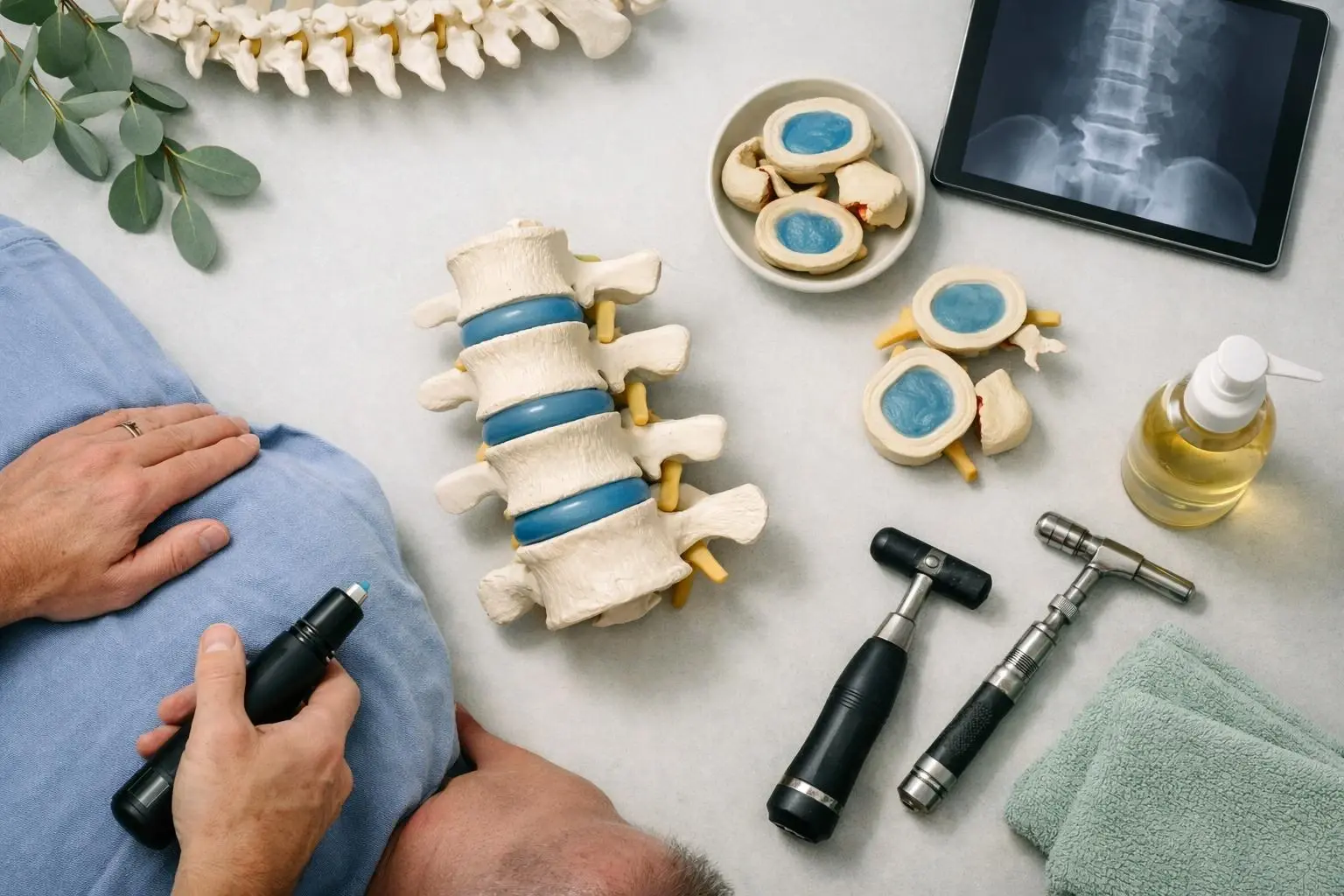
Intervertebral discs are essential components of the spine, located between each pair of vertebrae from the neck to the lower back. These discs serve as natural shock absorbers, cushioning the spine during everyday activities like walking, running. Or lifting. Without them, the vertebrae would grind against each other, leading to pain and limited movement. Each disc is composed of two main parts: the nucleus pulposus, a gel-like core that absorbs pressure. And the annulus fibrosus, a fibrous outer layer that holds the nucleus in place and connects adjacent vertebrae.
Related glossary terms: Disc Herniation, Spinal Decompression, Chiropractic Adjustment.
The design of intervertebral discs allows the spine to bend, twist. And flex while maintaining stability. For example, when you bend forward to pick up an object, the discs at the front of the spine compress. While those at the back stretch. This flexibility is crucial for activities ranging from simple daily tasks to more demanding physical movements. Over time. But discs can degenerate due to aging, repetitive stress. Or injury, which may lead to conditions like herniation or bulging discs.
How Intervertebral Discs Work?
Intervertebral discs function by distributing mechanical forces evenly across the spine. When pressure is applied—such as when standing, sitting. Or lifting—the nucleus pulposus inside each disc compresses and redistributes the load outward through the annulus fibrosus. This process helps prevent excessive stress on any single vertebra, reducing the risk of fractures or other injuries. The discs also act as spacers, maintaining the proper distance between vertebrae, which is critical for protecting the nerves that run through the spinal column.
The health of an intervertebral disc depends on its ability to retain water and nutrients. Unlike most other tissues in the body, discs have a limited blood supply, relying instead on diffusion from nearby tissues to stay hydrated and nourished. This makes them particularly vulnerable to dehydration and degeneration over time. Activities that involve prolonged sitting, poor posture. Or heavy lifting can accelerate wear and tear. While regular movement and proper hydration help maintain disc health.
- Discs compress under load, absorbing shock like a cushion.
- The nucleus pulposus distributes pressure evenly to the annulus fibrosus.
- Proper spacing between vertebrae protects spinal nerves.
- Hydration and movement are key to disc longevity.
Why Intervertebral Discs Matter?

Intervertebral discs play a vital role in maintaining spinal health and overall mobility. When discs are healthy, they allow for pain-free movement and protect the spine from injury. But when discs become damaged or degenerate, they can cause significant discomfort, including localized back pain, radiating pain into the arms or legs, numbness. Or muscle weakness. Conditions like herniated discs or degenerative disc disease often result from disc damage, which can interfere with daily activities and reduce quality of life.
The impact of disc health extends beyond physical comfort. Chronic back pain caused by disc issues can lead to decreased productivity, missed workdays. And even disability in severe cases. Early intervention, such as physical therapy, posture correction. Or chiropractic care, can help manage symptoms and prevent further deterioration. Understanding the function and care of intervertebral discs empowers individuals to make informed decisions about their spinal health and seek appropriate treatment when needed.
When Intervertebral Discs Matter Most?
Intervertebral discs become a primary concern in situations involving back pain, injury. Or degenerative conditions. For example, individuals who experience sudden back pain after lifting a heavy object, a car accident. Or a fall may have a disc injury. Symptoms such as sharp pain, tingling. Or weakness in the limbs often indicate that a disc is pressing on a nerve, a condition known as a herniated disc. In these cases, prompt evaluation by a healthcare provider is essential to prevent further damage and relieve symptoms.
Disc health also matters for individuals with jobs or lifestyles that place repetitive stress on the spine. Office workers who sit for long hours, athletes who engage in high-impact sports. And laborers who frequently lift heavy loads are all at higher risk for disc degeneration. Preventive measures, such as ergonomic workspace adjustments, proper lifting techniques. And regular exercise, can help reduce the risk of disc-related issues. And aging naturally causes discs to lose hydration and elasticity, making older adults more susceptible to degenerative disc disease. Regular check-ups and early intervention can help manage these changes effectively.
- Sudden back pain after lifting or trauma may signal a disc injury.
- Tingling or weakness in limbs can indicate nerve compression from a disc.
- Repetitive stress from jobs or sports increases disc degeneration risk.
- Aging reduces disc hydration and flexibility, requiring proactive care.