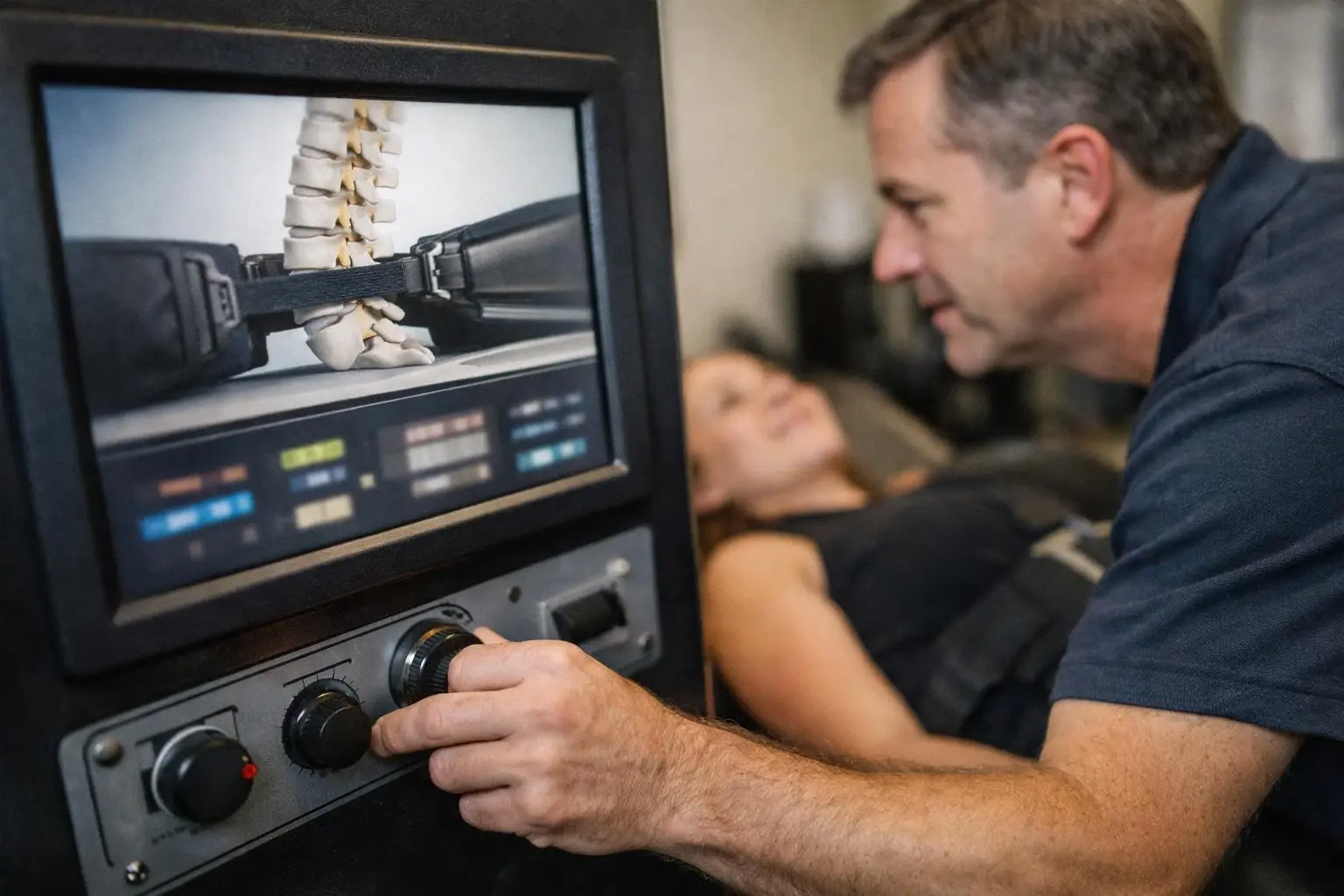
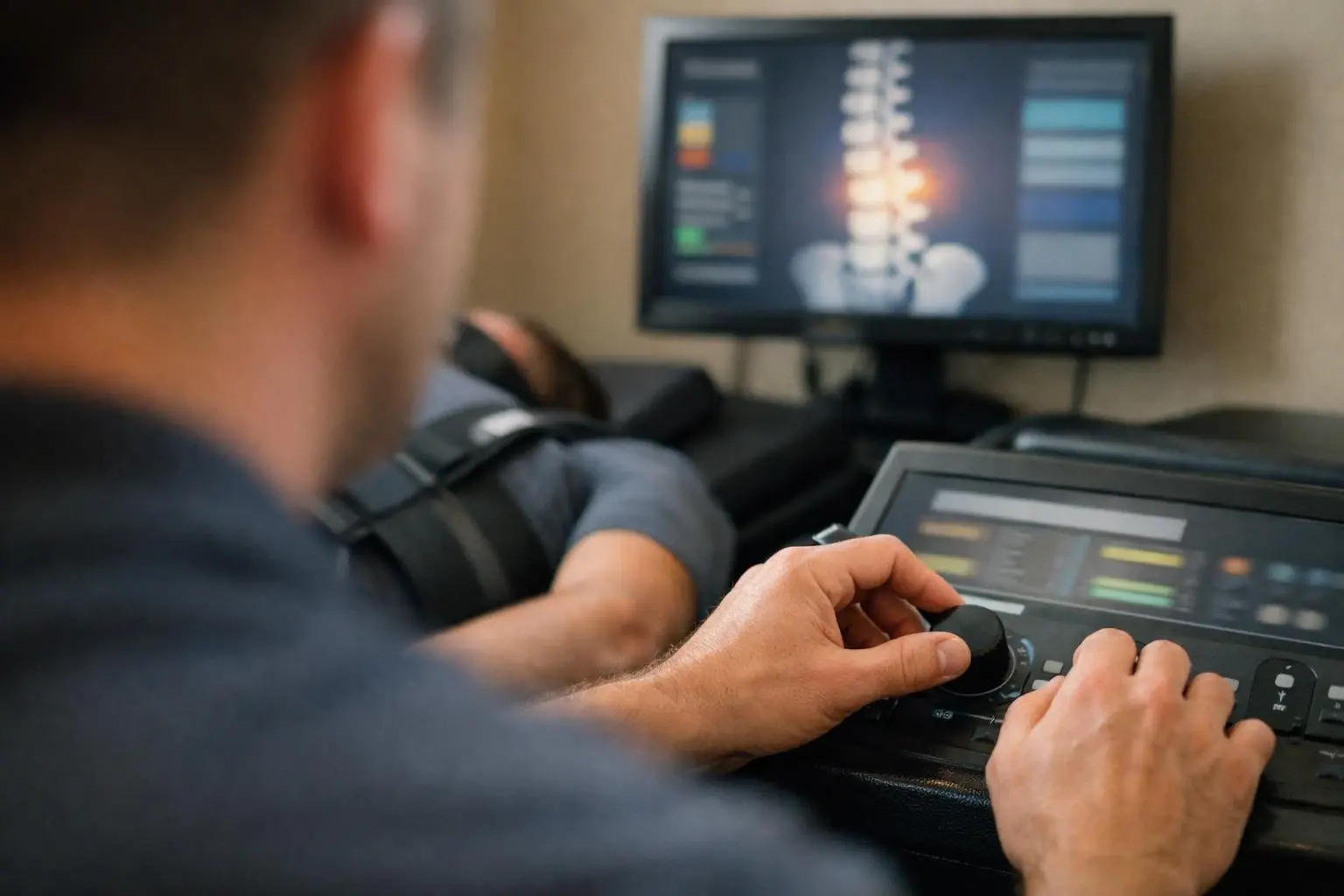
Spinal Decompression is a non-surgical treatment designed to relieve pressure on the spine and spinal nerves. It involves gently stretching the spine using a motorized table or similar device to create negative pressure within the discs, which can help herniated or bulging discs retract and promote healing by allowing oxygen, water. And nutrient-rich fluids to flow into the discs.
Category
Non-surgical spinal therapy
Used for
Herniated discs, sciatica, degenerative disc disease, spinal stenosis
Common confusion
Often mistaken for spinal manipulation or traction. But uses controlled stretching
Also called
Non-Surgical Spinal Decompression, Decompression Therapy
Often discussed with
Back Pain Treatment, Work Injury Treatment

Spinal Decompression is a therapeutic technique aimed at relieving pain and discomfort associated with compressed spinal nerves. The spine consists of vertebrae separated by discs, which act as cushions. Over time, these discs can bulge, herniate. Or degenerate, leading to pressure on the nerves that exit the spinal cord. This pressure can cause pain, numbness. Or weakness in the back, neck, arms. Or legs. Spinal Decompression works by gently stretching the spine to create a negative pressure within the discs, which can help retract herniated or bulging disc material and reduce nerve compression.
Related glossary terms: Disc Herniation, Chiropractic Adjustment, Spinal Manipulation.
Unlike surgical decompression, which involves removing bone or disc material, non-surgical Spinal Decompression is a conservative approach. It's typically performed using a specialized table that's controlled by a computer to apply precise amounts of traction and relaxation. The goal is to create an optimal environment for the discs to heal by allowing fluids, nutrients. And oxygen to flow back into the affected area. This process can also help reduce inflammation and improve mobility in the spine.
Spinal Decompression therapy involves the patient lying on a motorized table, usually face up or face down, depending on the area being treated. A harness is placed around the hips or pelvis and attached to the lower part of the table. While the upper part remains fixed. The table then moves in a controlled manner to apply a gentle stretching force to the spine. This force alternates between traction and relaxation phases, typically lasting for 30-45 minutes per session.
For local customers, The traction phase creates a negative intradiscal pressure, which can help retract herniated or bulging disc material. This negative pressure also promotes the influx of healing nutrients, oxygen. And water into the disc, aiding in the repair process. The relaxation phase allows the muscles around the spine to relax, reducing spasms and improving circulation. The entire process is designed to be comfortable and painless, with most patients experiencing a gentle stretching sensation rather than pain.
Treatment plans usually involve multiple sessions, often ranging from 15 to 30 visits over several weeks. The exact number of sessions depends on the severity of the condition, the patient's response to treatment. And the recommendations of the healthcare provider. Spinal Decompression is often combined with other therapies, such as electrical stimulation, ultrasound. Or cold/heat therapy, to boost results and reduce inflammation.

Spinal Decompression is an important treatment option for individuals suffering from chronic back or neck pain due to disc-related issues. Many people with herniated discs, degenerative disc disease. Or spinal stenosis experience significant pain and limited mobility, which can impact their daily activities and quality of life. Surgery is often considered a last resort due to its risks, recovery time. And cost. Spinal Decompression offers a non-invasive alternative that can help patients avoid surgery or manage symptoms without relying solely on pain medications.
For patients with conditions like sciatica, where a herniated disc presses on the sciatic nerve, Spinal Decompression can provide relief by reducing the pressure on the nerve. This can alleviate pain, tingling. Or numbness that radiates down the legs. Similarly, for those with degenerative disc disease, the treatment can slow the progression of disc deterioration by improving nutrient flow to the discs. By addressing the root cause of the pain rather than just masking symptoms, Spinal Decompression can help patients achieve long-term relief and improved function.
Spinal Decompression is most beneficial for individuals who have not found relief from conservative treatments like rest, physical therapy. Or medication. It is particularly useful for those diagnosed with specific conditions, such as herniated discs, bulging discs, sciatica. Or spinal stenosis. Patients who experience chronic back or neck pain, numbness. Or weakness in their limbs may also benefit from this therapy if their symptoms are linked to disc compression or nerve irritation.
But Spinal Decompression is not suitable for everyone. Individuals with certain conditions, such as severe osteoporosis, spinal fractures, tumors. Or infections, should avoid this treatment. Pregnant women and those with metal implants in the spine, such as screws or plates, are also not candidates for Spinal Decompression. A thorough evaluation by a healthcare provider is necessary to determine if this treatment is appropriate for a patient's specific condition. The provider will consider factors such as the patient's medical history, imaging results. And overall health before recommending Spinal Decompression.
In Hermitage, TN, where many residents lead active lifestyles or work in physically demanding jobs, Spinal Decompression can be a valuable option for managing work-related injuries or chronic pain. Local chiropractors and clinics often use this therapy as part of a full treatment plan to help patients return to their daily activities with reduced pain and improved mobility.
Spinal Traction applies a constant pulling force to the spine. While Spinal Decompression uses intermittent, controlled stretching and relaxation phases to create negative pressure within the discs.
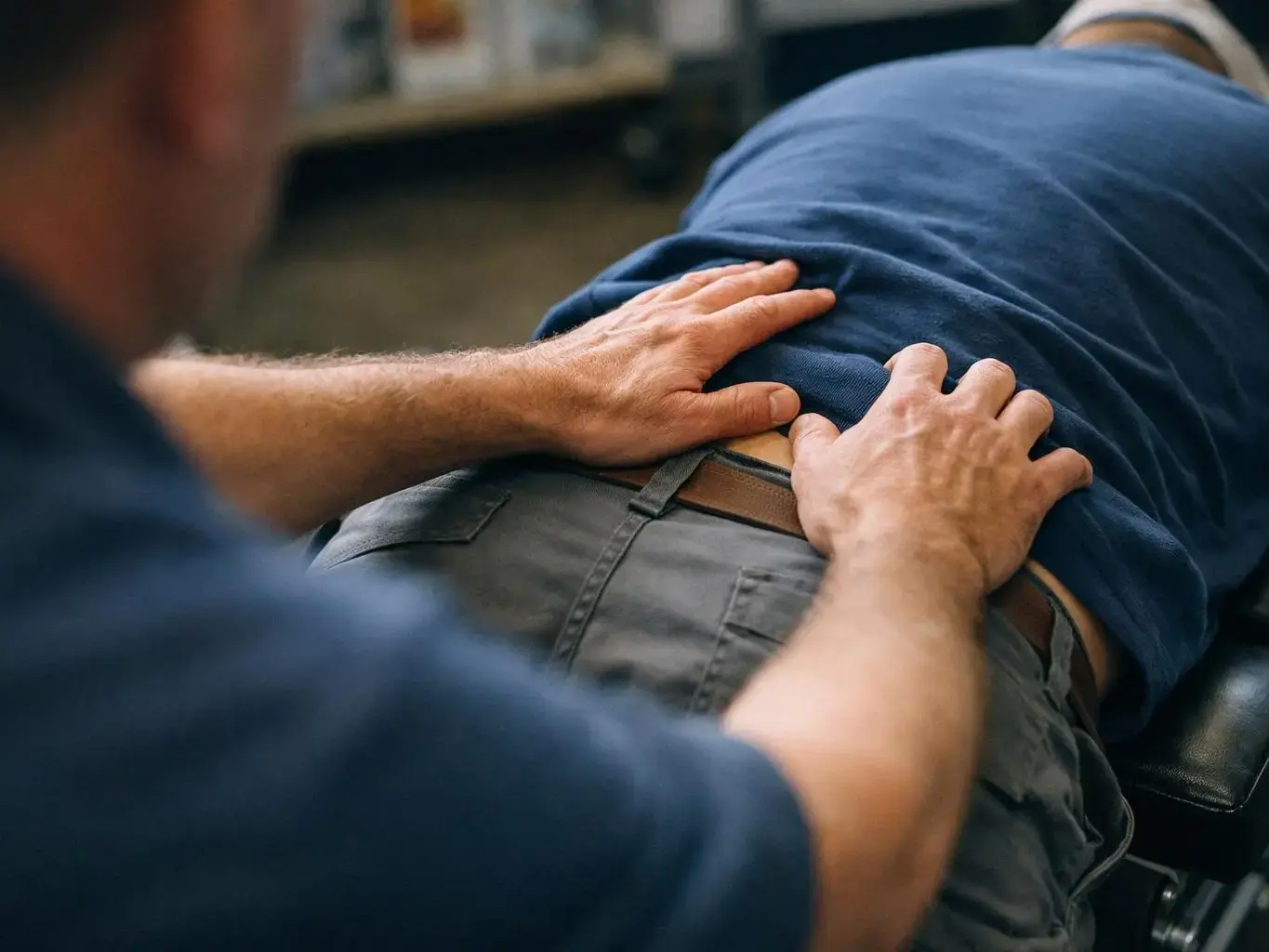
Chiropractic Adjustment involves manual manipulation of the spine to improve alignment, whereas Spinal Decompression focuses on stretching the spine to relieve disc pressure.
Physical Therapy includes a range of exercises and modalities to improve strength and mobility. While Spinal Decompression is a specific treatment targeting disc-related issues.
Spinal Decompression is most effective when combined with other therapies like core strengthening exercises and posture correction. It’s not a standalone cure but part of a holistic approach to spinal health.
A 45-year-old construction worker in Hermitage, TN, developed chronic lower back pain after lifting heavy materials. An MRI revealed a herniated disc pressing on a nerve. After 20 sessions of Spinal Decompression, his pain decreased significantly. And he returned to work with improved mobility and reduced reliance on pain medication.
Disc herniation is a spinal condition where the soft, gel-like center of an intervertebral disc pushes through a tear in the disc’s tougher outer layer. This can irritate nearby nerves, causing pain, numbness. Or weakness in the back, neck, arms. Or legs. Disc herniation often results from aging, injury. Or repetitive strain on the spine.
Chiropractic Adjustment is a precise, hands-on procedure where a licensed chiropractor applies controlled force to a joint in the spine or other body part to improve alignment, reduce pain. And restore movement. It's commonly used to treat back pain, neck pain, headaches. And joint stiffness without surgery or medication.
Spinal Manipulation is a hands-on technique used by licensed chiropractors to apply controlled force to a joint in the spine. The goal is to improve spinal motion, reduce pain. And restore function by realigning vertebrae that may be misaligned or restricted. This method is often used to treat back pain, neck pain. And headaches without surgery or medication.
Decompression Therapy is a non-surgical, motorized traction treatment designed to relieve pressure on the spine and promote healing of damaged intervertebral discs and nerves. Decompression Therapy gently stretches the spine, creating negative pressure within the discs to help retract herniated or bulging material, improve nutrient flow. And reduce pain in the back, neck. And limbs.
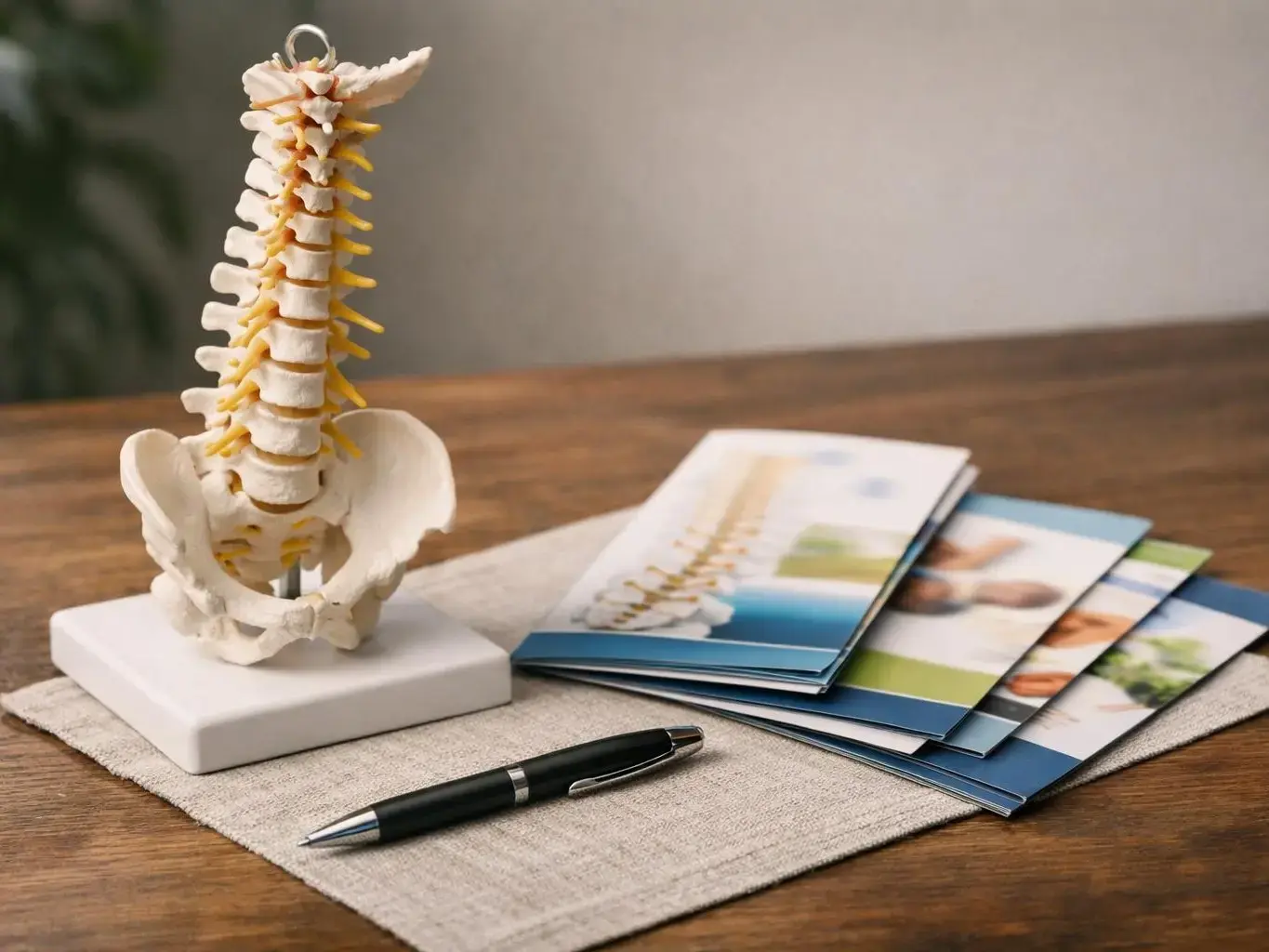
Intervertebral Disc is intervertebral discs are soft, flexible cushions located between the vertebrae of the spine. Each disc acts as a shock absorber, preventing bones from rubbing together during movement. They consist of a gel-like center called the nucleus pulposus and a tough outer ring known as the annulus fibrosus, enabling spinal flexibility and load distribution.
Advanced Injury Care Clinic
Contact Advanced Injury Care Clinic for practical guidance on Spinal Decompression and related chiropractor work in Hermitage.