
What Is Kyphosis?
Kyphosis is an excessive forward curve of the spine, most often seen in the thoracic region of the upper back. The curve can affect posture and may develop from vertebral shape, spinal conditions, aging, injury, or habitual positioning. Mild postural kyphosis may differ from a fixed structural curve that remains during movement.
Quick Facts About Kyphosis
Category
Spinal alignment condition
Used for
Describing forward spinal curvature
Common confusion
Often confused with scoliosis
Also called
Rounded upper back, Hyperkyphosis
Often discussed with
Scoliosis Treatment, Posture Correction
Key Takeaways About Kyphosis
- Kyphosis most often affects the thoracic spine.
- Postural rounding may change with movement or position.
- Kyphosis is not the same as scoliosis.
How Kyphosis Works
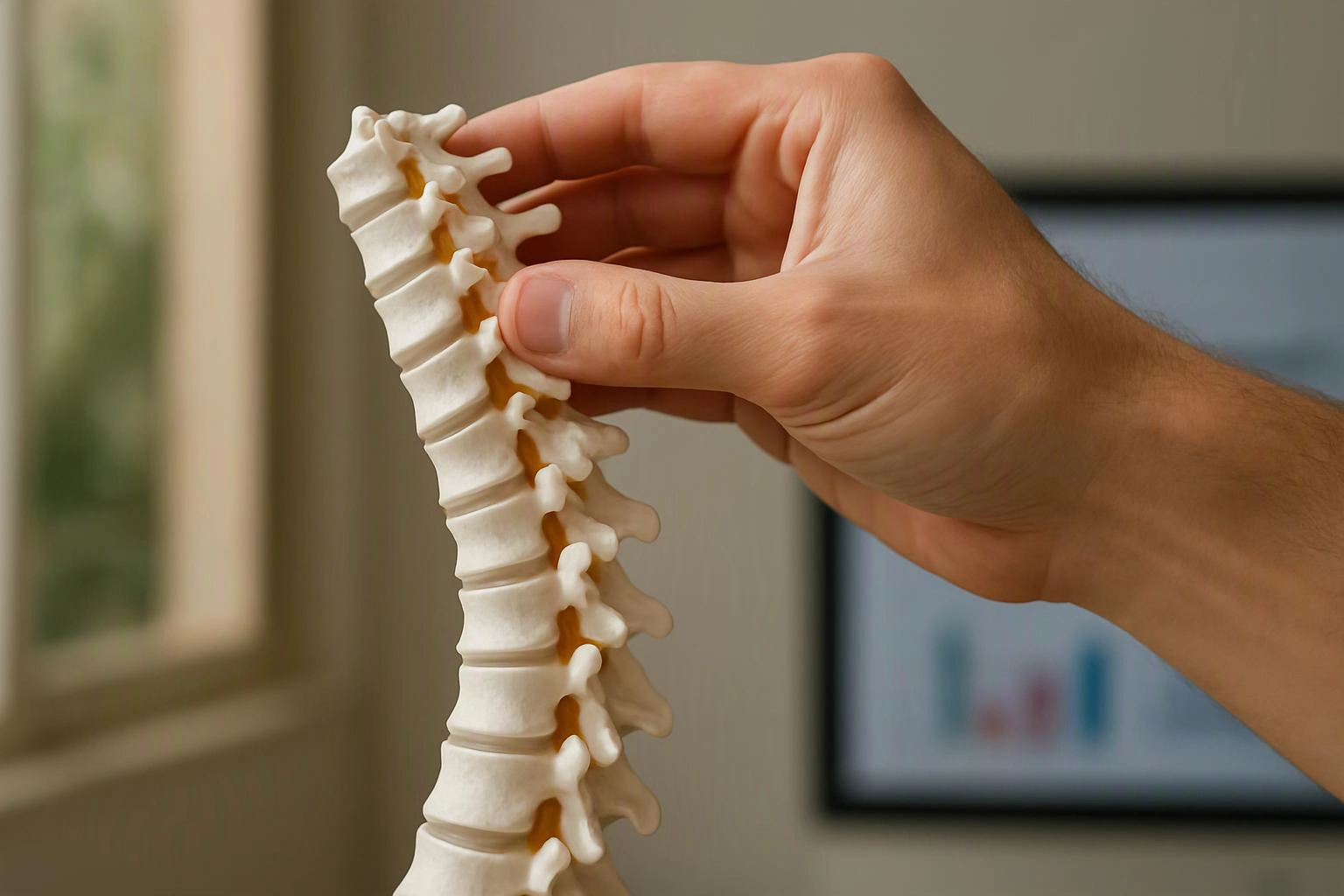
Kyphosis describes how the spine curves forward when viewed from the side. The thoracic spine naturally has some forward curvature, which helps the back balance the head and support movement. A clinician considers the shape, flexibility, location, and related symptoms when assessing whether the curve is mainly postural or structural.
Related glossary terms: Thoracic Spine, Scoliosis Curve, Forward Head Posture.
Assessment may include observing standing posture, walking, and spinal movement. The examiner may also check the thoracic spine, muscle balance, and range of motion. Scoliosis involves side-to-side curvature and rotation, so a person can have kyphosis, scoliosis, or both. The findings help guide care within a scoliosis treatment plan.
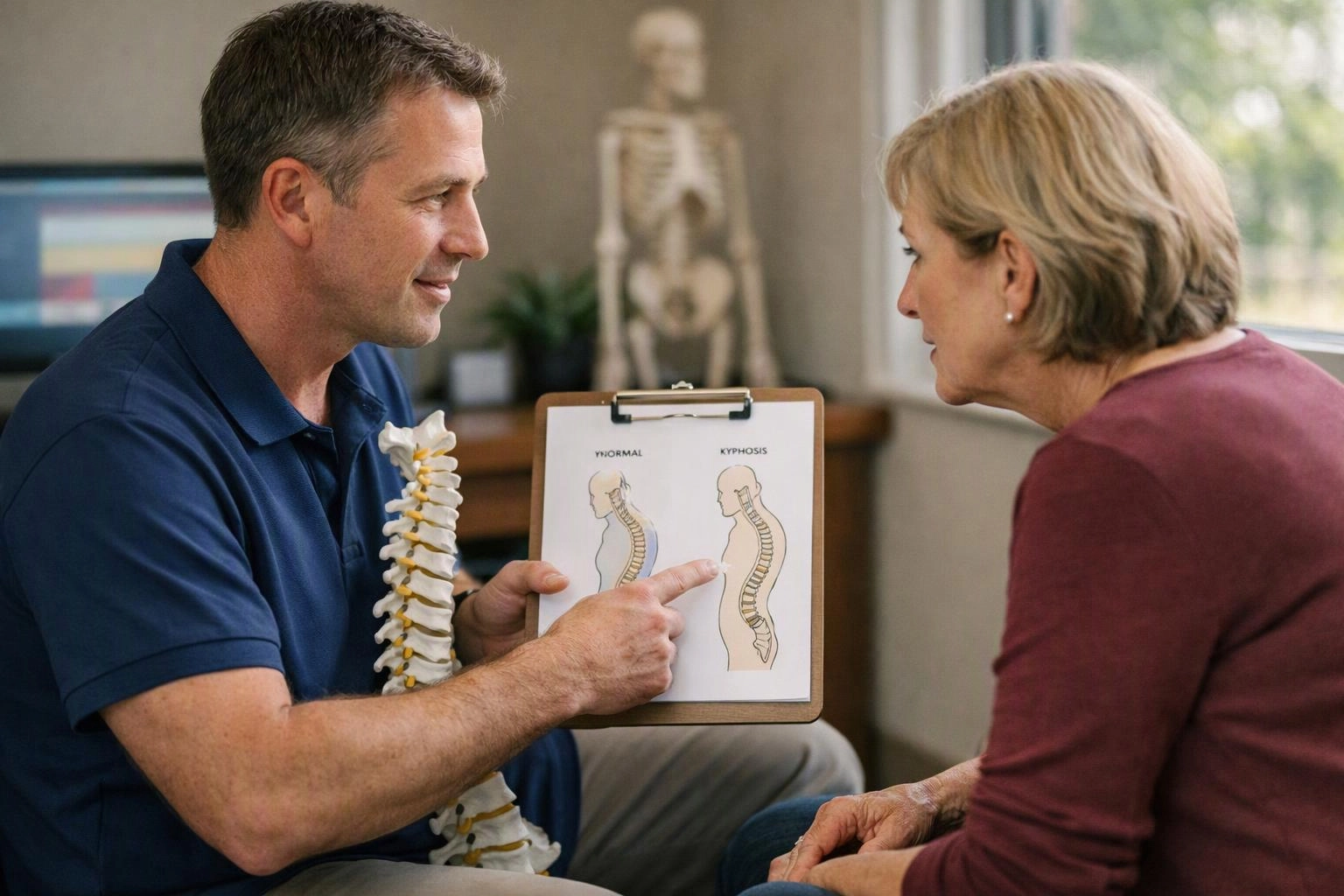
From the Advanced Injury Care Clinic team
When we assess kyphosis, we observe posture and spinal movement rather than judging the curve from appearance alone. Our team considers flexibility, muscle balance, and related findings as part of a broader scoliosis treatment evaluation. We document how the spine responds during movement so the care plan reflects the individual presentation.
Kyphosis in Practice: A Real-World Example
A person with rounded upper-back posture may show more kyphosis while sitting and less while standing or moving. During a scoliosis treatment evaluation, the clinician observes that change and checks spinal motion, muscle balance, and related alignment findings.
Related Services
Related Terms
Thoracic Spine
The thoracic spine is the middle section of the vertebral column, located between the neck and…
Scoliosis Curve
A Scoliosis Curve is an abnormal sideways curve of the spine that may also include rotation…
Forward Head Posture
Forward Head Posture is a postural pattern in which the head rests in front of the…
Range Of Motion
Range Of Motion is the available movement at a joint or body region, measured by how…
Advanced Injury Care Clinic
Have Questions About Kyphosis?
Contact Advanced Injury Care Clinic for practical guidance on Kyphosis and related chiropractor work in Hermitage.