
What Is Range Of Motion?
Range Of Motion is the available movement at a joint or body region, measured by how far it can move in different directions. Clinicians assess active motion, which you perform yourself, and passive motion, which another person guides. Findings can show stiffness, guarded movement, or changes that affect physical function.
Quick Facts About Range Of Motion
Category
Physical assessment measure
Used for
Joint movement and functional changes
Common confusion
Flexibility is not the same as joint range
Also called
ROM, Joint range
Often discussed with
Sports Injury Treatment
Key Takeaways About Range Of Motion
- Movement can be active or passive.
- Assessment compares motion across relevant directions.
- Flexibility and range of motion are not identical.
How Range Of Motion Works
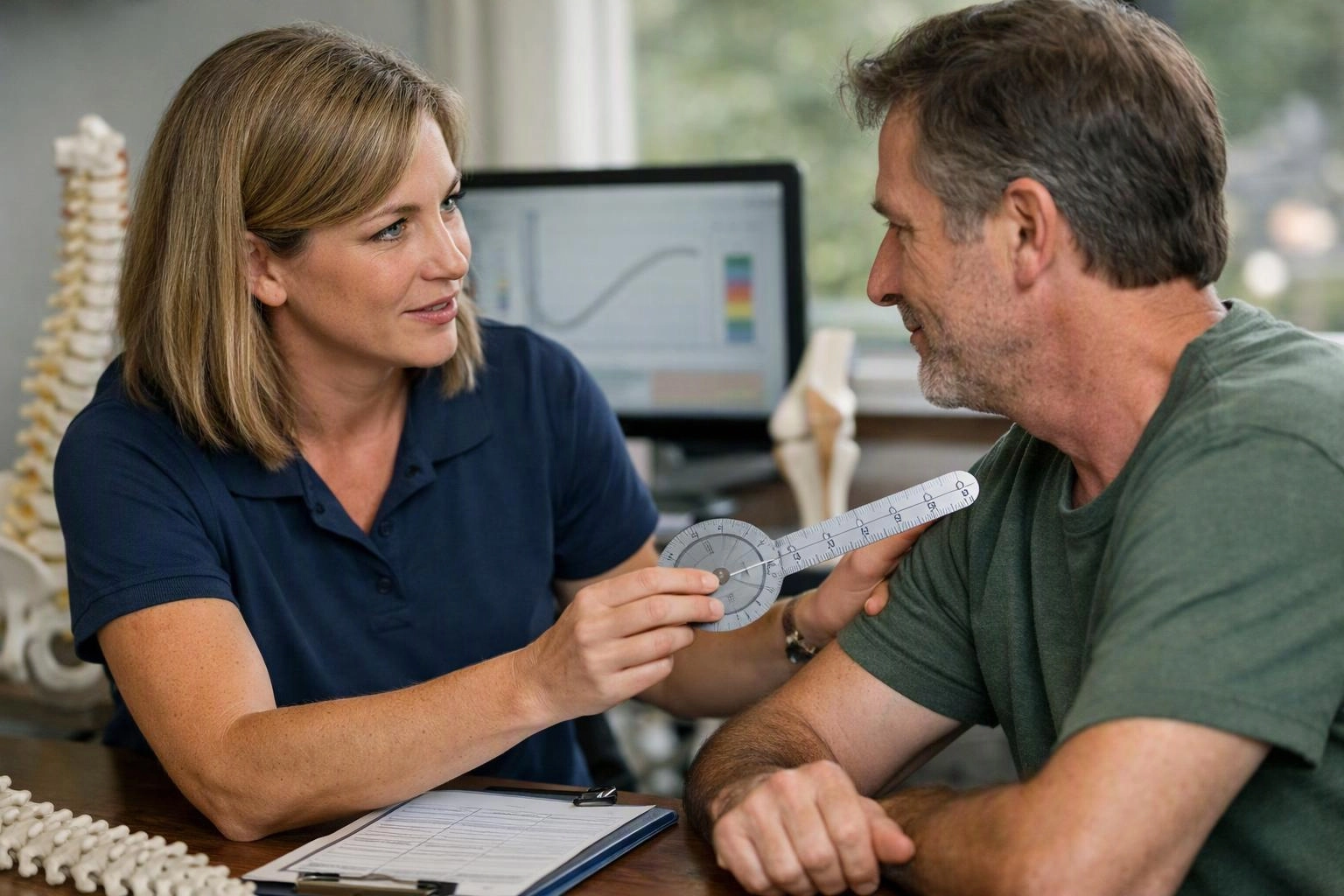
Range Of Motion describes movement around a joint or through a body region. Assessment may involve active movement, where you control the motion, or passive movement, where a clinician guides it. The comparison helps show whether discomfort, stiffness, weakness, or guarding affects the movement pattern.
Related glossary terms: Joint Mobilization, Sprain, Strain.
A clinician observes the direction, smoothness, and endpoint of movement. The cervical spine and shoulder, for example, move through several directions that support turning, reaching, and positioning. A restriction in one direction may have a different meaning from a general loss of movement, so the finding is considered alongside the injury history and physical examination.
From the Advanced Injury Care Clinic team
When we assess Range Of Motion during Sports Injury Treatment, we observe how you move and note where motion becomes limited or guarded. We compare active movement with guided movement when appropriate, then relate those findings to the injured area and the demands of your sport.
Range Of Motion in Practice: A Real-World Example
A recreational tennis player may have reduced shoulder movement after an overuse injury. During Sports Injury Treatment, the clinician observes reaching and rotation to identify which motions reproduce discomfort or appear restricted.
Related Services
Related Terms
Joint Mobilization
Joint mobilization is a hands-on chiropractic technique that applies controlled movement to a joint. The clinician…
Sprain
A sprain is an injury to a ligament, the strong connective tissue that links bones at…
Strain
Strain is an injury to a muscle or tendon caused by overstretching or tearing tissue. A…
Muscle Spasm
A muscle spasm is a sudden, involuntary tightening of muscle fibers that can feel firm, painful…
Advanced Injury Care Clinic
Have Questions About Range Of Motion?
Contact Advanced Injury Care Clinic for practical guidance on Range Of Motion and related chiropractor work in Hermitage.