
What Is the Thoracic Spine?
The thoracic spine is the middle section of the vertebral column, located between the neck and lower back. It contains the vertebrae that connect with the ribs and help form the back wall of the chest. This region supports upright posture, protects the spinal cord, and contributes to trunk movement and breathing mechanics.
Quick Facts About Thoracic Spine
Category
Spinal region
Used for
Posture and trunk movement
Common confusion
Thoracic pain versus cervical pain
Also called
Upper back vertebrae, T-spine
Often discussed with
Neck Pain Treatment, Posture Correction
Key Takeaways About Thoracic Spine
- The thoracic spine connects with the ribs.
- Its movement affects posture and trunk rotation.
- Thoracic pain is not the same as neck pain.
How Thoracic Spine Works
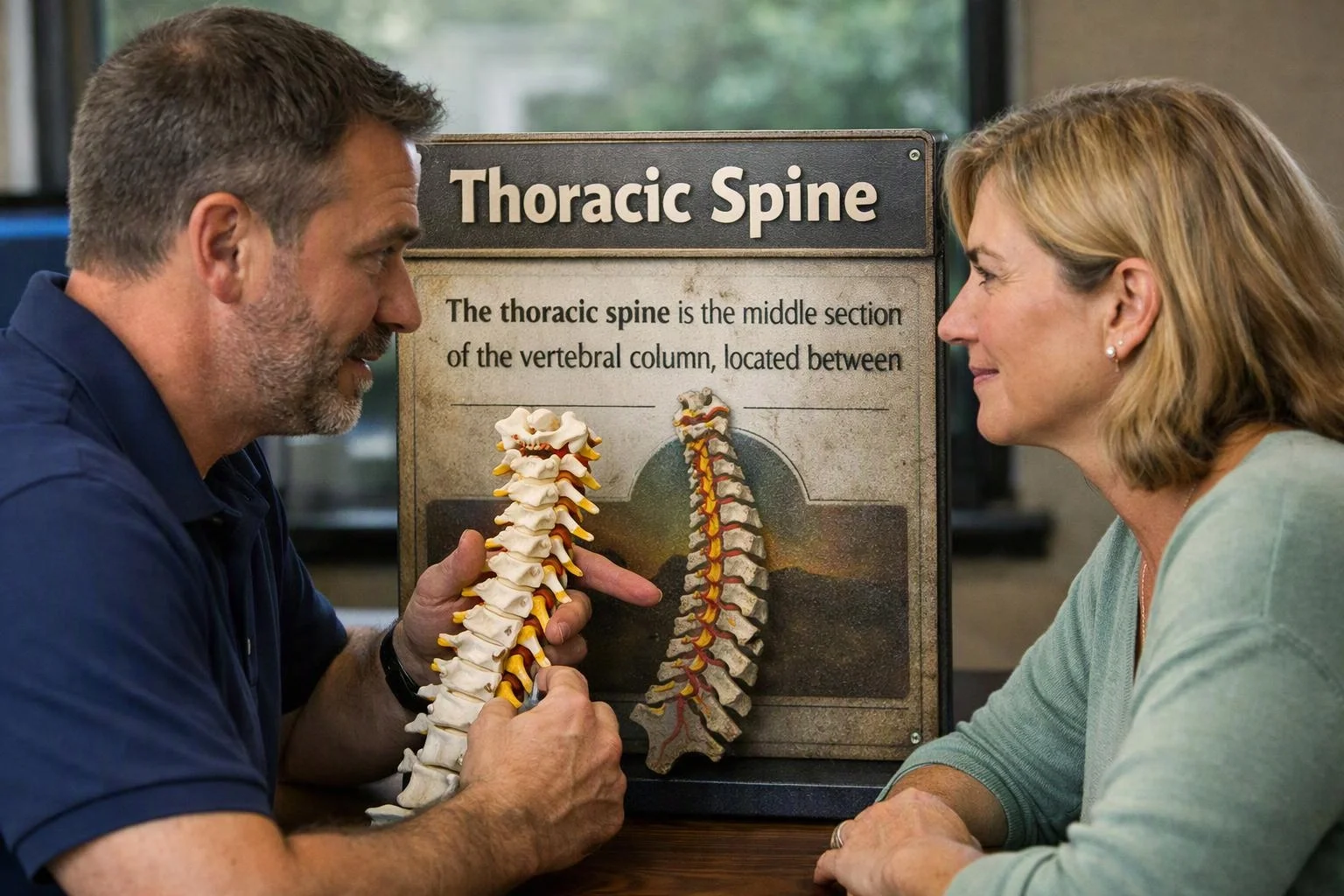
The thoracic spine works as a stable bridge between the neck and lower back. Its vertebrae join with the ribs, which help protect organs in the chest. The region bends, rotates, and assists with upright posture while allowing controlled movement through the trunk.
Related glossary terms: Cervical Spine, Lumbar Spine, Facet Joint.
Movement in this area depends on the joints, discs, muscles, ligaments, and nearby ribs working together. Limited motion may change how the shoulders, neck, or lower back move during daily tasks. A clinical assessment may examine posture, spinal motion, muscle tension, and symptoms around the mid-back. The cervical spine sits above this region, while the lumbar spine sits below it.
From the Advanced Injury Care Clinic team
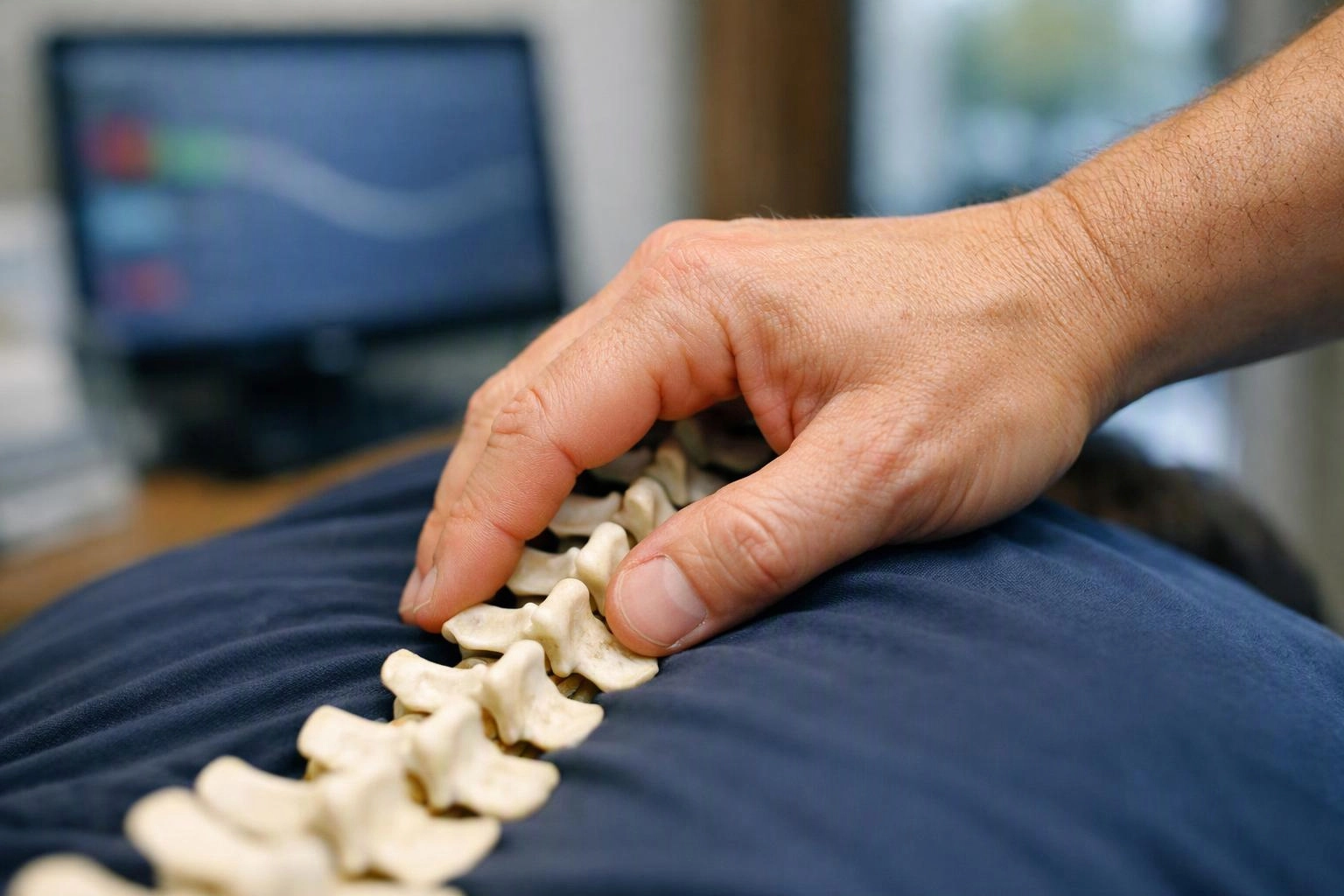
When we assess the thoracic spine during Neck Pain Treatment, we check how the mid-back moves with the neck and shoulders. Our team also considers posture, muscle tension, and symptom patterns. This approach helps us distinguish a neck concern from movement limits in a connected spinal region.
Thoracic Spine in Practice: A Real-World Example
A person with neck pain may also show limited thoracic spine rotation while turning the upper body. During Neck Pain Treatment, the provider may assess both regions because mid-back movement can affect how the neck and shoulders move.
Related Services
Related Terms
Cervical Spine
Cervical Spine is the upper section of the spinal column located in the neck. The cervical…
Lumbar Spine
Lumbar Spine is the lower section of the vertebral column between the thoracic spine and sacrum…
Facet Joint
A facet joint is a small spinal joint that connects the bones at the back of…
Range Of Motion
Range Of Motion is the available movement at a joint or body region, measured by how…
Advanced Injury Care Clinic
Have Questions About Thoracic Spine?
Contact Advanced Injury Care Clinic for practical guidance on Thoracic Spine and related chiropractor work in Hermitage.