
What Is a Scoliosis Curve?
A Scoliosis Curve is an abnormal sideways curve of the spine that may also include rotation of the vertebrae. The curve can appear in the upper, middle, or lower spine and may affect posture, shoulder or hip balance, and movement. Clinicians assess its location, shape, and severity during an examination.
Quick Facts About Scoliosis Curve
Category
Spinal alignment finding
Used for
Describing scoliosis structure and position
Common confusion
A curve is not simply poor posture
Also called
Spinal curve, Spinal curvature
Often discussed with
Scoliosis Treatment, Posture Correction
Key Takeaways About Scoliosis Curve
- A scoliosis curve may include spinal rotation.
- Its location can affect posture and movement.
- Scoliosis is not the same as temporary poor posture.
How Scoliosis Curve Works
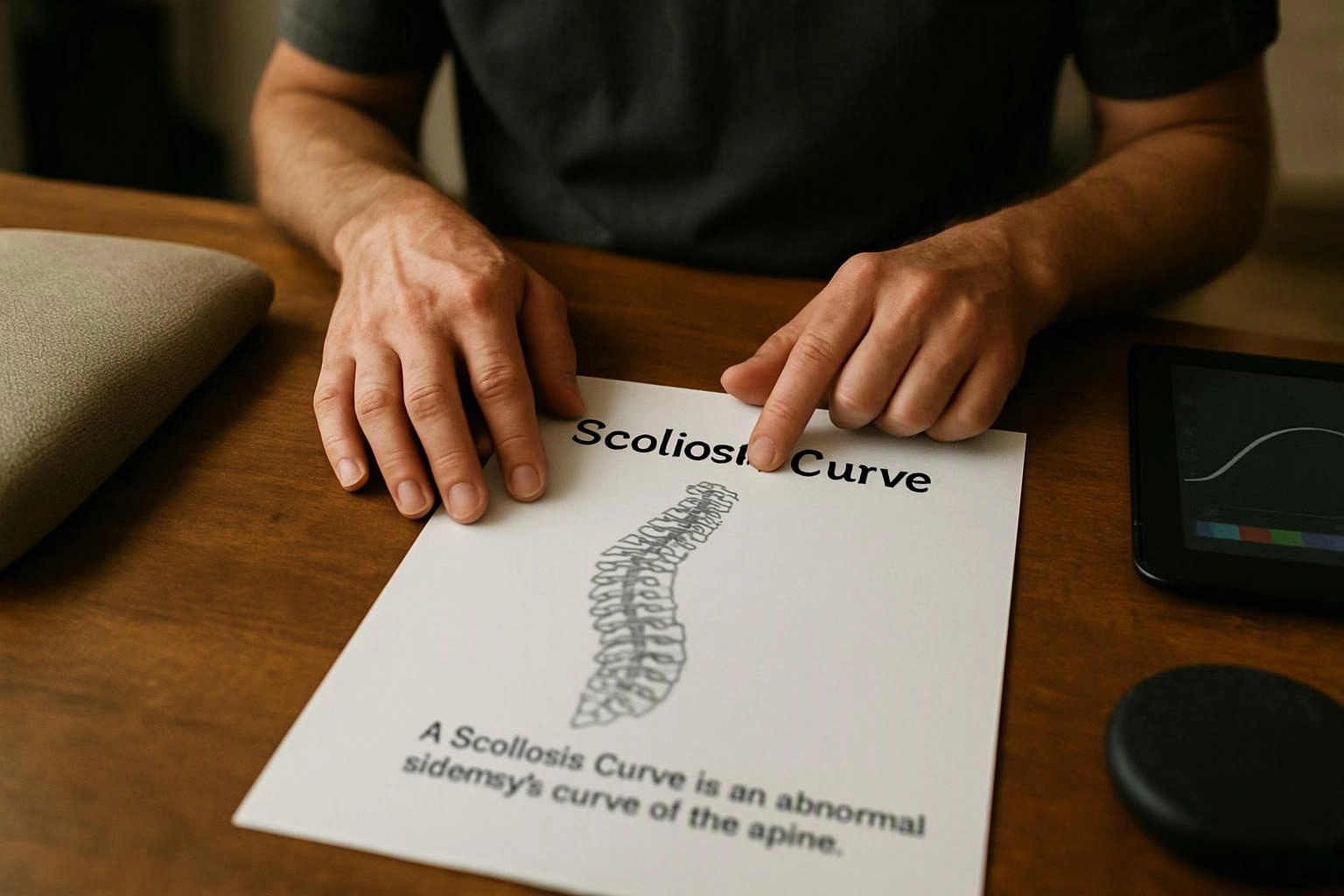
A Scoliosis Curve describes how the spine departs from a straight line when viewed from the front or back. The curve may occur in the cervical, thoracic, or lumbar spine. Spinal rotation can accompany the sideways change, which may alter the position of the ribs, shoulders, or pelvis.
Related glossary terms: Cobb Angle, Thoracic Spine, Lumbar Spine.
Clinicians review the curve through posture observation, movement checks, and available imaging reports. The Cobb Angle is a radiographic measurement that describes the curve’s size. A clinical assessment also considers balance, range of motion, muscle control, and how the curve relates to daily movement. These findings help separate a lasting spinal pattern from a temporary position caused by pain, muscle tension, or uneven loading.
From the Advanced Injury Care Clinic team
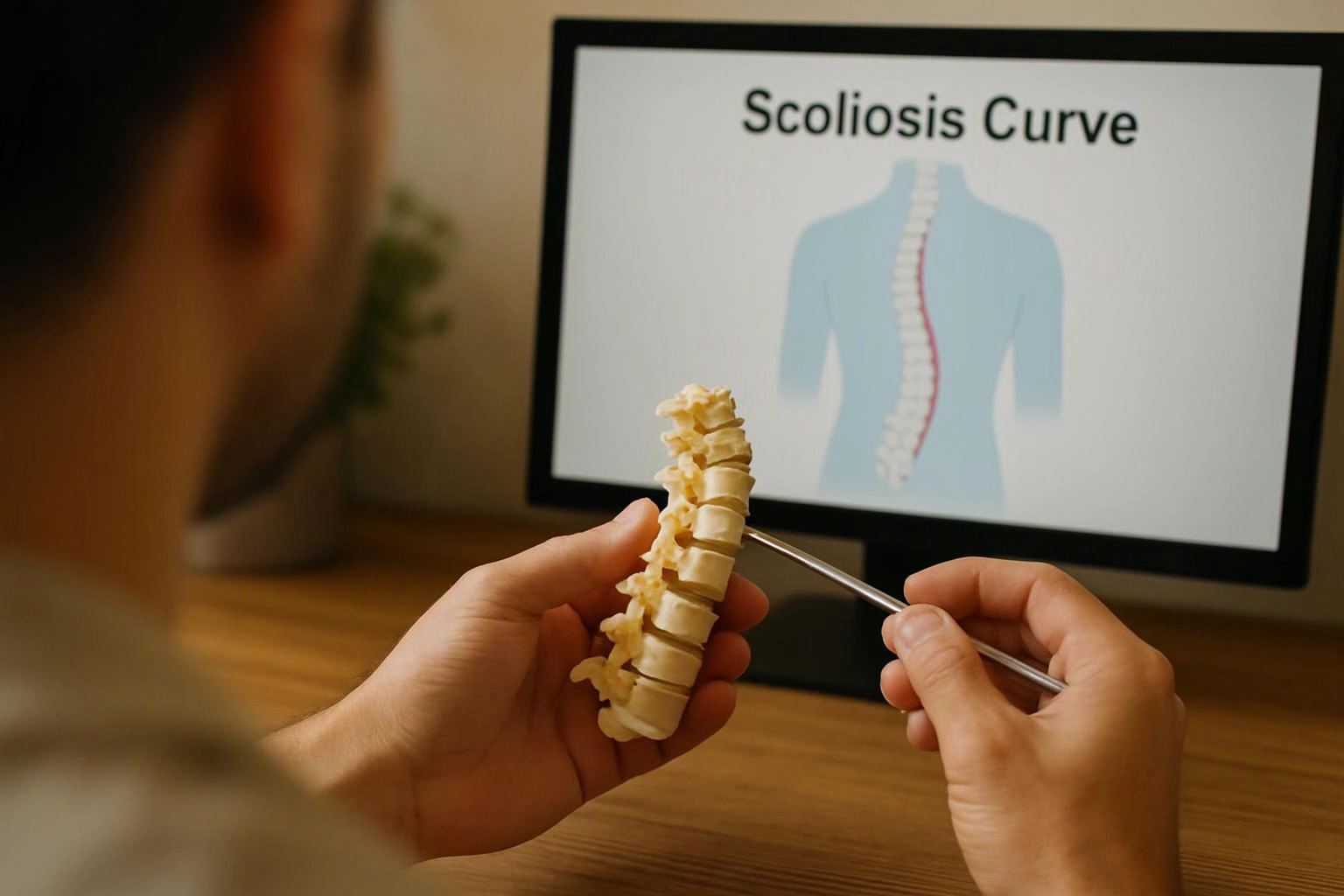
When we assess a scoliosis curve, we observe spinal alignment, posture, and movement together. Our team also considers muscle balance and reported symptoms so the examination reflects how the curve functions during ordinary activities. We use those findings to guide care within Scoliosis Treatment.
Scoliosis Curve in Practice: A Real-World Example
A person with a thoracic scoliosis curve may show uneven shoulder height and limited trunk rotation during an examination. Scoliosis Treatment may address related movement restrictions and muscle imbalance while tracking changes in posture and function.
Related Services
Related Terms
Cobb Angle
Cobb Angle is an angular measurement used on a spinal image to describe the size of…
Thoracic Spine
The thoracic spine is the middle section of the vertebral column, located between the neck and…
Lumbar Spine
Lumbar Spine is the lower section of the vertebral column between the thoracic spine and sacrum…
Kyphosis
Kyphosis is an excessive forward curve of the spine, most often seen in the thoracic region…
Advanced Injury Care Clinic
Have Questions About Scoliosis Curve?
Contact Advanced Injury Care Clinic for practical guidance on Scoliosis Curve and related chiropractor work in Hermitage.