
What Is the Vestibular System?
The vestibular system is a sensory system that helps your brain track head movement and maintain balance. Its sensors sit in the inner ear and send information to the brain. That information helps you stay steady and keep your eyes focused as you move.
Quick Facts About Vestibular System
- Category
- Sensory system
- Used for
- Balance and gaze control
- Common confusion
- Vertigo is a symptom, not the system itself
- Often discussed with
- Vertigo Treatment
Key Takeaways About Vestibular System
- It detects head motion, not sound.
- Symptoms may appear during changes in position.
- Vertigo is a sensation, not the name of a body system.
How Vestibular System Works
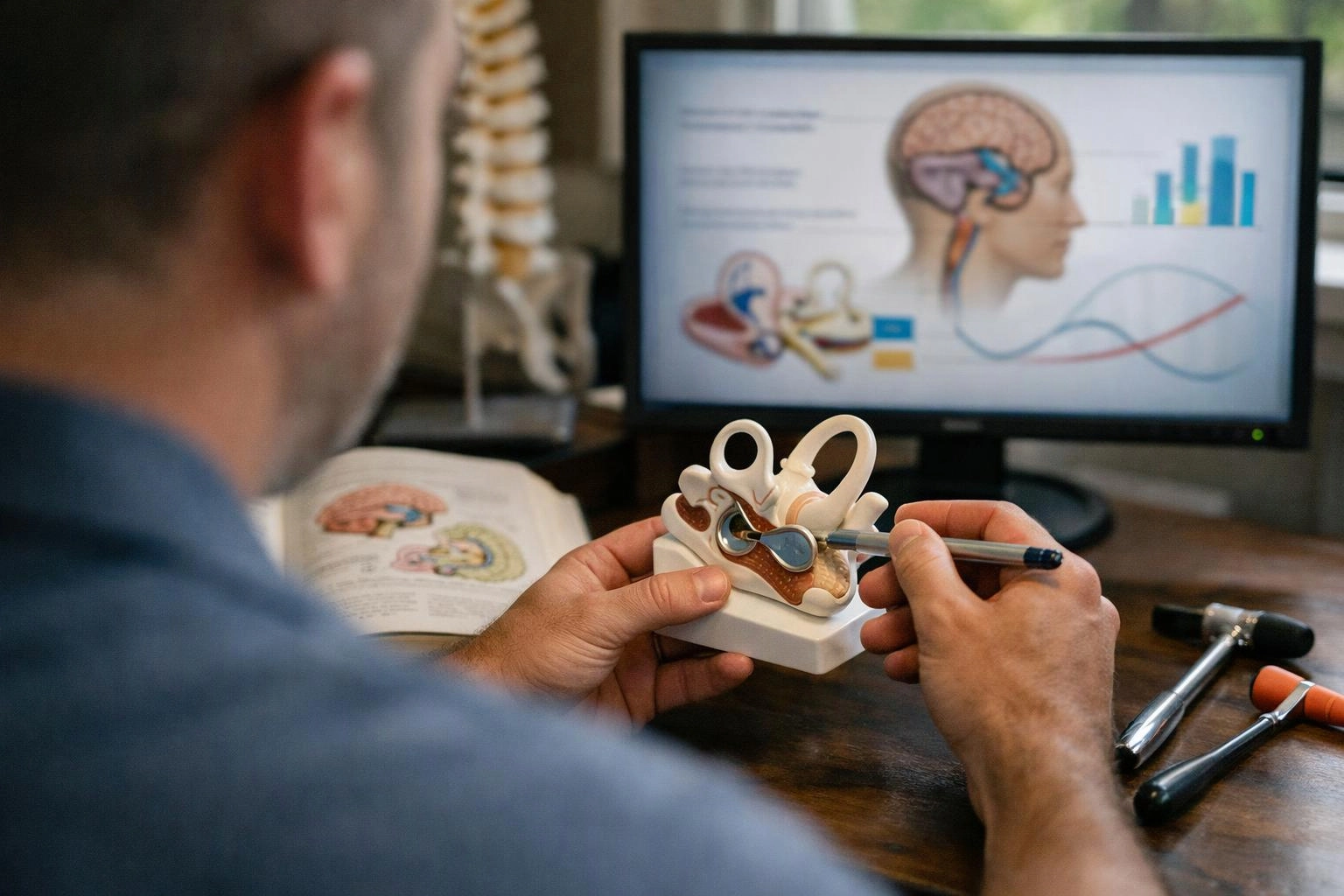
The vestibular system responds when your head turns or changes position. Fluid moves inside curved canals in the inner ear. Small sensory cells detect that movement and send signals through a nerve to the brain. Related service: Vertigo Treatment.
Related glossary terms: Benign Paroxysmal Positional Vertigo, Concussion, Cervical Spine.
Other inner ear sensors respond to gravity and straight-line motion. These signals help your brain sense whether your head is tilted or moving. Your brain combines them with information from your eyes and body to help control posture.
The vestibulo-ocular reflex helps keep your view steady during head movement. For example, your eyes move in the opposite direction when you turn your head. If motion signals don't match other sensory information, you may feel dizzy or unsteady.
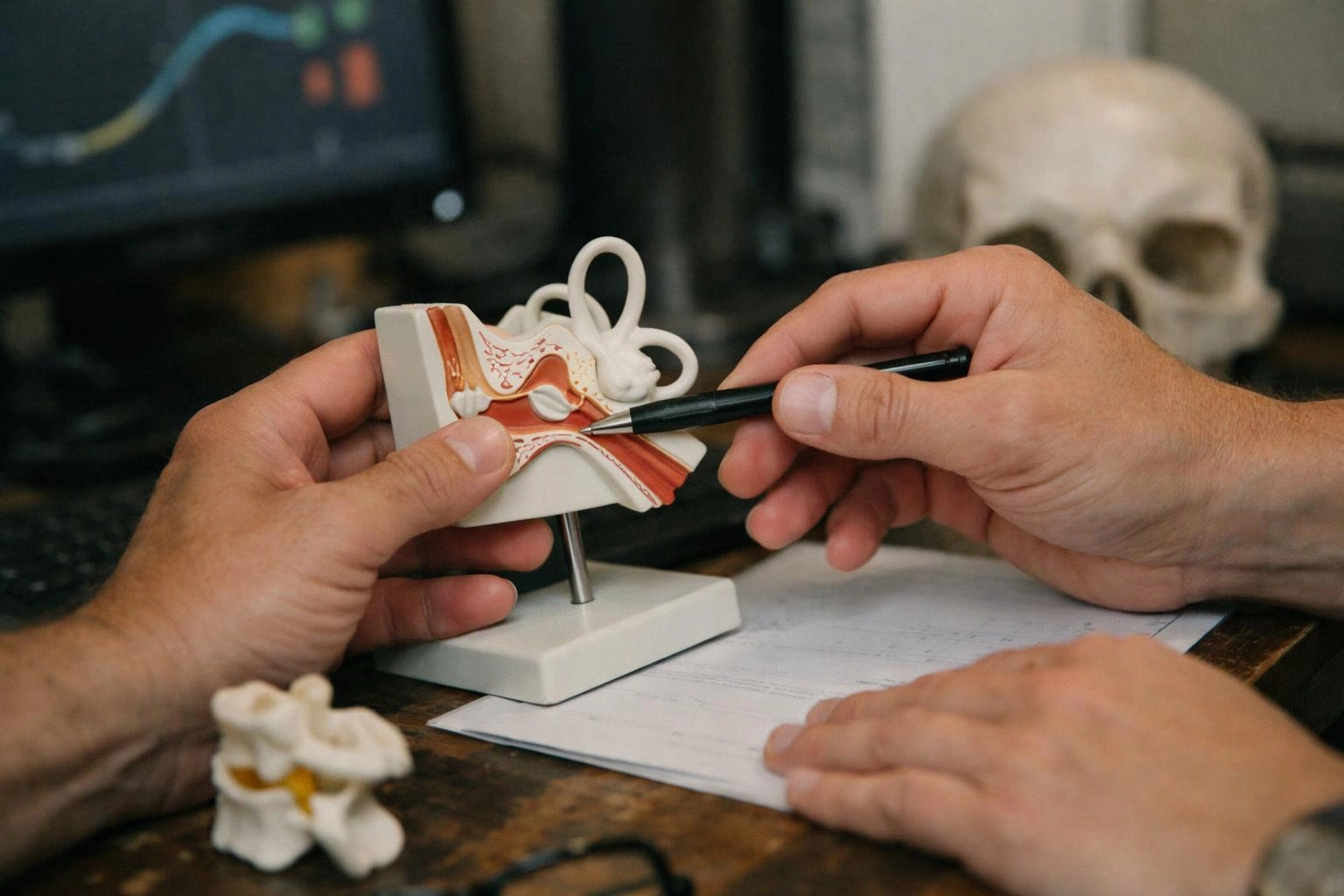
From the Advanced Injury Care Clinic team
When we discuss vertigo treatment, we ask what movements bring on your symptoms. We also consider how those symptoms affect everyday activities. The pattern helps us understand your concern before discussing care.
Vestibular System in Practice: A Real-World Example
A person feels a spinning sensation after rolling over in bed. During a vertigo treatment visit, the person describes that movement and how it affects daily life.
Related Services
Related Terms
Benign Paroxysmal Positional Vertigo
Benign Paroxysmal Positional Vertigo is an inner ear condition that causes a spinning sensation during certain head movements.
Concussion
A concussion is a brain injury that changes how the brain works after a blow or jolt.
Cervical Spine
The cervical spine is the section of your backbone in your neck that supports your head and allows it to move.
Posture
Posture is the position of your body when you are still or moving.
Advanced Injury Care Clinic
Have Questions About Vestibular System?
Contact Advanced Injury Care Clinic for practical guidance on Vestibular System and related chiropractor work in Hermitage.