
What Is Posture?
Posture is the way a person holds and positions the body while sitting, standing, moving, or resting. It includes the alignment of the head, spine, shoulders, pelvis, and limbs. Posture changes with activity, habits, growth, muscle control, balance, and comfort, so it can look different across daily tasks. For more detail, see Signs Poor Posture Is Causing Neck Pain and Headaches.
Quick Facts About Posture
Category
Body alignment and movement
Used for
Observing body position and control
Common confusion
Posture does not require rigid stillness
Also called
Body alignment, Postural alignment
Often discussed with
Pediatric Chiropractic Care
Key Takeaways About Posture
- Posture changes with movement, activity, and body position.
- A child’s posture may look different during growth.
- Posture is not the same as having a perfectly straight back.
How Posture Works
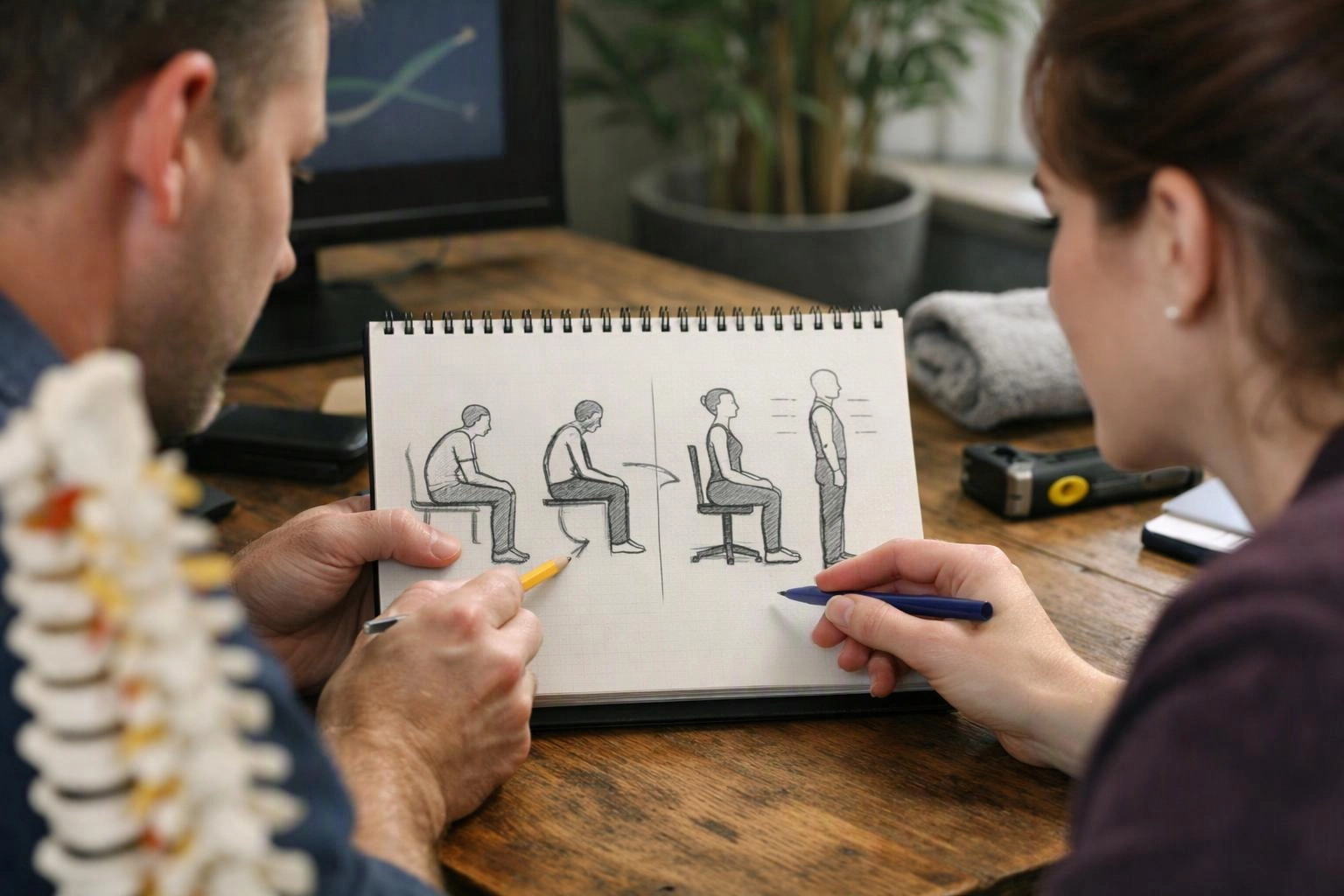
Posture reflects how the body arranges itself during sitting, standing, walking, play, and rest. The brain, muscles, joints, and balance system work together to keep the body supported. Small changes happen as a person reaches, turns, bends, or shifts weight.
Related glossary terms: Forward Head Posture, Anterior Pelvic Tilt, Pelvic Tilt.
In pediatric chiropractic care, posture may be observed during natural movements and common positions. A clinician may look at head position, shoulder level, spinal curves, pelvic position, and how the feet contact the floor. The goal is to understand movement patterns, not to force a child into one fixed shape.
Posture and Daily Activity
- Desk work can change head and shoulder position.
- Backpack use can affect how a child carries weight.
- Play shows how posture adapts during movement.
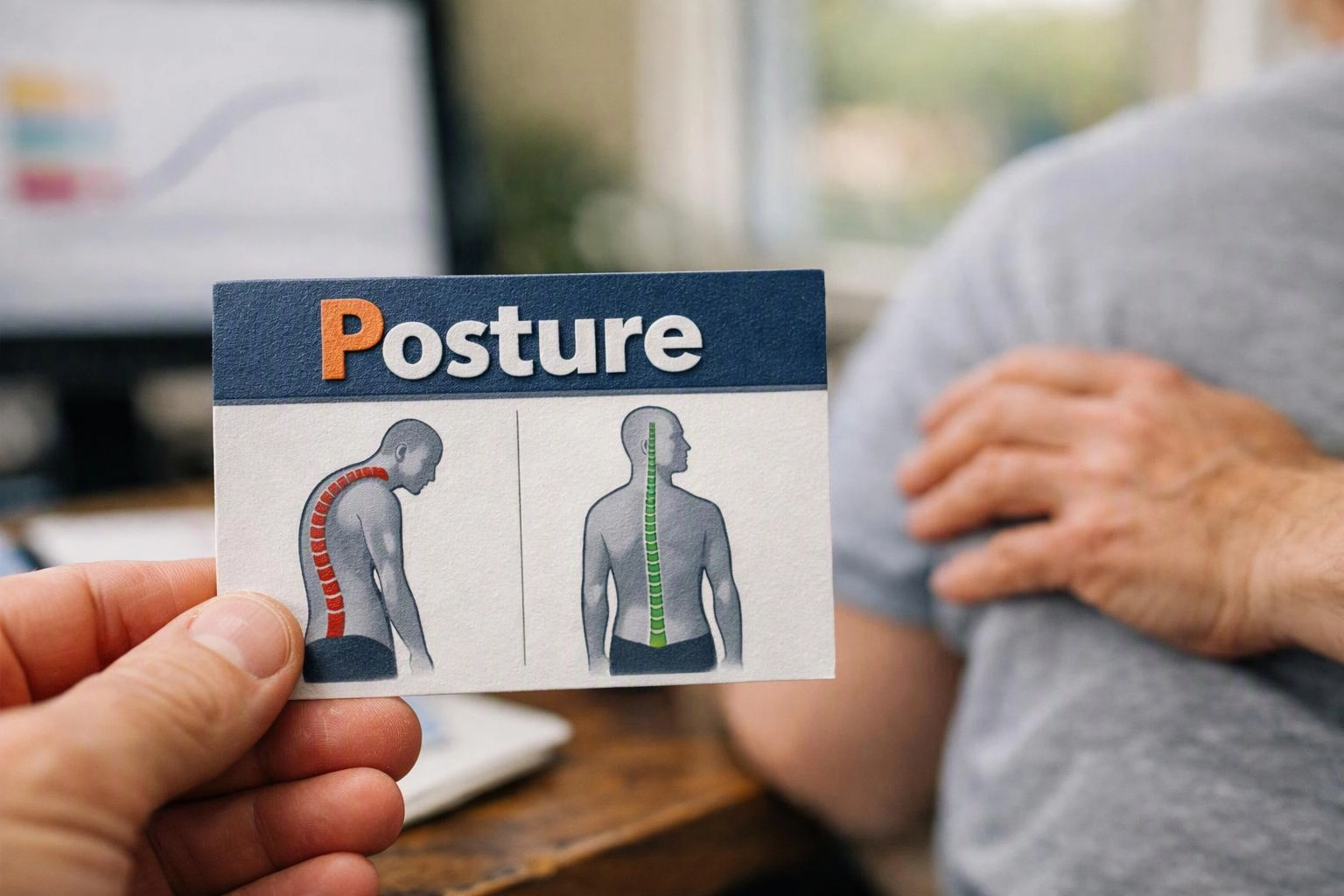
From the Advanced Injury Care Clinic team
When we check posture, we watch how a child sits, stands, walks, and changes position. We consider movement, balance, comfort, and growth together. Our team looks for patterns during natural activity, since a forced pose may not show how the body works during daily life.
Posture in Practice: A Real-World Example
A child may lean forward while reading and shift weight while standing. During pediatric chiropractic care, the clinician observes these positions and checks how the child moves between them.
Related Services
Related Terms
Forward Head Posture
Forward Head Posture is a change in head and neck alignment where the head sits ahead…
Anterior Pelvic Tilt
Anterior Pelvic Tilt is a forward rotation of the pelvis that increases the curve of the…
Pelvic Tilt
Pelvic Tilt is the position or movement of the pelvis as it tips forward, backward, or…
Proprioception
Proprioception is the body's ability to sense the position and movement of its joints and limbs…
Advanced Injury Care Clinic
Have Questions About Posture?
Contact Advanced Injury Care Clinic for practical guidance on Posture and related chiropractor work in Hermitage.