
What Is Benign Paroxysmal Positional Vertigo?
Benign Paroxysmal Positional Vertigo is an inner ear condition that causes a spinning sensation during certain head movements. Small calcium crystals move into a part of the ear where they disrupt balance signals. The spinning may occur when you roll over in bed or look upward.
Quick Facts About Benign Paroxysmal Positional Vertigo
- Category
- Inner ear balance condition
- Used for
- Describing a positional vertigo diagnosis
- Common confusion
- General dizziness
- Also called
- BPPV, Benign positional vertigo
- Often discussed with
- Vertigo Treatment
Key Takeaways About Benign Paroxysmal Positional Vertigo
- Symptoms relate to head position, not simply standing up.
- A description of your triggers helps guide the assessment.
- Vertigo describes spinning, while dizziness covers other sensations too.
How Benign Paroxysmal Positional Vertigo Works
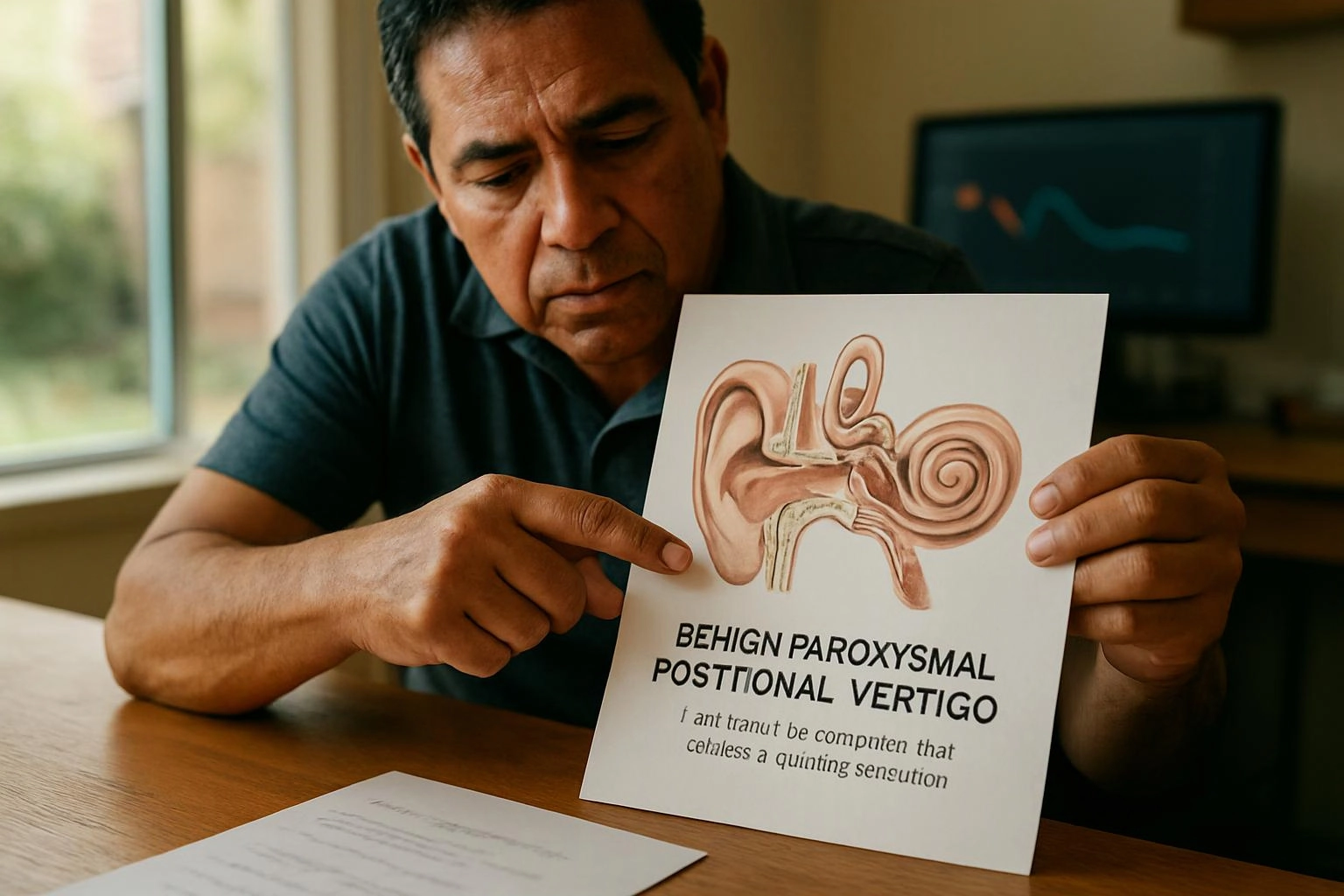
Benign Paroxysmal Positional Vertigo affects the way the inner ear senses movement. The inner ear has curved canals filled with fluid. These canals normally help your brain track turns of the head. Related service: Vertigo Treatment.
Related glossary terms: Vestibular System, Cervical Spine, Concussion.
Loose crystals can shift inside a canal as your head changes position. Their movement disturbs the fluid and sends a misleading signal to your brain. Your eyes may also move in a pattern called nystagmus.
A clinician may look for that eye movement during a positional exam. The direction of the movement can help identify the affected canal. A repositioning maneuver uses guided head movements to move the crystals out of the canal.
From the Advanced Injury Care Clinic team
When we discuss BPPV during vertigo treatment, we ask you to describe what movements bring on symptoms. Your description helps our team understand the pattern and consider whether further assessment is appropriate.
Benign Paroxysmal Positional Vertigo in Practice: A Real-World Example
During a vertigo treatment visit, a person describes spinning when turning over in bed. The clinician asks about the direction of the turn and other sensations the person notices.
Related Services
Related Terms
Vestibular System
The vestibular system is a sensory system that helps your brain track head movement and maintain balance.
Cervical Spine
The cervical spine is the section of your backbone in your neck that supports your head and allows it to move.
Concussion
A concussion is a brain injury that changes how the brain works after a blow or jolt.
Advanced Injury Care Clinic
Have Questions About Benign Paroxysmal Positional Vertigo?
Contact Advanced Injury Care Clinic for practical guidance on Benign Paroxysmal Positional Vertigo and related chiropractor work in Hermitage.