
What Is Vestibular Rehabilitation?
Vestibular Rehabilitation is a therapy approach that helps the brain and body respond better to balance signals from the inner ear, eyes, and joints. It uses guided movements and balance tasks to address dizziness, motion sensitivity, or unsteady walking. A clinician selects activities based on symptoms and observed movement patterns.
Quick Facts About Vestibular Rehabilitation
Category
Balance and movement therapy
Used for
Dizziness, motion sensitivity, and balance problems
Common confusion
It is not general fitness training
Also called
Balance therapy, Vestibular Rehab
Often discussed with
Vertigo Treatment, Therapeutic Exercise
Key Takeaways About Vestibular Rehabilitation
- It targets balance signals, not just neck or back movement.
- Exercises are matched to observed dizziness and balance patterns.
- Vestibular rehabilitation isn't the same as general exercise.
How Vestibular Rehabilitation Works
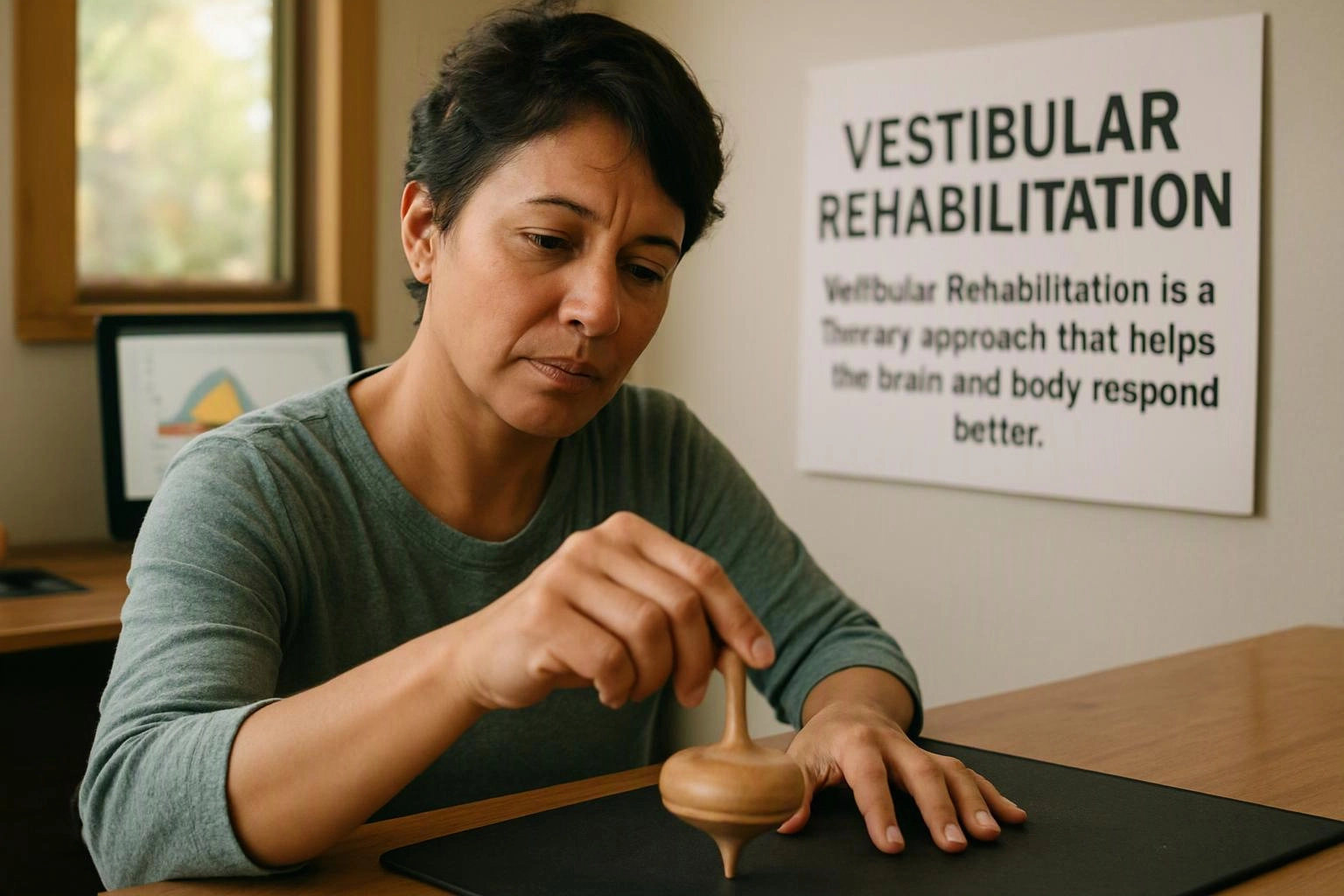
Vestibular Rehabilitation uses controlled movement to help the brain compare signals from the inner ear, eyes, muscles, and joints. A clinician may watch how you turn your head, shift your weight, focus your eyes, or walk. These observations help guide the exercise plan.
Related glossary terms: Proprioception, Gait Analysis, Neuromuscular Reeducation.
Some activities challenge gaze control during head movement. Others work on standing balance, body position, or motion tolerance. Progress is checked through changes in movement quality, steadiness, and symptom response. The exercises should match the person's findings, so the plan may change as balance improves.
What It Addresses
- Unsteadiness during walking or turning.
- Dizziness linked to movement or visual focus.
- Difficulty adapting to changes in head position.
From the Advanced Injury Care Clinic team
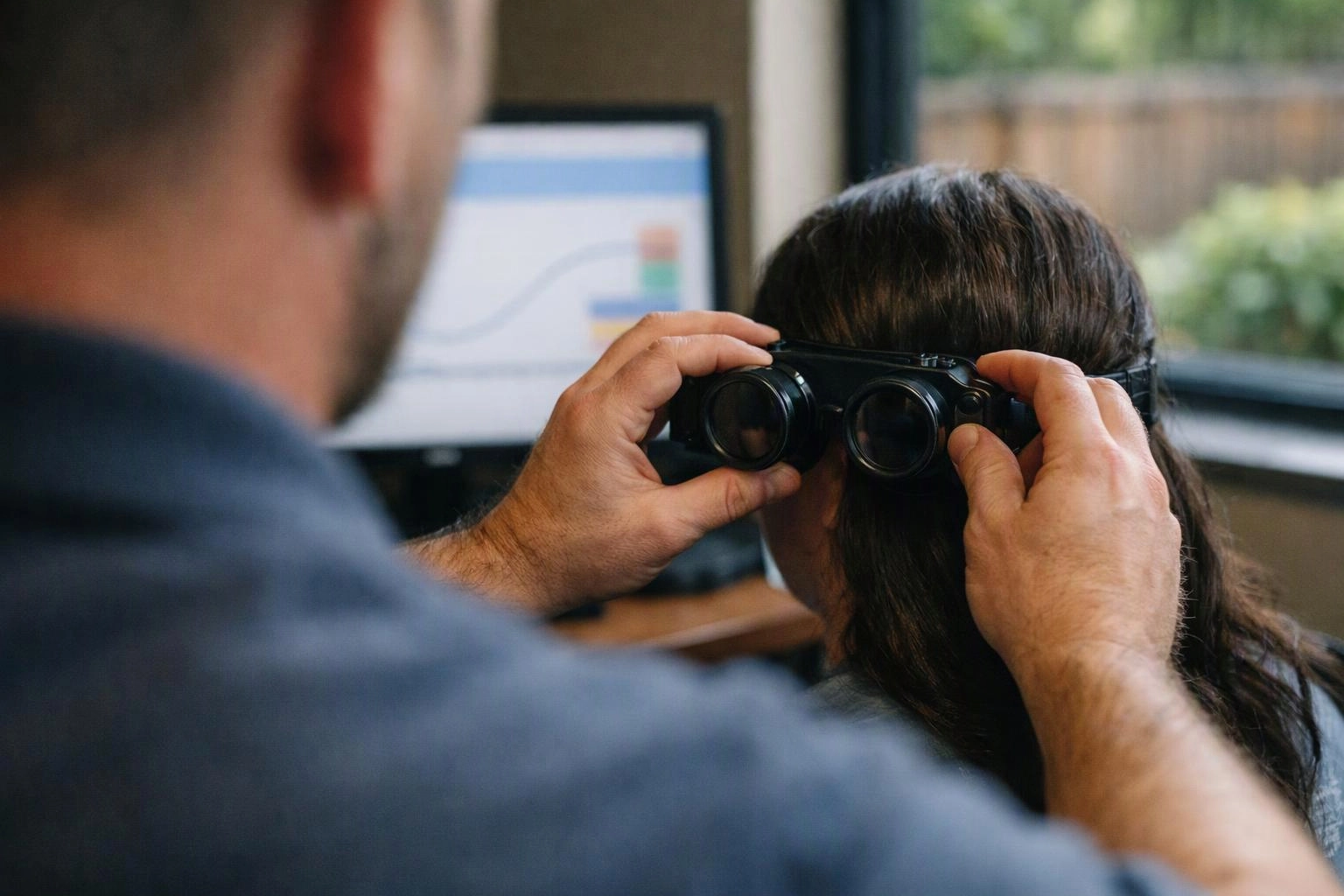
When we assess Vestibular Rehabilitation, we look at balance, eye tracking, head movement, and walking patterns. We connect those findings with the person's reported symptoms. Our team uses that information to select exercises that fit the Vertigo Treatment plan and to monitor how movement affects balance.
Vestibular Rehabilitation in Practice: A Real-World Example
A person may feel dizzy when turning the head while walking through a busy store. Vestibular rehabilitation may pair slow head turns with steady visual focus and controlled steps to address that movement pattern.
Related Services
Related Terms
Proprioception
Proprioception is the body's ability to sense the position and movement of its joints and limbs…
Gait Analysis
Gait Analysis is the study of how you walk or run. It examines foot placement, stride…
Neuromuscular Reeducation
Neuromuscular Reeducation is a rehabilitation method that retrains communication between the brain, nerves, and muscles. It…
Range of Motion
Range of Motion is the amount a joint can move in different directions. It describes movement…
Advanced Injury Care Clinic
Have Questions About Vestibular Rehabilitation?
Contact Advanced Injury Care Clinic for practical guidance on Vestibular Rehabilitation and related chiropractor work in Hermitage.