
What Is Neuromuscular Reeducation?
Neuromuscular Reeducation is a rehabilitation method that retrains communication between the brain, nerves, and muscles. It uses controlled movements, balance tasks, and body-position cues to improve movement patterns. The goal is better coordination and control during daily activities, especially after pain, injury, weakness, or changes in normal movement.
Quick Facts About Neuromuscular Reeducation
Category
Chiropractic rehabilitation technique
Used for
Coordination, balance, and movement control
Common confusion
It is not simply strength training
Also called
Movement retraining, Neuromuscular retraining
Often discussed with
Chiropractic Rehabilitation, Therapeutic Exercise
Key Takeaways About Neuromuscular Reeducation
- It focuses on movement control, not only muscle strength.
- Exercises may use balance, body-position cues, or controlled motion.
- It is not the same as passive massage or spinal adjustment.
How Neuromuscular Reeducation Works
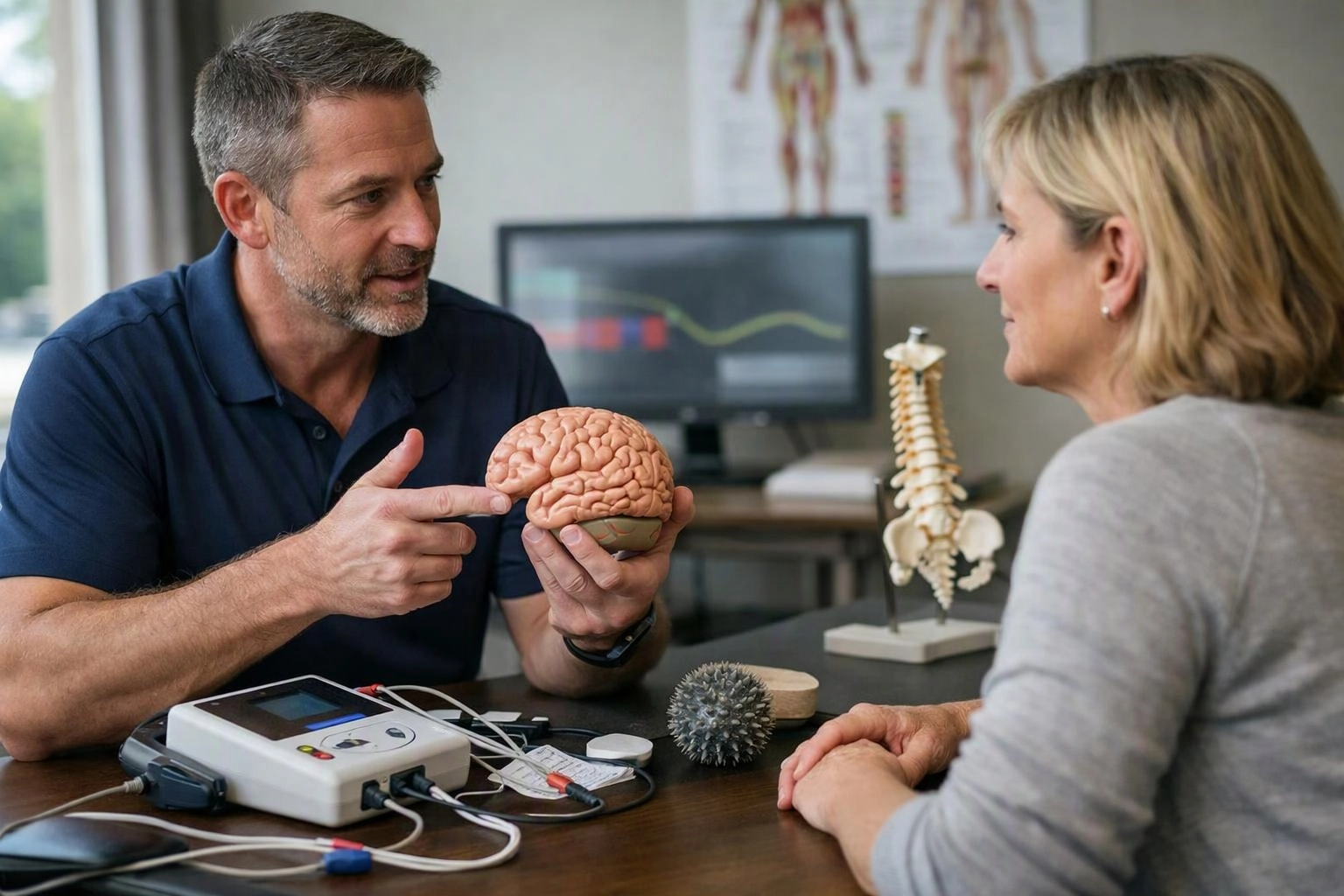
Neuromuscular Reeducation gives the nervous system repeated practice with a specific movement. A person may follow a slow motion, hold a stable position, or respond to a balance challenge. These tasks help the body notice position, timing, and muscle control.
Related glossary terms: Proprioception, Gait Analysis, Range of Motion.
A clinician watches how the body moves and adjusts the task as needed. The clinician may check balance, joint control, movement quality, and the ability to repeat a motion. Proprioception plays a key role because it helps the brain sense where the body is without looking.
Neuromuscular Reeducation often works alongside therapeutic exercise. The activity may begin with a simple controlled motion and progress toward a task that resembles walking, reaching, lifting, or changing direction.
From the Advanced Injury Care Clinic team
When we use Neuromuscular Reeducation, we watch how a person controls each movement, not just whether the movement is completed. Our team checks balance, timing, and unwanted motion during Chiropractic Rehabilitation. We then adjust the task so the exercise matches the person’s current control and daily movement needs.
Neuromuscular Reeducation in Practice: A Real-World Example
A person recovering from an ankle injury may practice standing on the affected leg while keeping the knee and foot aligned. The clinician may add a reaching task when balance and control improve.
Related Services
Related Terms
Proprioception
Proprioception is the body's ability to sense the position and movement of its joints and limbs…
Gait Analysis
Gait Analysis is the study of how you walk or run. It examines foot placement, stride…
Range of Motion
Range of Motion is the amount a joint can move in different directions. It describes movement…
Posture
Posture is the way a person holds and positions the body while sitting, standing, moving, or…
Advanced Injury Care Clinic
Have Questions About Neuromuscular Reeducation?
Contact Advanced Injury Care Clinic for practical guidance on Neuromuscular Reeducation and related chiropractor work in Hermitage.