
What Is a Temporomandibular Joint?
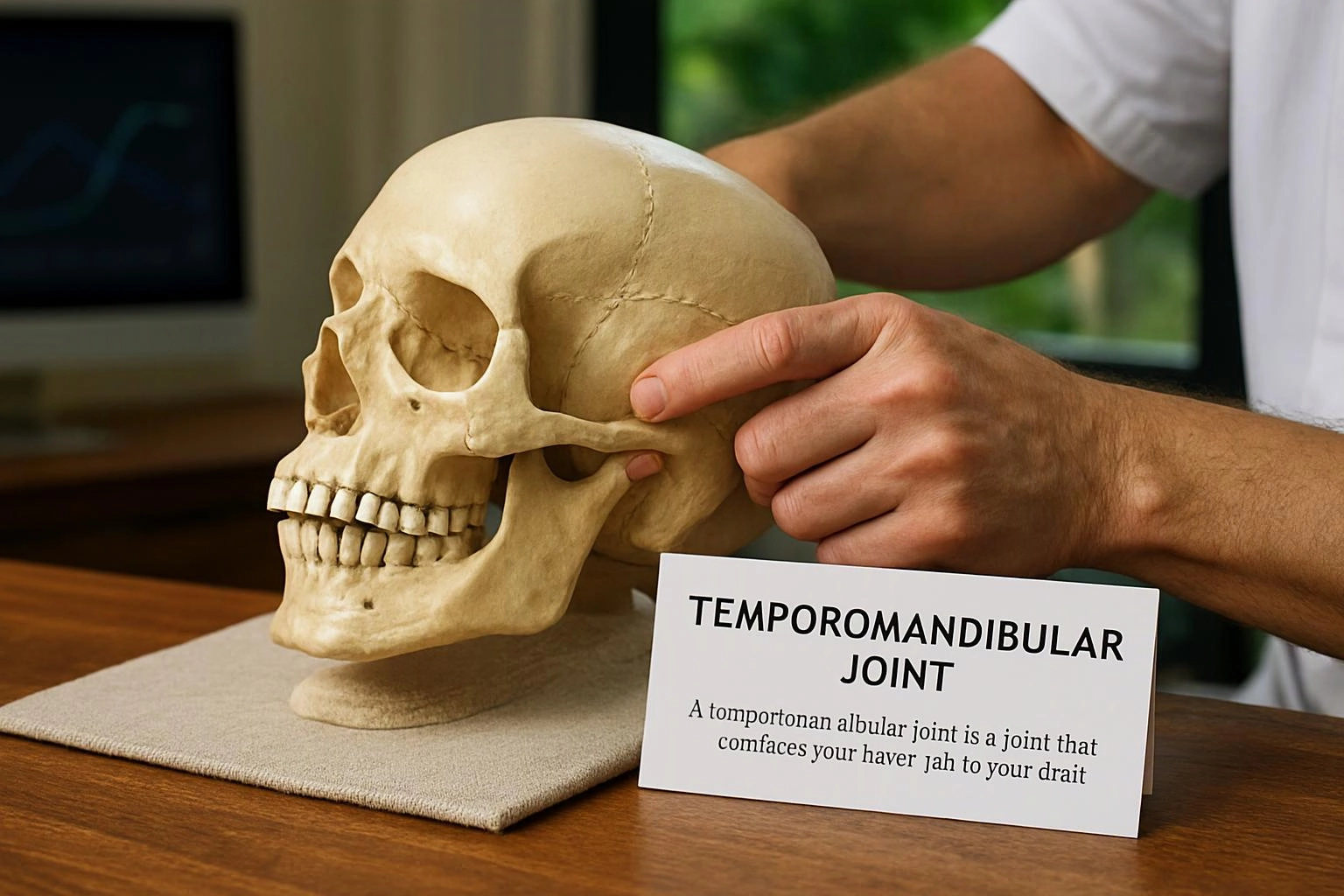
A temporomandibular joint is a joint that connects your lower jaw to your skull near your ear. It allows your jaw to move when you talk, chew, and yawn. Muscles guide its movement, while a small disc sits between the bones within the joint.
Quick Facts About Temporomandibular Joint
- Category
- Jaw joint
- Used for
- Jaw movement
- Common confusion
- TMJ is the joint, not the disorder.
- Also called
- Jaw Joint, TMJ
- Often discussed with
- TMJ Treatment
Key Takeaways About Temporomandibular Joint
- The joint both rotates and slides during jaw movement.
- Jaw movement depends on coordinated muscle action.
- TMJ names the joint, while TMD names a group of disorders.
How Temporomandibular Joint Works
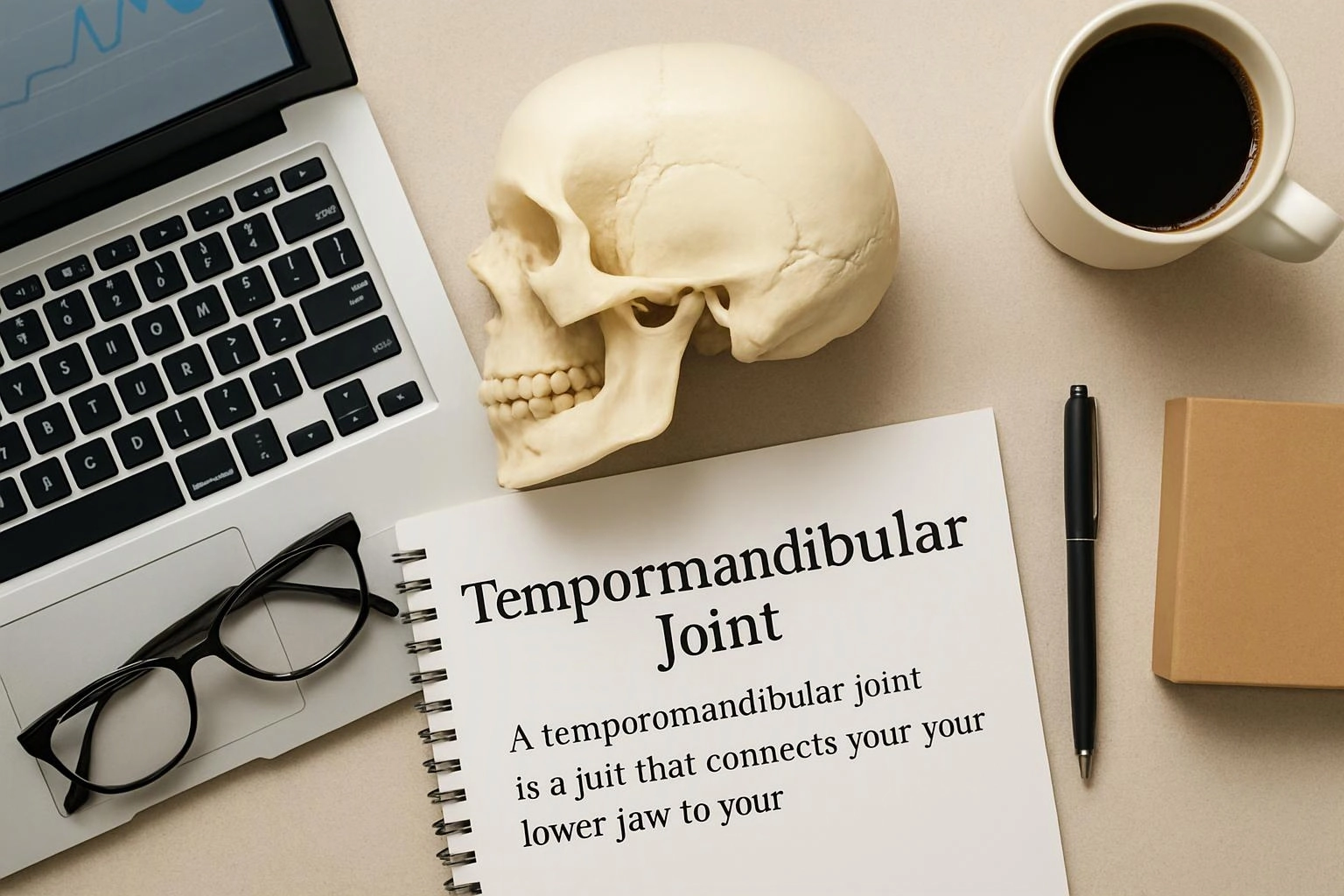
The temporomandibular joint combines rotation and sliding to move your jaw. As your mouth opens, the rounded end of the lower jaw turns and then glides along the skull. The movements work together to create the opening you use when eating. Related service: TMJ Treatment.
Related glossary terms: Range of Motion, Muscle Spasm, Myofascial Pain Syndrome.
A disc inside the joint helps the surfaces move against each other. The disc also helps spread pressure during jaw movement. Its position changes as the jaw opens and closes.
Jaw muscles provide the force for these movements. Your jaw can also move forward and from side to side. Those motions help you shift food as you chew.
TMJ is an abbreviation for the joint itself. TMD refers to disorders that affect the jaw joints or nearby muscles. People sometimes use TMJ when they mean a jaw disorder, so the context matters.
From the Advanced Injury Care Clinic team
When we discuss TMJ treatment, we ask where you notice discomfort and which jaw movements bring it on. We also look at how your jaw moves. Those details help us describe the problem clearly rather than relying on the word TMJ alone.
Temporomandibular Joint in Practice: A Real-World Example
A person seeking TMJ treatment notices discomfort when chewing. The person describes the location and movement involved, giving the care team a clearer picture of the concern.
Related Services
Related Terms
Range of Motion
Range of Motion is a measure of how far a joint moves in a given direction.
Muscle Spasm
A muscle spasm is an involuntary tightening of a muscle that you can't control at the moment it happens.
Myofascial Pain Syndrome
Myofascial Pain Syndrome is a muscle pain condition linked to sensitive spots called trigger points.
Cervical Spine
The cervical spine is the section of your backbone in your neck that supports your head and allows it to move.
Advanced Injury Care Clinic
Have Questions About Temporomandibular Joint?
Contact Advanced Injury Care Clinic for practical guidance on Temporomandibular Joint and related chiropractor work in Hermitage.