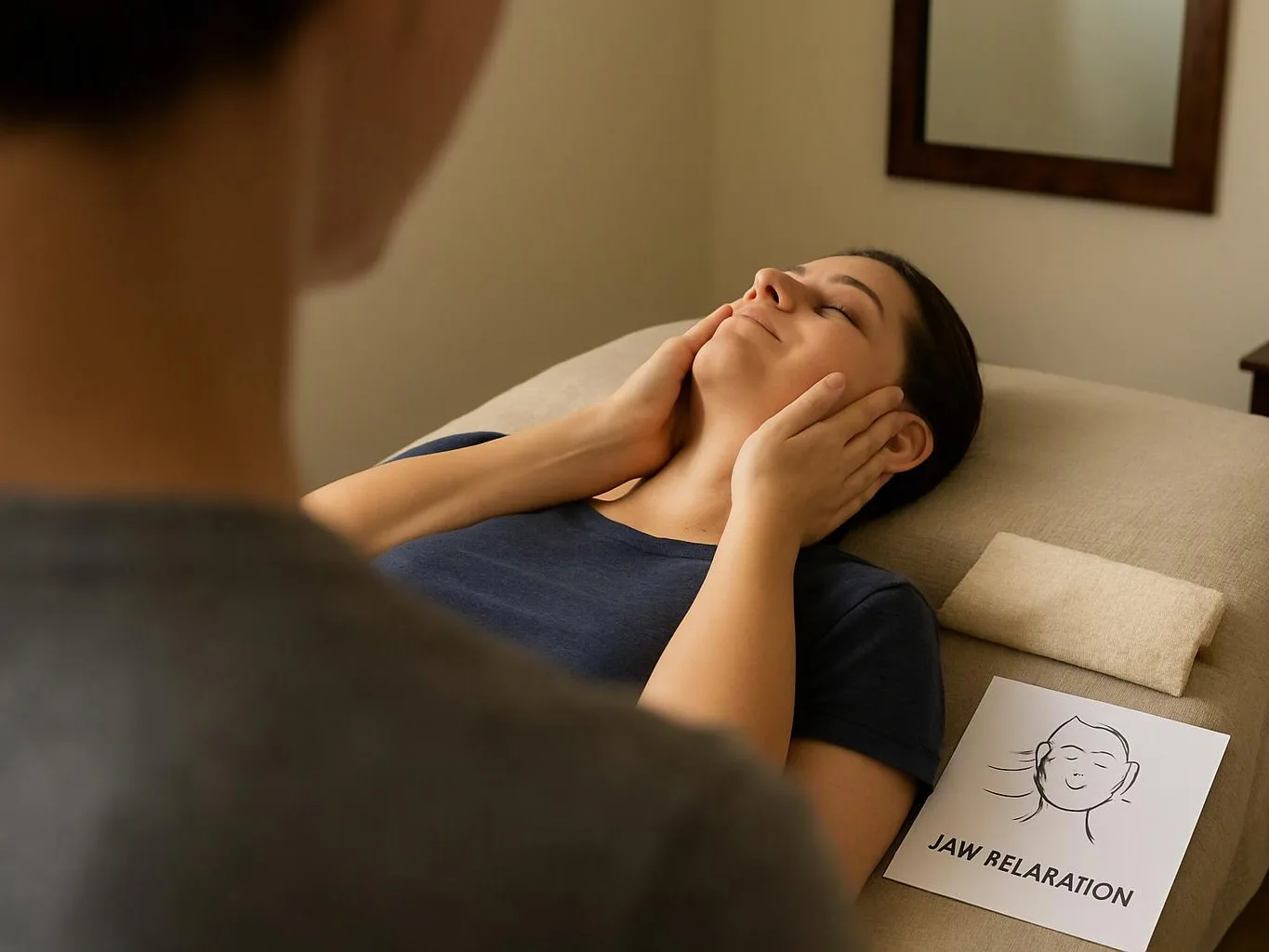
Discuss symptoms and history
We record jaw pain, clicking, locking, headaches, neck symptoms, prior injuries, and relevant medical history.
Jaw pain, clicking, and limited movement can affect eating and speaking. We provide individualized care after a clear injury evaluation.
A focused review can clarify whether jaw pain connects with neck tension, injury, or TMJ dysfunction.
An individualized plan gives you specific care steps instead of a generic jaw exercise list.
Patient education helps you recognize movements or habits that may worsen clicking and strain.
TMJ treatment is care that evaluates jaw joint pain, muscle tension, clicking, and limited mouth movement.

Jaw-focused care begins with the symptoms that affect your daily life. We ask about chewing, speaking, headaches, neck pain, clicking, locking, and any accident or workplace injury. Cost depends on the evaluation needs, the symptoms involved, any clinically indicated testing, and the care discussed after findings are reviewed. A low-cost visit that skips the history or jaw movement assessment may leave the main problem unclear. We explain the recommended approach before treatment and offer a free consultation as an entry point. Our team also considers related spinal movement and neurological concerns because jaw symptoms can appear with neck tension or injury. Results vary, so the right plan depends on your examination and medical history.
We record jaw pain, clicking, locking, headaches, neck symptoms, prior injuries, and relevant medical history.
We assess jaw motion and related musculoskeletal findings to identify issues that need closer attention.
Our medical team discusses possible diagnostic testing when the history and examination support it.
We explain the findings, recommended approach, and expected care steps before treatment begins.
Follow-up discussions compare symptoms and movement so the plan can reflect your response to care.
Bring details that help us connect your jaw symptoms with injury, movement, and daily habits.
We explain jaw findings and the recommended care approach before treatment begins.
We adapt jaw care discussions to each patient's history, concerns, and examination findings.
We connect chiropractic adjustments, rehabilitation, and therapeutic exercise to the patient's jaw-related functional needs.

Dr. Roberts was amazing. She was very thorough with her examination and questions. I felt like she truly cared and wanted to help

Dr. Robert’s was helpful and informative on the resources I had and what my injuries were. I am confident I will be feeling better soon and that my case will be successful!!

Great service , The doctor an her team is super helpful always nice . Always willing to help in anyway an they make sure each visit your comfortable an get the help that you need . The doctor makes you feel safe an has a caring soul makes you feel so welcomed ❤️ Jose always has a smile on his face an is very helpful always . Your sure to leave happy an with a smile . - KYSHAUNA DUNCAN
Your first deliverable is a review of your symptoms, injury history, and possible testing needs. Schedule a consultation with Advanced Injury Care Clinic to discuss jaw movement and related pain.

A collision can leave jaw pain alongside whiplash, neck pain, or headaches. The injury history matters because jaw movement may change after impact, even when the main pain starts elsewhere. Write down the symptoms and their start date, then request an evaluation so our team can document the condition and discuss possible testing.
Clicking that appears during chewing can become more concerning when pain, locking, or reduced opening follows. Our team looks at the movement pattern and asks about habits that place strain on the joint. Bring a short symptom record to your consultation, including which foods or movements make the jaw react.
Jaw discomfort may occur with neck pain, headaches, or restricted spinal movement. These symptoms need a connected review because treating one area without checking the others can leave questions unanswered. We discuss your medical history and examination findings, then explain which care options fit the problem found.