
What Is a Muscle Spasm?
A muscle spasm is a sudden, involuntary tightening of muscle fibers that can feel firm, painful, or difficult to relax. A spasm may affect a small area, such as a neck muscle, or a larger region, such as the lower back. Muscle fatigue, strain, irritation, or sustained posture can contribute to the response.
Quick Facts About Muscle Spasm
Category
Involuntary muscle response.
Used for
Describing localized muscle tightening.
Common confusion
Often confused with a muscle strain.
Also called
Muscle cramp, Involuntary muscle contraction
Often discussed with
Soft Tissue Therapy, Trigger Point Therapy
Key Takeaways About Muscle Spasm
- Spasms involve involuntary tightening, not simply ordinary muscle soreness.
- Gentle soft tissue work may address tension around the affected area.
- A spasm is not the same as a strain or a nerve compression.
How Muscle Spasm Works
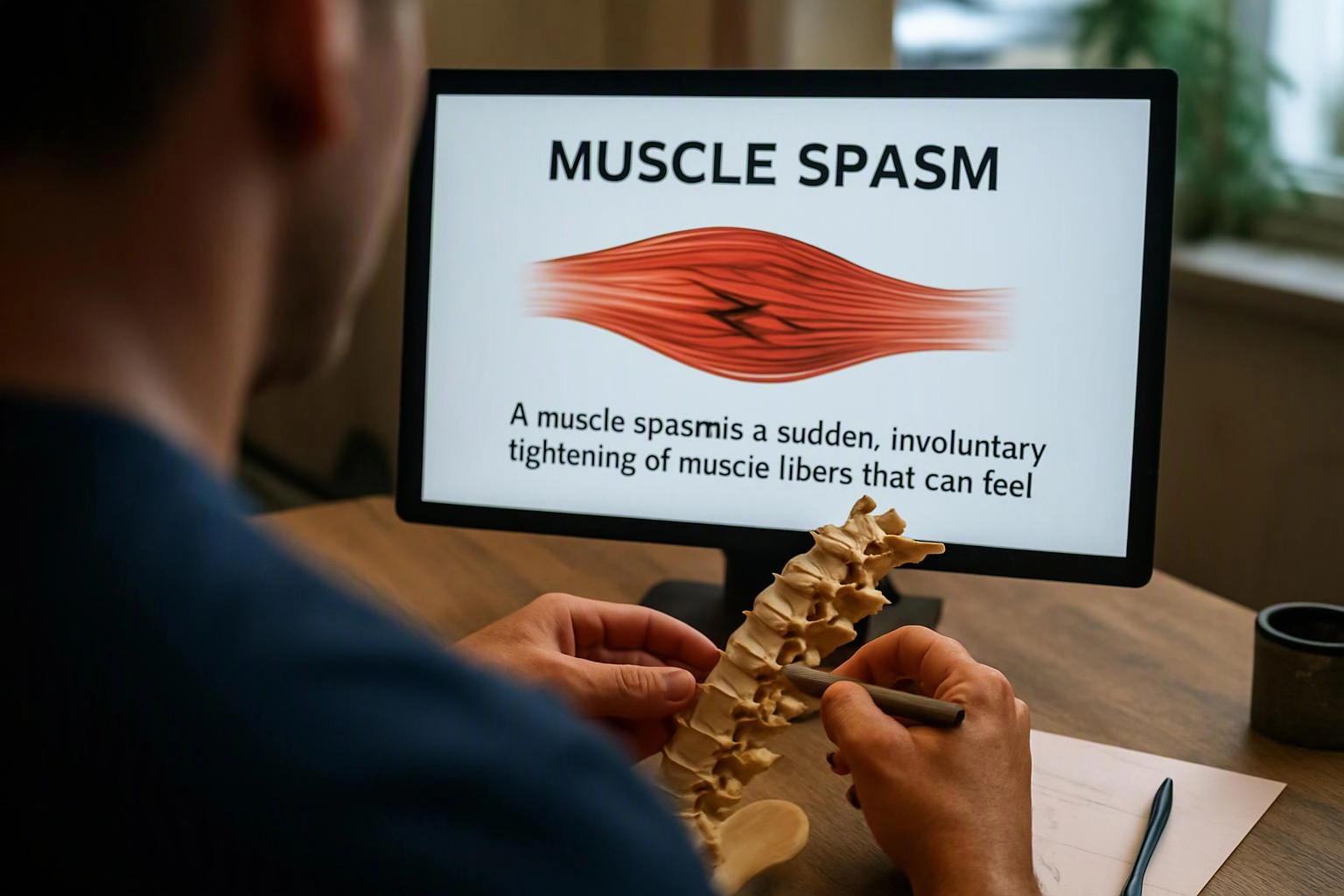
Muscle spasm begins when muscle fibers contract without a person choosing to tighten them. The affected tissue may feel hard, tender, or resistant to movement. The contraction can settle quickly, or nearby muscles may remain tense after the initial response.
Related glossary terms: Strain, Adhesion, Range Of Motion.
Clinicians consider the location, tenderness, movement pattern, and surrounding tissue when describing a spasm. A trigger point may produce a focused area of sensitivity within tight muscle tissue. The range of motion around the area also gives practical information, because restricted movement can show how muscle tension affects a joint or nearby body region.
From the Advanced Injury Care Clinic team
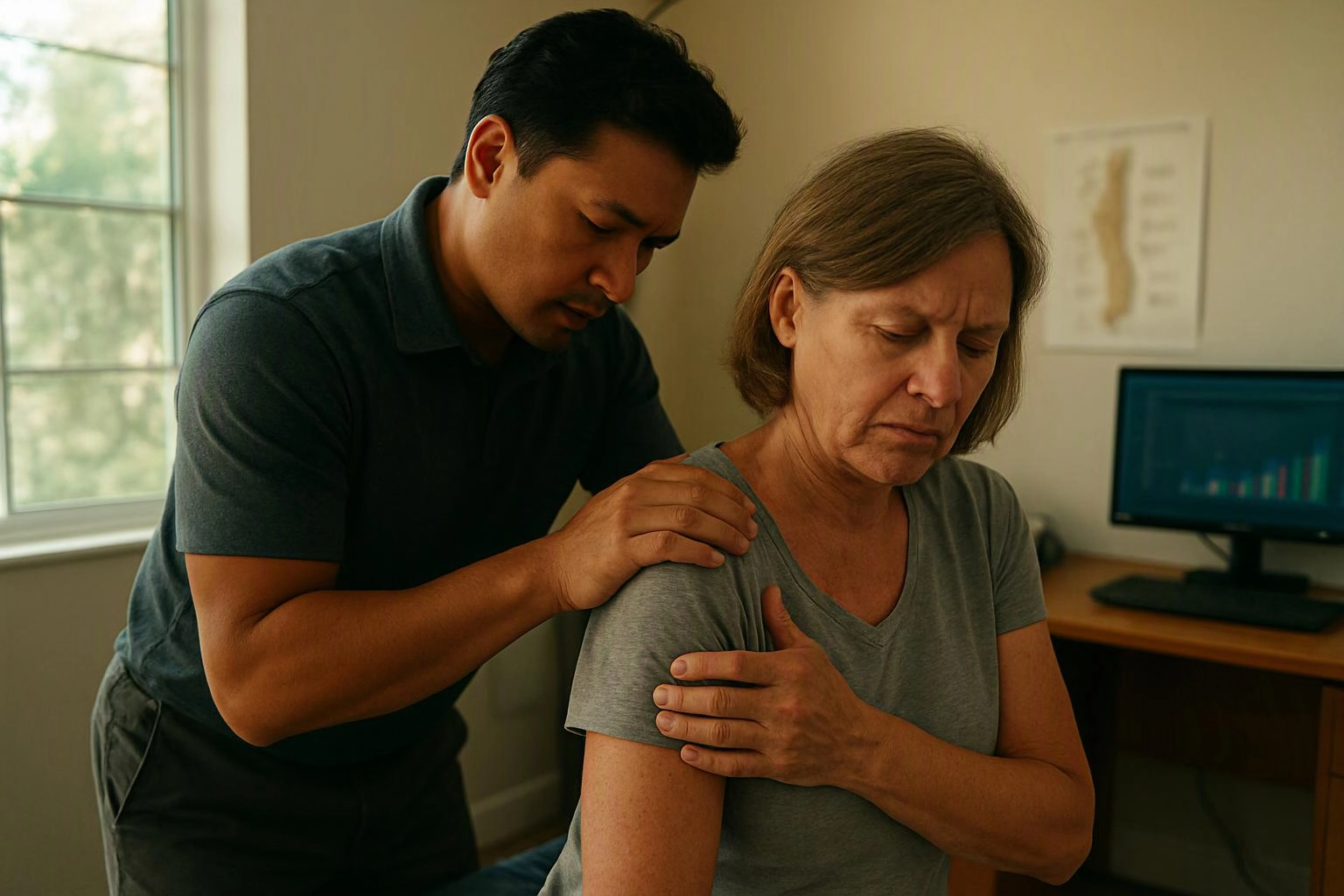
When we assess a muscle spasm, we check the painful area, nearby joints, posture, and movement quality. Our team uses that information to guide soft tissue therapy toward restricted or guarded tissue. We also distinguish muscle tightness from signs that may point to a strain or nerve-related condition.
Muscle Spasm in Practice: A Real-World Example
A person develops a lower-back muscle spasm after holding one position during a long drive. Soft Tissue Therapy may focus on the tense muscles and nearby tissue while movement findings help guide the session.
Related Services
Related Terms
Strain
Strain is an injury to a muscle or tendon caused by overstretching or tearing tissue. A…
Adhesion
Adhesion is a band of fibrous connective tissue that can form between tissues after injury, inflammation…
Range Of Motion
Range Of Motion is the available movement at a joint or body region, measured by how…
Advanced Injury Care Clinic
Have Questions About Muscle Spasm?
Contact Advanced Injury Care Clinic for practical guidance on Muscle Spasm and related chiropractor work in Hermitage.