
What Is Lateral Flexion?
Lateral Flexion is a bending movement that brings one side of the body closer to the other. The movement may occur in the neck, upper back, or lower back. The spine moves sideways in relation to its usual upright position. Lateral flexion describes direction, not a specific exercise or treatment.
Quick Facts About Lateral Flexion
Category
Spinal movement
Used for
Movement control and exercise
Common confusion
Side bending is not spinal rotation
Also called
Side bending, Spinal side bending
Often discussed with
Therapeutic Exercise
Key Takeaways About Lateral Flexion
- The movement travels sideways, not forward or backward.
- Exercises may train control, strength, or comfortable motion.
- Lateral flexion is not the same as rotation.
How Lateral Flexion Works
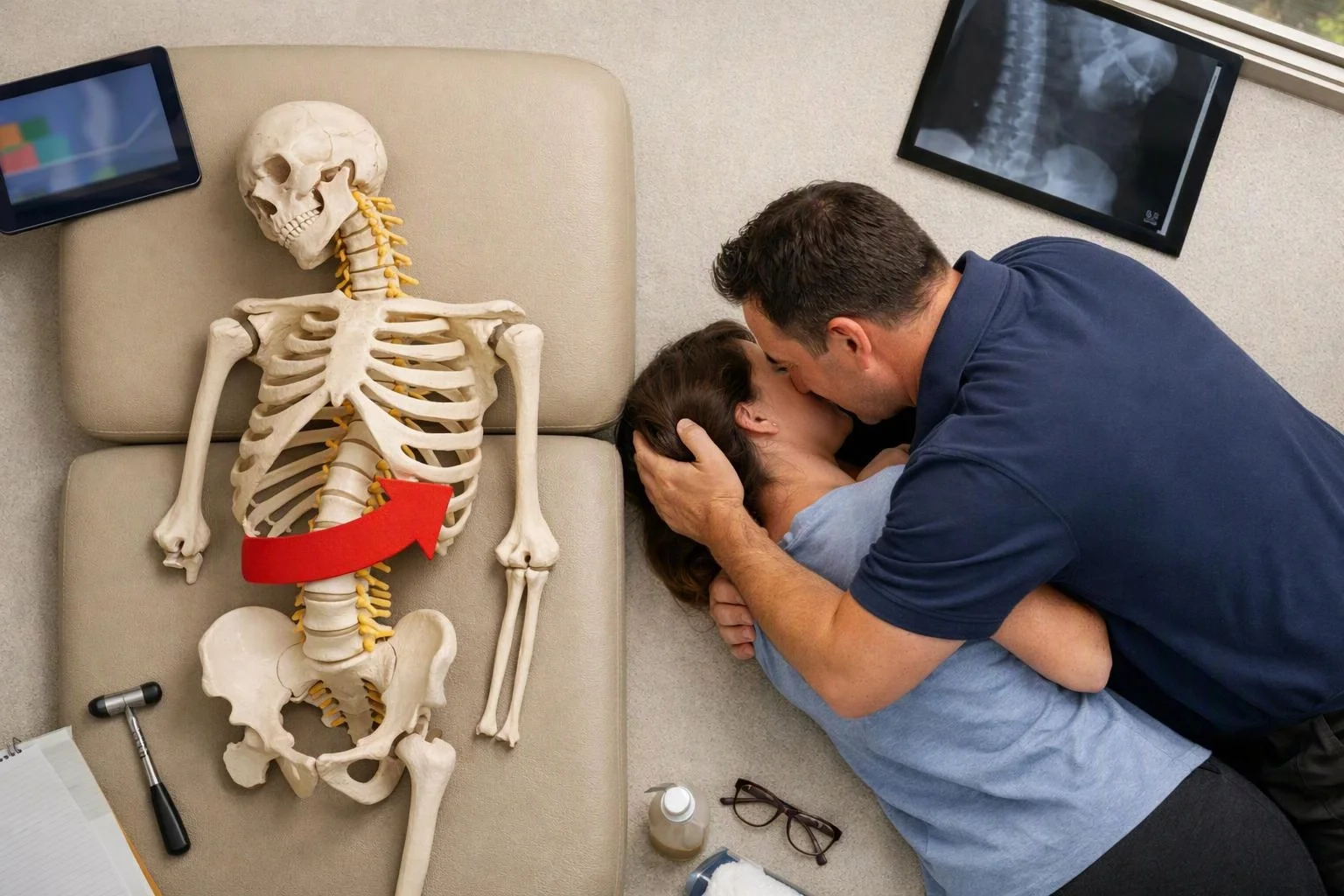
Lateral flexion occurs when the spine bends toward the left or right side. The neck, thoracic spine, and lumbar spine can each contribute to this motion. Muscles on the side of the trunk help guide the movement and keep the body steady.
Related glossary terms: Range of Motion, Thoracic Spine, Lumbar Spine.
Therapeutic exercise may use side bending to practice controlled motion. A clinician may watch the direction of the trunk, the position of the pelvis, and the quality of the movement. Range of motion describes how far a person moves, while control describes how smoothly the person manages that motion.
How It Differs From Rotation
Rotation turns the body around its vertical line. Lateral flexion shifts the body sideways without making turning the main action. These movements can occur together during daily tasks, but they describe different directions.
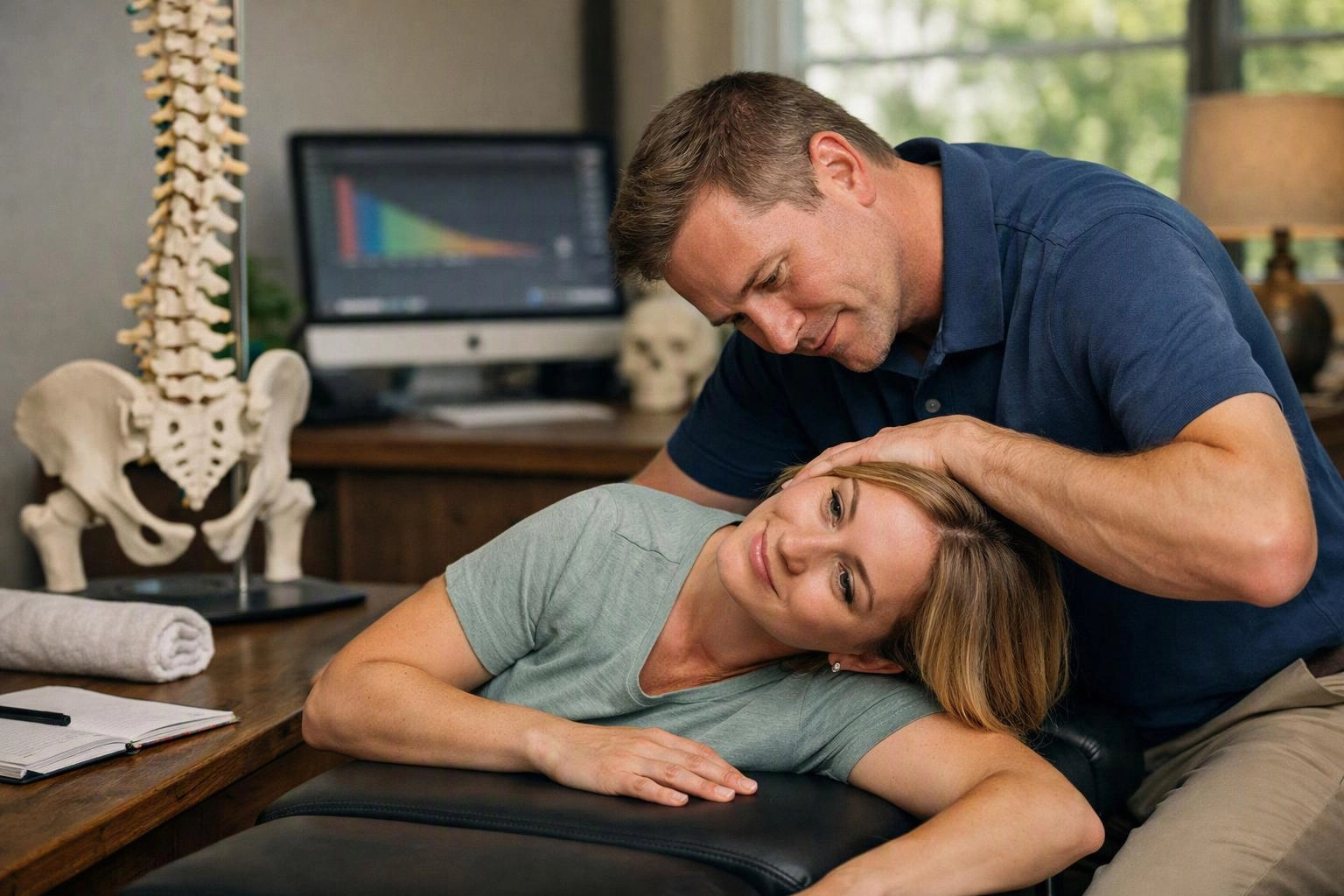
From the Advanced Injury Care Clinic team
When we use therapeutic exercise, we check whether the trunk bends from the intended area. We also watch pelvic control and breathing so the exercise reflects the person’s movement goals. Our team adjusts the position or resistance when another body region starts doing most of the work.
Lateral Flexion in Practice: A Real-World Example
A person may perform a standing side bend during therapeutic exercise. The person keeps the feet steady and moves the rib cage toward one hip while maintaining controlled motion.
Related Services
Related Terms
Range of Motion
Range of Motion is the amount a joint can move in different directions. It describes movement…
Thoracic Spine
Thoracic Spine is the middle section of the spinal column, located between the neck and lower…
Lumbar Spine
The lumbar spine is the lower section of the back, located between the thoracic spine and…
Cervical Spine
Cervical Spine is the upper part of the backbone that supports the head and allows neck…
Advanced Injury Care Clinic
Have Questions About Lateral Flexion?
Contact Advanced Injury Care Clinic for practical guidance on Lateral Flexion and related chiropractor work in Hermitage.