
What Is Torticollis?
Torticollis is a neck condition that causes the head to tilt toward one side while the chin turns toward the other. The pattern may result from tight or shortened neck muscles, joint restriction, or an underlying neurological or structural issue. In children, torticollis may appear at birth or develop later.
Quick Facts About Torticollis
Category
Neck posture and movement condition
Used for
Describing restricted or uneven neck positioning
Common confusion
Often mistaken for simple muscle tension
Also called
Wry neck
Often discussed with
Pediatric Chiropractic Care
Key Takeaways About Torticollis
- Head tilt and chin rotation create the characteristic posture.
- The condition may involve muscles, joints, nerves, or structure.
- Torticollis is not the same as ordinary neck soreness.
How Torticollis Works
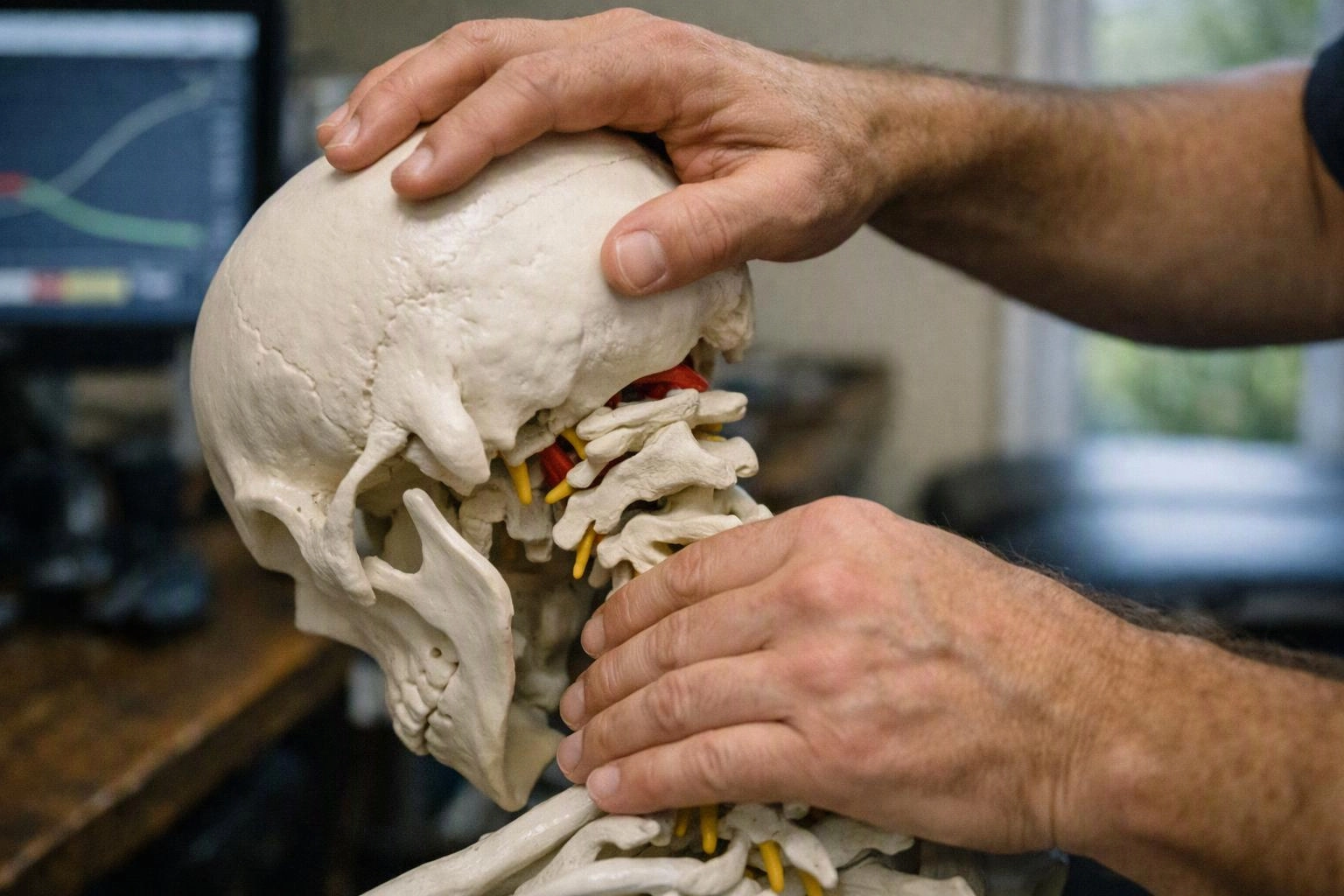
Torticollis changes the balance between neck muscles and joints, which can pull the head into an uneven position. One side may feel shorter or more active, while movement toward the opposite side becomes limited. The visible tilt is a sign of altered neck control, not a complete explanation of its cause.
Related glossary terms: Cervical Spine, Muscle Spasm, Range Of Motion.
Assessment considers head position, active movement, passive movement, muscle tone, and related body patterns. In pediatric care, the child’s age, birth history, development, and daily positioning can help place the neck findings in context. Range of motion describes how far the head turns or tilts. A clinician may also screen for signs that call for evaluation beyond routine musculoskeletal care.
From the Advanced Injury Care Clinic team
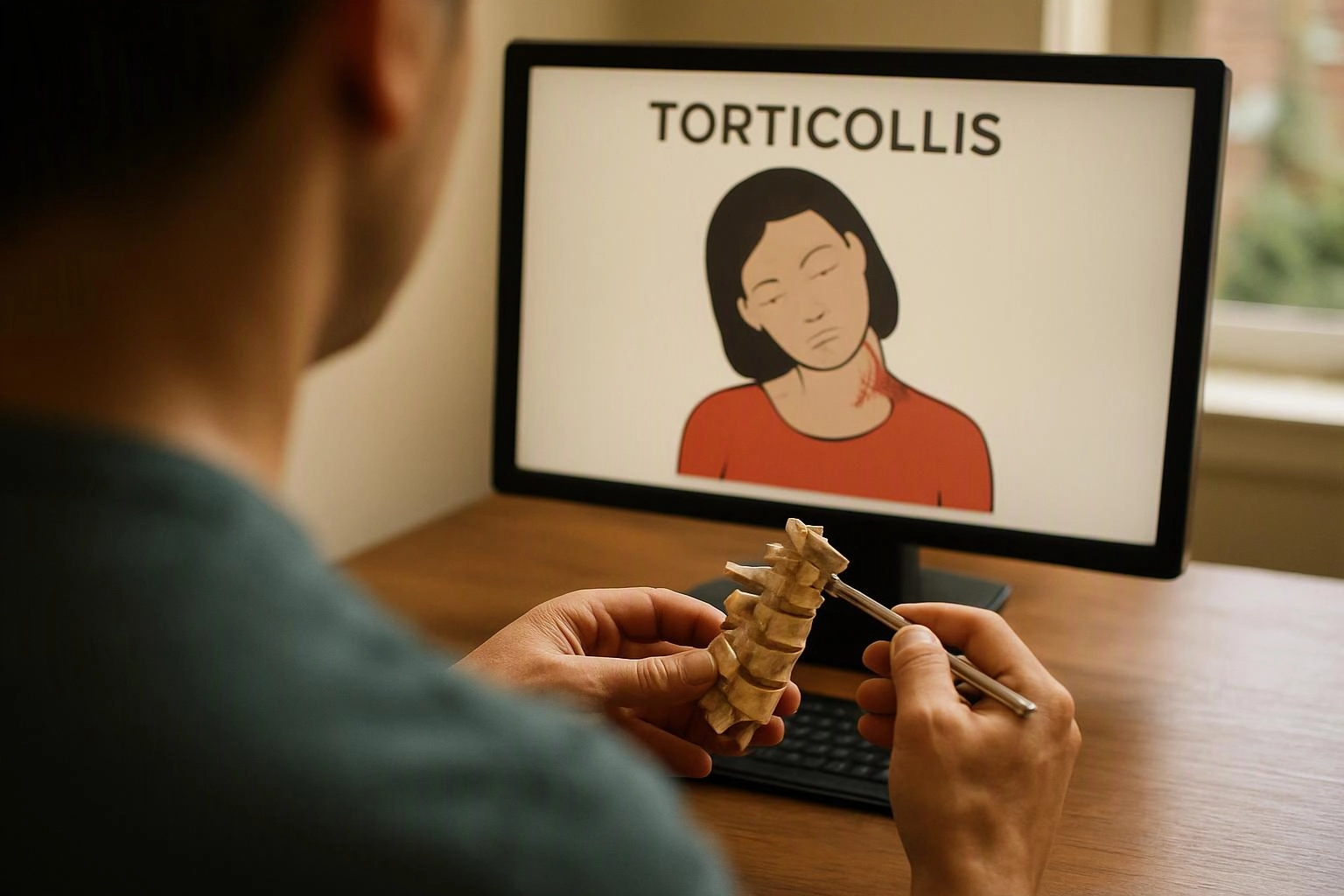
When we assess torticollis in pediatric chiropractic care, we observe head position, neck motion, muscle balance, and how the child responds to gentle examination. We also consider positioning during feeding, sleep, and play. Our team separates movement findings from signs that may require evaluation by another healthcare professional.
Torticollis in Practice: A Real-World Example
A baby may keep the head turned toward one shoulder and show less interest in looking the other way during play. In pediatric chiropractic care, the assessment focuses on movement, muscle balance, and positioning patterns.
Related Services
Related Terms
Cervical Spine
Cervical Spine is the upper section of the spinal column located in the neck. The cervical…
Muscle Spasm
A muscle spasm is a sudden, involuntary tightening of muscle fibers that can feel firm, painful…
Range Of Motion
Range Of Motion is the available movement at a joint or body region, measured by how…
Joint Mobilization
Joint mobilization is a hands-on chiropractic technique that applies controlled movement to a joint. The clinician…
Advanced Injury Care Clinic
Have Questions About Torticollis?
Contact Advanced Injury Care Clinic for practical guidance on Torticollis and related chiropractor work in Hermitage.