
What Is Atlas?
Atlas is the uppermost vertebra in the neck and the first section of the cervical spine. This ring-shaped bone supports the base of the skull and forms a joint with the axis below it. Its structure allows controlled head movement while helping protect nearby nerves and other sensitive tissues.
Quick Facts About Atlas
Category
Upper cervical vertebra
Used for
Supporting the skull and guiding head movement
Common confusion
Confused with the entire neck or cervical spine
Also called
C1 vertebra, Atlas vertebra
Often discussed with
Neck Pain Treatment
Key Takeaways About Atlas
- Atlas is a ring-shaped vertebra without a typical vertebral body.
- Its joints help guide head movement and distribute load.
- Atlas is not the same structure as the entire cervical spine.
How Atlas Works
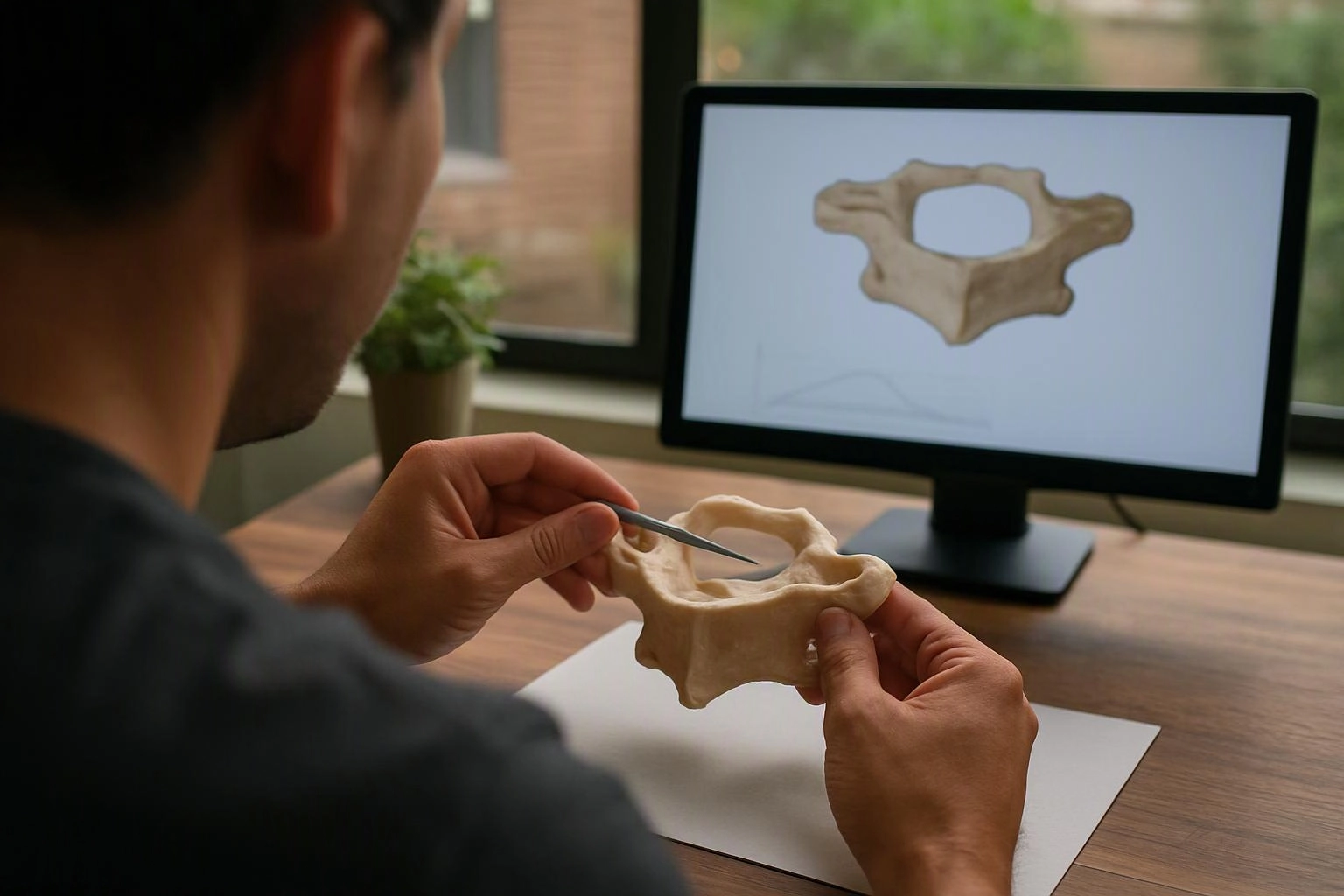
Atlas works as a ring-shaped connection between the skull and the rest of the neck. Its upper surfaces meet the base of the skull, while its lower connection meets the axis. This arrangement supports the head and helps guide nodding and other controlled movements.
Related glossary terms: Cervical Spine, Joint Mobilization, Forward Head Posture.
The atlas differs from most other vertebrae because it does not have a typical vertebral body. Strong ligaments and nearby muscles help hold the area in position. During a neck pain evaluation, a clinician may consider atlas alignment as part of the broader cervical spine, along with posture, joint motion, muscle tension, and symptoms. Atlas findings do not explain every neck complaint, so assessment considers the whole region.
From the Advanced Injury Care Clinic team
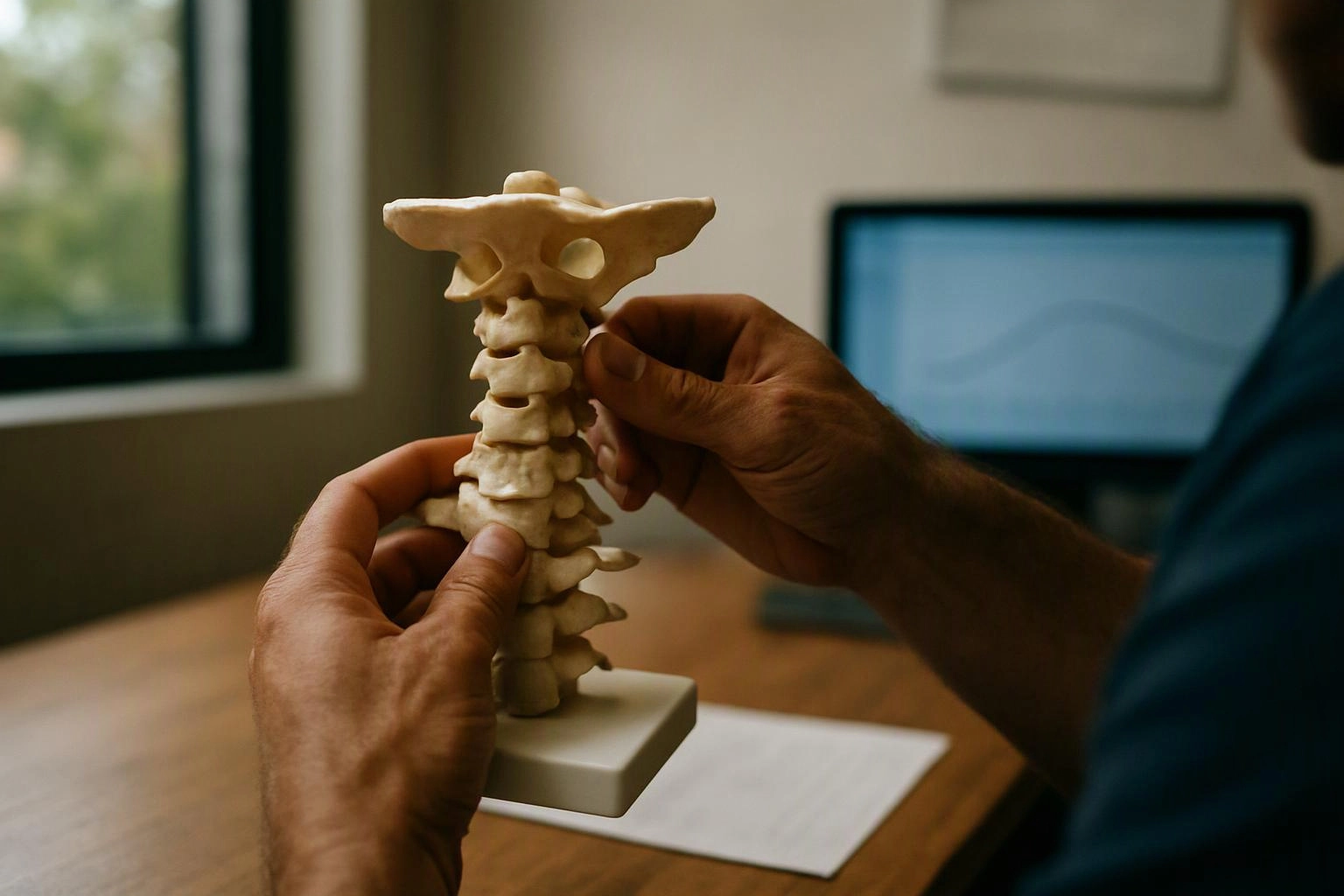
When we evaluate atlas-related findings during neck pain treatment, we examine head position, neck motion, muscle tension, and nearby joint function together. Our team uses the atlas as one part of the clinical picture, not as a standalone explanation for every symptom.
Atlas in Practice: A Real-World Example
A person with neck pain after prolonged desk work may show restricted upper-neck motion and increased muscle tension near the atlas. The examination considers those findings alongside posture and movement patterns before care is planned.
Related Services
Related Terms
Cervical Spine
Cervical Spine is the upper section of the spinal column located in the neck. The cervical…
Joint Mobilization
Joint mobilization is a hands-on chiropractic technique that applies controlled movement to a joint. The clinician…
Forward Head Posture
Forward Head Posture is a postural pattern in which the head rests in front of the…
Muscle Spasm
A muscle spasm is a sudden, involuntary tightening of muscle fibers that can feel firm, painful…
Advanced Injury Care Clinic
Have Questions About Atlas?
Contact Advanced Injury Care Clinic for practical guidance on Atlas and related chiropractor work in Hermitage.