After a Car Accident: Symptoms to Watch for and What to Share at an Evaluation
Whiplash symptoms after a car accident can include neck pain, stiffness, headaches, shoulder pain, dizziness, and changes in concentration. Advanced Injury Care Clinic checks your symptoms, accident details, and movement limits so you know what to share during an evaluation.
Request an EstimateWhy Whiplash Symptoms Can Appear After a Car Accident
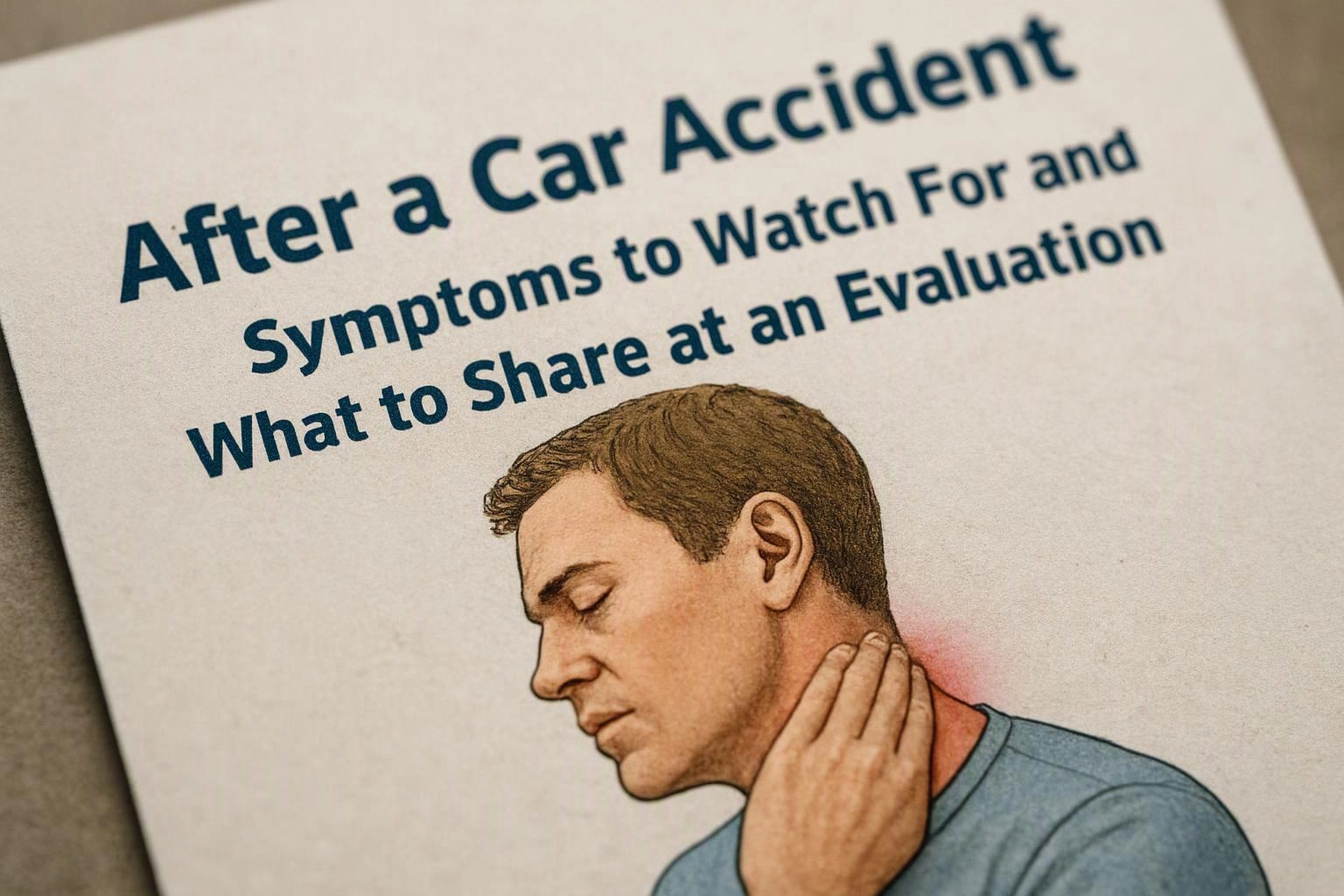
Whiplash symptoms can appear immediately or later because the neck and nearby tissues may react after the collision.
Whiplash is a neck strain caused by sudden movement of the head and cervical spine. The collision force can affect muscles, ligaments, and other soft tissue.
Some people notice pain right away. Others develop delayed pain as muscle tenderness, swelling, or movement limits become clearer.
We review the accident details and your symptom onset during an injury evaluation. That review helps us understand how the crash affected your neck, shoulders, upper back, and arms.
Before You Leave the Crash Scene
Crash scene steps help protect your health and preserve useful accident details. Focus first on safety, emergency response, and clear records.
Do not ignore new symptoms because vehicle damage looks minor. Share any concern with emergency responders and follow their guidance.
Symptoms to Watch for in the Hours and Days After a Crash
Common whiplash symptoms include neck pain, stiffness, headaches, shoulder pain, dizziness, and arm sensations.
Neck pain may spread toward the shoulders or upper back. Neck stiffness can limit turning, looking up, or looking down.
A headache after a crash may begin near the base of the skull or feel connected to neck tension. Shoulder pain and upper back pain can also appear after a soft tissue injury.
Dizziness, numbness, tingling, and other arm symptoms deserve attention. Changes in concentration, sleep problems, and pain that worsens with movement can affect work and daily activities.
We ask when each symptom started and whether it is changing. Those details help us assess the neck injury and decide what needs further medical review.
Red Flags That Need Prompt Medical Attention
Red flags after a crash need prompt medical attention because they may signal a serious injury.
Call emergency services or seek urgent care when these symptoms appear. Do not drive yourself if you feel faint, confused, or unsafe.
How to Track Changes Before an Evaluation
A symptom record helps show when symptoms began, what changes them, and how they affect daily activities.
A symptom diary can include pain location, pain intensity, and the movements that increase discomfort. Note whether symptoms affect sleep, work, driving, or household tasks.
Record changes in range of motion, balance, concentration, and arm sensations. Also note new symptoms and any care you received after the crash.
Bring the record to your evaluation. Clear notes help us compare your symptoms over time and shape the next steps.
During an Auto Accident Injury Evaluation
An auto accident injury evaluation reviews your medical history, current symptoms, and physical movement limits.
Our team connects your collision details with the findings from the physical examination. We also ask about neurological symptoms and changes in daily function.
What Information to Bring to an Auto Injury Evaluation
Bring accident details, symptom notes, medical records, current medications, imaging reports, and information about daily limits.
An accident report can clarify the collision record and vehicle positions. Medical records and imaging reports show care you already received.
Bring your medication list and insurance information as well. Your symptom notes should explain pain location, movement limits, sleep disruption, and work limitations.
These details help our team build a complete picture of your auto accident injuries. They also help us discuss appropriate follow-up care and your care plan.
After the Evaluation: Follow Your Care Plan
A care plan gives you clear steps for monitoring symptoms and supporting recovery. Follow the instructions provided by your healthcare team.
Keep noting symptom changes between visits. Contact the appropriate medical service when symptoms become severe, new red flags appear, or your condition changes quickly.
How Advanced Injury Care Clinic Reviews Accident-Related Symptoms
Advanced Injury Care Clinic reviews accident-related symptoms through symptom tracking, red-flag screening, accident details, and physical assessment.
We evaluate the pattern of your neck pain, shoulder pain, back pain, dizziness, and other concerns. Our team also considers range of motion, muscle tenderness, sleep disruption, and daily activities.
Our clinical evaluation supports a focused discussion about Auto Accident Injury Treatment, Whiplash Treatment, neck pain treatment, and back pain treatment. We explain what we find and outline the next step in your care plan.
For more information about our Auto Accident Injury Treatment, contact our team through the clinic.
Questions About Whiplash Symptoms After a Crash
Can whiplash symptoms start days after a car accident?
Yes, whiplash symptoms can start later because soft tissue irritation and muscle tension may develop after the collision. Advanced Injury Care Clinic reviews the timing and pattern of delayed symptoms during an evaluation.
What should I do if my neck pain gets worse after a crash?
Worsening neck pain after a crash should be reported to a healthcare service for guidance. Seek prompt medical attention when severe headache, weakness, trouble speaking, chest pain, or breathing difficulty also appears.
Can whiplash cause headaches and dizziness?
Yes, whiplash can occur with headaches and dizziness after a crash. Share these symptoms during an evaluation, especially when they affect walking, concentration, or daily activities.
Should I get evaluated if I don't feel pain right away?
Yes, an evaluation can help identify delayed symptoms after a car accident, even when pain is not present at first. Track changes and share any later stiffness, headache, dizziness, or movement limits.
Advanced Injury Care Clinic can review your accident-related symptoms and help you understand what to share during care.
Contact Advanced Injury Care Clinic