When Headaches or Migraines May Be Connected to Neck Symptoms
Headaches and migraines may be connected to neck tension, restricted movement, or irritated nerves, but not every headache comes from the neck. Advanced Injury Care Clinic checks your symptoms, neck function, and warning signs before discussing appropriate care.
Request an Estimate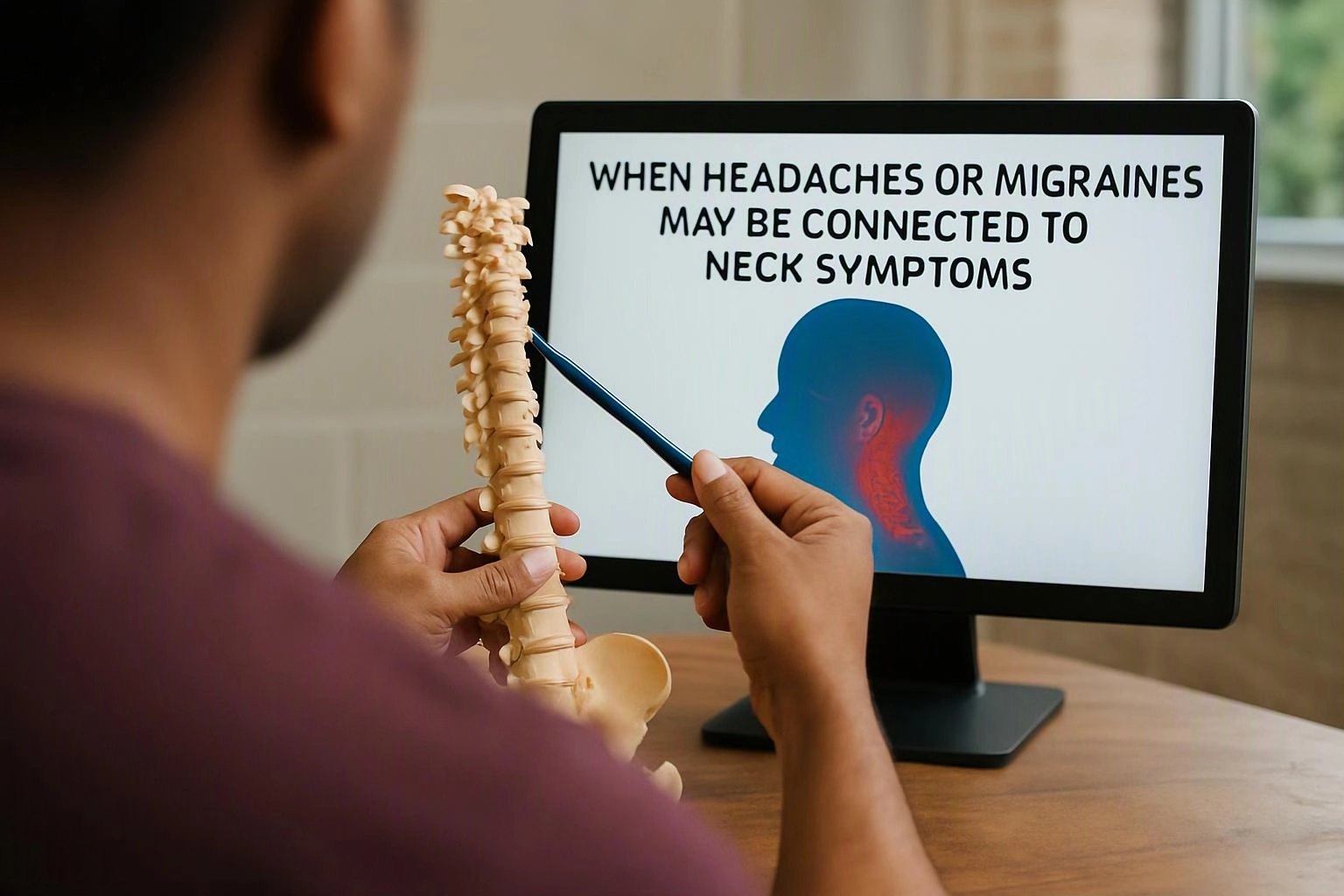
Can Neck Symptoms Contribute to Headaches or Migraines?
Yes, neck symptoms can contribute to some headaches, while migraines can also occur without a neck cause. We assess the full symptom pattern before connecting headache pain to the neck.
Neck pain and neck tension can affect muscles, joints, and nerves around the upper spine. Pain from those areas may travel into the head as referred pain.
A cervicogenic headache is a headache linked to the neck. A migraine is a neurological pain condition that can include head pain without a neck source.
Signs Your Headache May Be Connected to Your Neck
Headaches may be neck-related when head pain appears with clear neck or upper-body changes. These signs can help you describe your symptoms during an evaluation.
We look at the full pattern because one symptom alone doesn't confirm the cause.
How Neck-Related Headaches Differ From Migraines
Neck-related headaches often track with neck movement or restricted motion, while migraines commonly involve neurological symptoms such as light sensitivity, sound sensitivity, or nausea. Symptoms can overlap, so we review the complete history.
A cervicogenic headache often begins near the neck or base of the skull. Neck movement may increase the pain, and limited motion may be easy to notice.
Migraine symptoms can include throbbing head pain, light sensitivity, sound sensitivity, and nausea. A migraine attack may occur with or without neck tightness, and some people experience migraine with aura.
Common Causes of Headaches With Neck Symptoms
Several musculoskeletal factors can connect head pain with neck symptoms. We consider these factors alongside your symptom history and injury history.
Common causes include the following:
When Should a New or Severe Headache Be Checked by a Doctor?
A new or severe headache needs prompt medical evaluation when it starts suddenly or occurs with neurological changes, fever, confusion, fainting, or a recent head injury. Emergency symptoms require urgent medical care before chiropractic treatment.
Seek urgent medical care for a sudden severe headache, especially when it feels different from past headaches. Head pain after a head injury also needs medical evaluation.
Red flags include weakness, vision changes, speech changes, confusion, fainting, or fever. We don't begin neck-focused care until urgent concerns have been addressed.
How Chiropractic Care May Address Neck-Related Headache Symptoms
Chiropractic care may address musculoskeletal factors that contribute to neck-related headaches. We review your history, examine neck movement, and choose care that matches your symptoms and safety needs.
Our chiropractic evaluation may include a neck assessment, movement checks, and a review of muscle tension. We may discuss a chiropractic adjustment when it fits your findings and safety needs.
Care may also focus on spinal mobility, posture, and muscle function. Our approach to headache treatment depends on whether your symptoms suggest a neck-related headache, migraine treatment needs, or medical evaluation.
Ways to Reduce Neck-Related Headache Triggers
Small changes can reduce strain when posture or sustained positions trigger neck symptoms. These steps support comfort but don't replace care for severe or changing headaches.
We can help you identify which daily habits appear linked to your headache triggers.
What We Check Before Recommending Care
We check the headache pattern, neck movement, injury history, and warning signs before recommending care. Our assessment helps separate possible neck-related pain from symptoms that need medical evaluation.
We ask about your headache history, including when symptoms began and what changes them. We also review pain location, frequency, neck range of motion, and neurological symptoms.
Your chiropractic evaluation helps us decide whether neck-focused care is appropriate. If the pattern raises concern, we direct you toward medical evaluation before treatment.
When Should You Consider a Chiropractor for Headaches?
Consider chiropractic care when recurring headaches occur with neck stiffness, limited movement, or upper back tension and no urgent warning signs are present. We can discuss whether neck-focused care fits your symptoms.
A chiropractic consultation may be useful when headaches follow certain neck positions or daily activities. Bring a clear symptom history so we can review possible headache triggers.
Chiropractic care isn't the right first step for every headache. Sudden or severe pain, new neurological symptoms, and head injury require medical attention first.
Questions About Headaches and Neck Symptoms
Can tight neck muscles cause headaches?
Advanced Injury Care Clinic sees that tight neck muscles can contribute to some headaches. Muscle tension may affect nearby joints and nerves, causing pain that spreads toward the head.
Can a chiropractor help with migraines?
A chiropractor may help address neck and muscle factors that occur with some migraines, but migraines don't always come from the neck. We review migraine symptoms and warning signs before discussing migraine treatment.
Can neck pain cause pain behind the eyes?
Neck pain can refer discomfort toward the head and sometimes behind the eyes. Pain behind the eyes can also have other causes, so changing, severe, or unusual symptoms need medical evaluation.
Should I see a doctor or chiropractor for a headache?
See a doctor first for a sudden severe headache, head injury, fever, confusion, fainting, weakness, vision changes, or speech changes. Chiropractic care may fit recurring headaches with neck symptoms when urgent warning signs aren't present.
Advanced Injury Care Clinic can review your headache pattern, neck function, and safety concerns with you. Contact us to discuss whether our approach fits your symptoms.
Contact Advanced Injury Care ClinicFree Consultations
Related Resources
Chiropractic Visit Cost Factors: Exams, Imaging, and Follow-Up Care
Brand vs BrandChiropractic Insurance Coverage: Questions to Ask Before Booking
Compared ToChiropractic Care vs. Massage Therapy: Which Should You Book?
Brand vs BrandWalk-In Chiropractic vs. Personalized Chiropractic Care