Sports Injury Treatment: Preparing for Your Appointment
Sports injury treatment appointments are easier to prepare for when you bring your injury history, symptom details, relevant records, activity goals, and questions; Advanced Injury Care Clinic uses this information to guide a chiropractic evaluation and care plan.
Request an EstimateWhat Should You Bring to a Sports Injury Treatment Appointment?
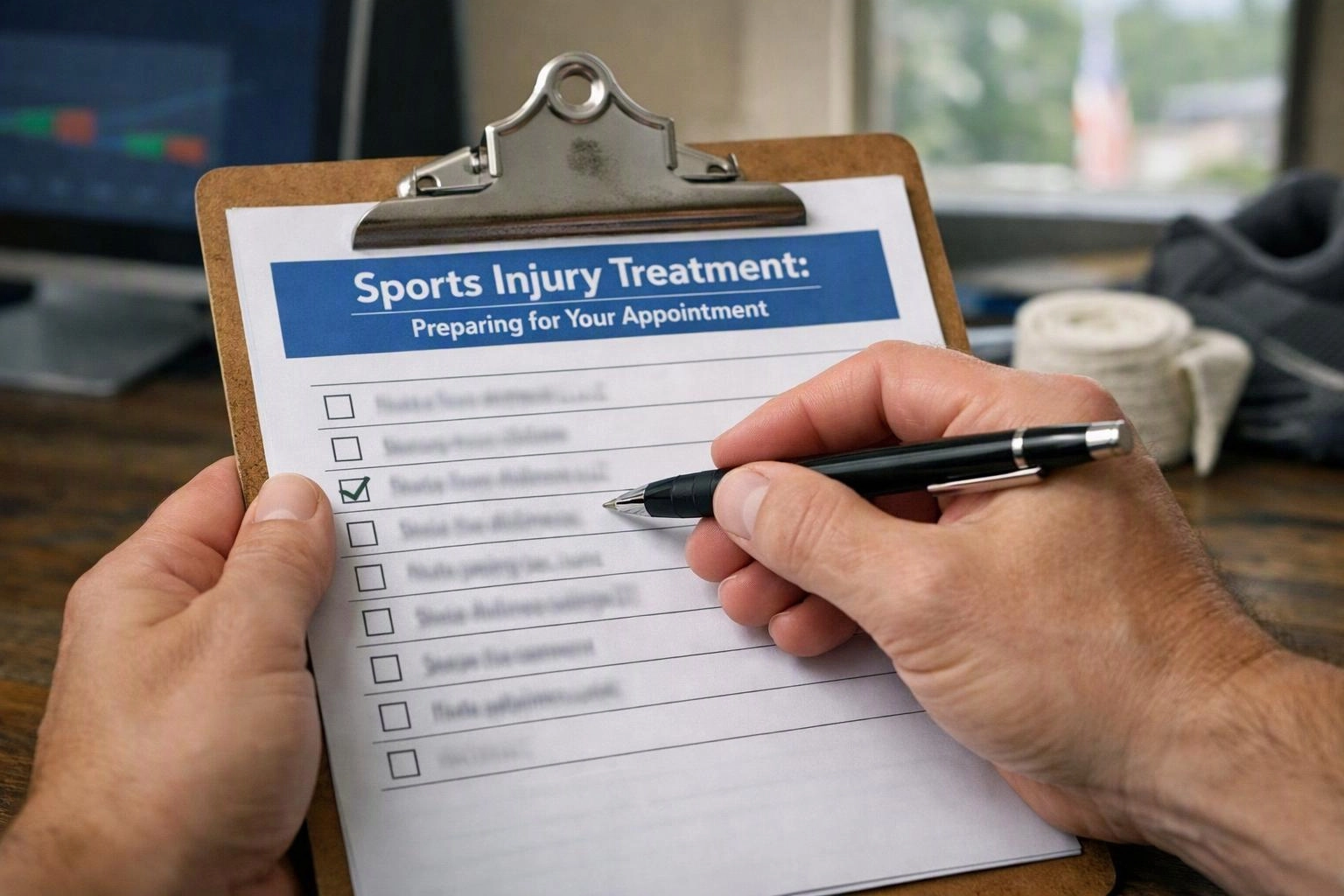
A sports injury treatment appointment checklist should include your injury timeline, symptom notes, relevant records, current medications, activity demands, and questions for the chiropractic team. These details help us connect your symptoms with your movement and recovery goals.
Bring the following information when possible:
Advanced Injury Care Clinic uses this information to plan a focused chiropractic evaluation. Clear records also help our team identify changes that may need further medical attention.
Which Symptoms Should You Record Before Your Appointment?
Sports injury symptoms to record include pain, swelling, stiffness, reduced movement, weakness, numbness, and changes during activity. A detailed symptom record helps us understand how the injury affects both daily tasks and athletic movement.
Write down the symptom timeline and any pattern you notice. We also want to know whether symptoms are improving, worsening, or changing before the appointment.
How Does Advanced Injury Care Clinic Evaluate a Sports Injury?
Advanced Injury Care Clinic evaluates a sports injury by reviewing the injury history and examining movement, range of motion, muscle function, and activity-related symptoms. Our team uses the findings to understand how the injured area works with nearby joints and muscles.
The chiropractic evaluation begins with questions about the injury mechanism, symptom timeline, training, and previous care. We then complete a physical examination that may include a movement assessment, range of motion checks, muscle function testing, and observation of sport-related movement patterns.
Our examination helps us identify restrictions, weakness, coordination concerns, and movements that may increase stress on the injured area. We explain the findings in plain language and discuss whether chiropractic care fits your needs.
What Commonly Causes Sports Injuries?
Sports injury causes often involve repeated stress, a sudden force, inefficient movement, or insufficient recovery. Understanding the likely cause helps us connect the injury with training habits and movement demands.
We assess the activity that led to the symptoms and look for related movement factors. That approach supports both injury rehabilitation and future sports injury prevention.
What Questions Should You Ask About Sports Injury Recovery?
Sports injury recovery questions should address the suspected source of symptoms, appropriate chiropractic care, activity changes, exercises, warning signs, and return-to-sport decisions. Clear answers help you understand the recovery plan and take part in each step.
Ask how the examination findings relate to your symptoms and whether the current activity should be changed. You can also ask which rehabilitation exercises support mobility, strength, muscle balance, and joint function.
Discuss how manual therapy and therapeutic exercise may fit into the chiropractic care plan. Ask what signs suggest that an activity is too demanding and how we will assess progress toward your recovery goals and return to sport.
Our team uses your activity goals to shape practical guidance for training and daily movement. We also explain when symptoms call for additional evaluation outside chiropractic sports injury care.
How Can You Reduce the Risk of Another Sports Injury?
Sports injury prevention focuses on preparing the body, using sound movement technique, managing training demands, and allowing adequate recovery. We connect prevention advice with the movements and activities that matter to you.
Prevention works best when it matches your current movement patterns and sport. Our team can use the examination findings to guide exercise selection and activity modification.
What Happens After the Chiropractic Evaluation?
After the chiropractic evaluation, the treatment plan connects the examination findings with appropriate care, exercise guidance, activity recommendations, and follow-up planning. We explain the purpose of each part of your sports injury care before treatment begins.
A chiropractic treatment plan may include manual therapy, therapeutic exercise, movement guidance, and activity modification. The specific approach depends on your symptoms, physical examination, movement findings, and recovery goals.
We review how to perform recommended exercises and how to respond if symptoms change. Follow-up care helps our team reassess movement, muscle function, range of motion, and progress toward return to activity.
How Are Consultation and Pricing Questions Handled?
Advanced Injury Care Clinic offers Free Consultations and explains pricing upfront after reviewing the needs of the sports injury treatment visit. The cost discussion considers the evaluation, recommended care, and services included in the treatment plan.
We explain what the consultation and proposed care include before you decide how to proceed. Bring your questions about the visit, follow-up care, and treatment goals so our team can give you clear next steps.
To request a sports injury treatment consultation, contact Advanced Injury Care Clinic through our contact page. We will review your needs and discuss the appropriate treatment plan.
Questions About Preparing for Sports Injury Treatment
Should I bring imaging results to a sports injury appointment?
Yes, bring relevant imaging results and reports when they relate to the current injury. Advanced Injury Care Clinic reviews those records with your history and examination findings to guide the evaluation.
What should I tell the chiropractic team about a sports injury?
Tell the chiropractic team when symptoms began, what caused them, where they occur, and which activities change them. Include past injuries, current medications, relevant records, and your activity goals.
Can I discuss returning to sports during the appointment?
Yes, discuss returning to sports during the appointment so we can connect your recovery plan with your sport, training demands, and movement goals.
What should I do if my symptoms change before the appointment?
Contact the clinic if your symptoms change before the appointment and describe the new pattern clearly. Seek prompt medical attention for severe or rapidly worsening symptoms, major loss of function, or concerning changes in sensation.
Sports injury treatment preparation gives our team the information needed to connect symptoms, movement findings, activity demands, and recovery goals. Advanced Injury Care Clinic is ready to discuss your appointment and next steps.
Related Resources
Auto Accident Injury Treatment: Evaluation, Preparation, and Next Steps
What It SolvesSpinal Decompression Therapy: What It Is and What to Expect
What It SolvesBack, Neck, Sciatica, and Headache Treatment: Questions for Your First Visit
What It SolvesBest Chiropractic Adjustment Options for Urgent, Budget & Long-Term Projects in Hermitage