Could Your Pain Be Related to a Herniated Disc?
A herniated disc can irritate nearby nerves and cause pain, numbness, or tingling in the back, neck, arm, or leg. Advanced Injury Care Clinic checks your symptoms and movement to decide whether chiropractic treatment may fit your condition.
Request an Estimate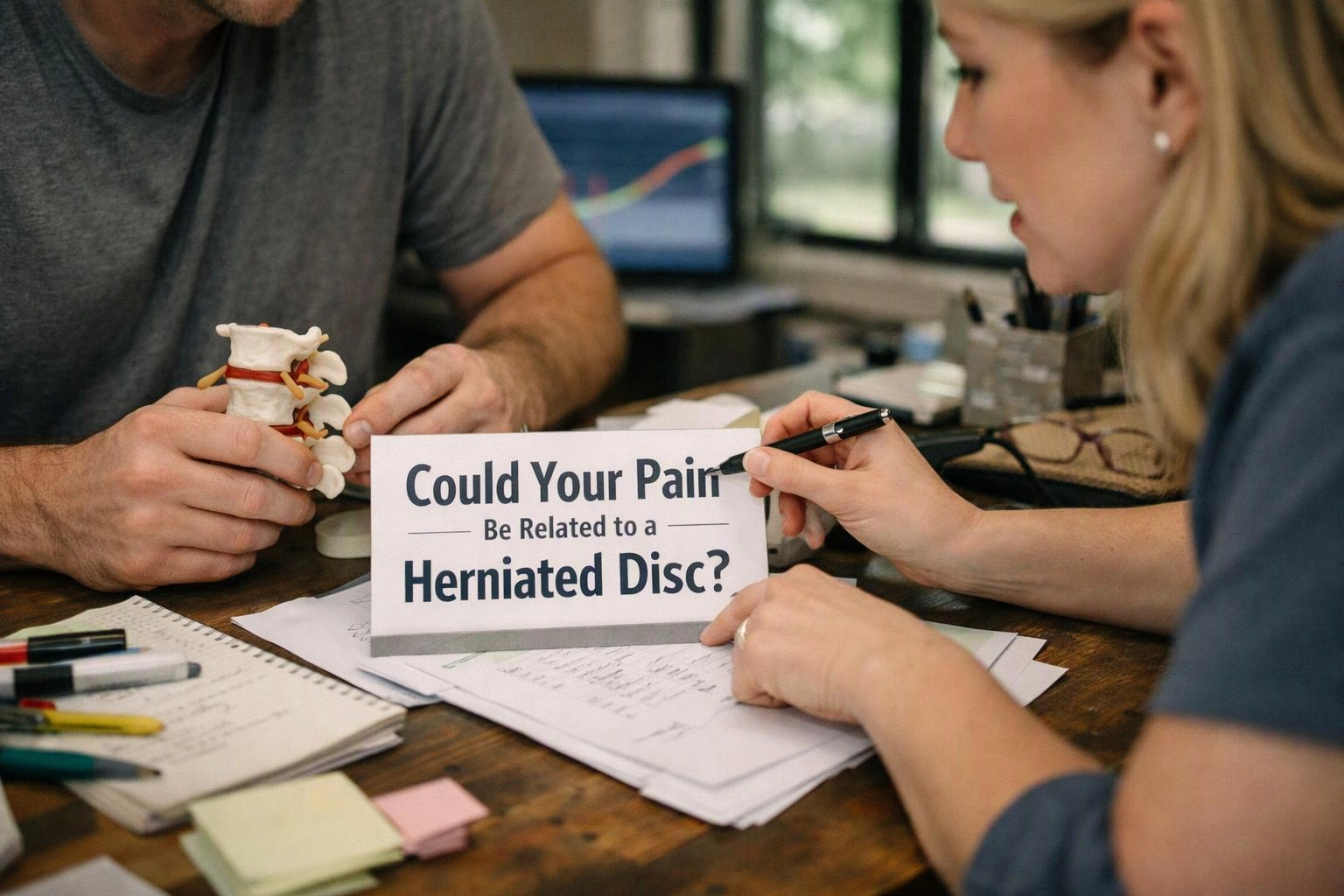
What Is a Herniated Disc?
Herniated disc is a spinal condition that occurs when part of an intervertebral disc pushes beyond its normal space. The disc sits between the vertebrae and helps cushion movement in the spinal column.
Each disc has an outer ring called the annulus fibrosus and a softer center called the nucleus pulposus. When disc material moves outward, it can irritate a nearby spinal nerve root. We review the location and pattern of your symptoms before choosing care.
A herniated disc may also be called a slipped disc, ruptured disc, prolapsed disc, or disc herniation. The condition can affect the cervical, thoracic, or lumbar spine.
What Signs and Symptoms Can a Herniated Disc Cause?
A herniated disc can cause symptoms that stay near the spine or travel along an irritated nerve. We look at the full symptom pattern because pain alone doesn't identify the cause.
Common signs and symptoms include:
Why Does a Herniated Disc Cause Arm or Leg Pain?
Yes, a herniated disc can cause arm or leg pain when displaced disc material irritates a nearby spinal nerve.
Nerve compression can create pain, numbness, or tingling along the nerve's path. Nerve irritation in the lower back may cause sciatica, while irritation in the neck may cause cervical radiculopathy.
Lumbar disc problems can send radiating pain into the hip, buttock, or leg. Cervical disc problems can send symptoms into the shoulder, arm, or hand. We check whether your movement and neurological findings match the suspected nerve pattern.
What Can Lead to a Herniated Disc?
A herniated disc can develop from gradual wear, sudden strain, or an injury. Several factors may affect how much stress reaches the spine.
Common causes and contributing factors include:
How Can You Reduce Herniated Disc Risk?
Herniated disc risk may be reduced by limiting repeated spinal strain and supporting steady movement. We can help you identify movement habits that may be adding stress.
Helpful prevention steps include:
When Should You See a Chiropractor for a Herniated Disc?
You should see a chiropractor when back or neck pain includes ongoing radiating symptoms, numbness, tingling, or movement limits that need an evaluation.
A chiropractic evaluation starts with your symptom history and a physical examination. We ask what causes or eases your pain, then check posture, range of motion, strength, sensation, and reflexes.
Our neurological screening helps us look for signs of spinal nerve involvement. We use those findings to decide whether conservative care fits or whether another medical evaluation is needed.
Our Herniated Disc Treatment approach focuses on safe decisions and a plan that matches your findings.
When Does a Herniated Disc Need Urgent Medical Attention?
Herniated disc symptoms need emergency medical care when they include serious nerve changes or loss of bladder or bowel control. These warning signs can point to a condition that needs immediate assessment.
Seek emergency medical care for the following symptoms:
| Warning sign | Why it matters |
|---|---|
| Severe weakness | A major change in strength may show serious nerve involvement. |
| Loss of bladder control | New bladder control problems need immediate medical assessment. |
| Loss of bowel control | New bowel control problems can signal urgent nerve pressure. |
| Saddle numbness | Numbness around the inner thighs, buttocks, or groin needs urgent care. |
Don't wait for a routine chiropractic visit when these warning signs appear. Go to emergency medical care or contact emergency services.
How Advanced Injury Care Clinic Evaluates and Treats Herniated Disc Symptoms
Advanced Injury Care Clinic uses a chiropractic assessment to connect your symptoms with your movement and nerve findings. Our team builds treatment planning around your condition and response to care.
Our approach stays focused on safe conservative care. We also explain when your findings call for medical follow-up.
What Can You Expect From Chiropractic Herniated Disc Care?
Chiropractic herniated disc care combines an examination, targeted treatment, and progress checks. The goal is to improve comfort and movement while respecting your symptoms.
Herniated Disc Treatment may include Spinal Decompression Therapy when our evaluation supports it. Chiropractic Rehabilitation and Therapeutic Exercise may also help restore control, strength, and daily movement.
Your symptom response helps guide the care plan. We monitor changes in pain, numbness, tingling, strength, and range of motion so treatment can stay appropriate.
How Do You Start an Evaluation for Herniated Disc Pain?
You can start an evaluation by contacting Advanced Injury Care Clinic for Free Consultations. We begin by listening to your patient history and reviewing your main symptoms.
Our team explains suitable treatment options after the examination. Upfront pricing helps you understand the expected cost of the recommended care before moving forward.
Use our contact page to request an appointment and discuss your symptoms.
Questions About Herniated Disc Pain
Can a herniated disc cause numbness or tingling?
Yes, a herniated disc can cause numbness or tingling when disc material irritates a nearby spinal nerve. Advanced Injury Care Clinic checks the symptom location, strength, sensation, and reflexes during an evaluation.
Can chiropractic care help with a herniated disc?
Yes, chiropractic care may help some people with herniated disc symptoms when the examination supports conservative treatment. Care may include movement-based treatment, spinal decompression therapy, rehabilitation, and therapeutic exercise.
What should you avoid doing with a herniated disc?
You should avoid movements that sharply increase pain, numbness, tingling, or weakness. Avoid heavy lifting, sudden twisting, and repeated strain until your symptoms have been evaluated.
Can a herniated disc heal without surgery?
Some herniated disc symptoms improve without surgery, but each condition responds differently. An examination helps determine whether conservative care is reasonable and whether medical follow-up is needed.
Related Resources
Chiropractic Visit Cost Factors: Exams, Imaging, and Follow-Up Care
Brand vs BrandChiropractic Insurance Coverage: Questions to Ask Before Booking
What's RequiredA Parent’s Checklist for Discussing a Child’s Musculoskeletal Concerns
Compared ToChiropractic Care vs. Physical Therapy for Sciatica