
What Is a TENS Unit?
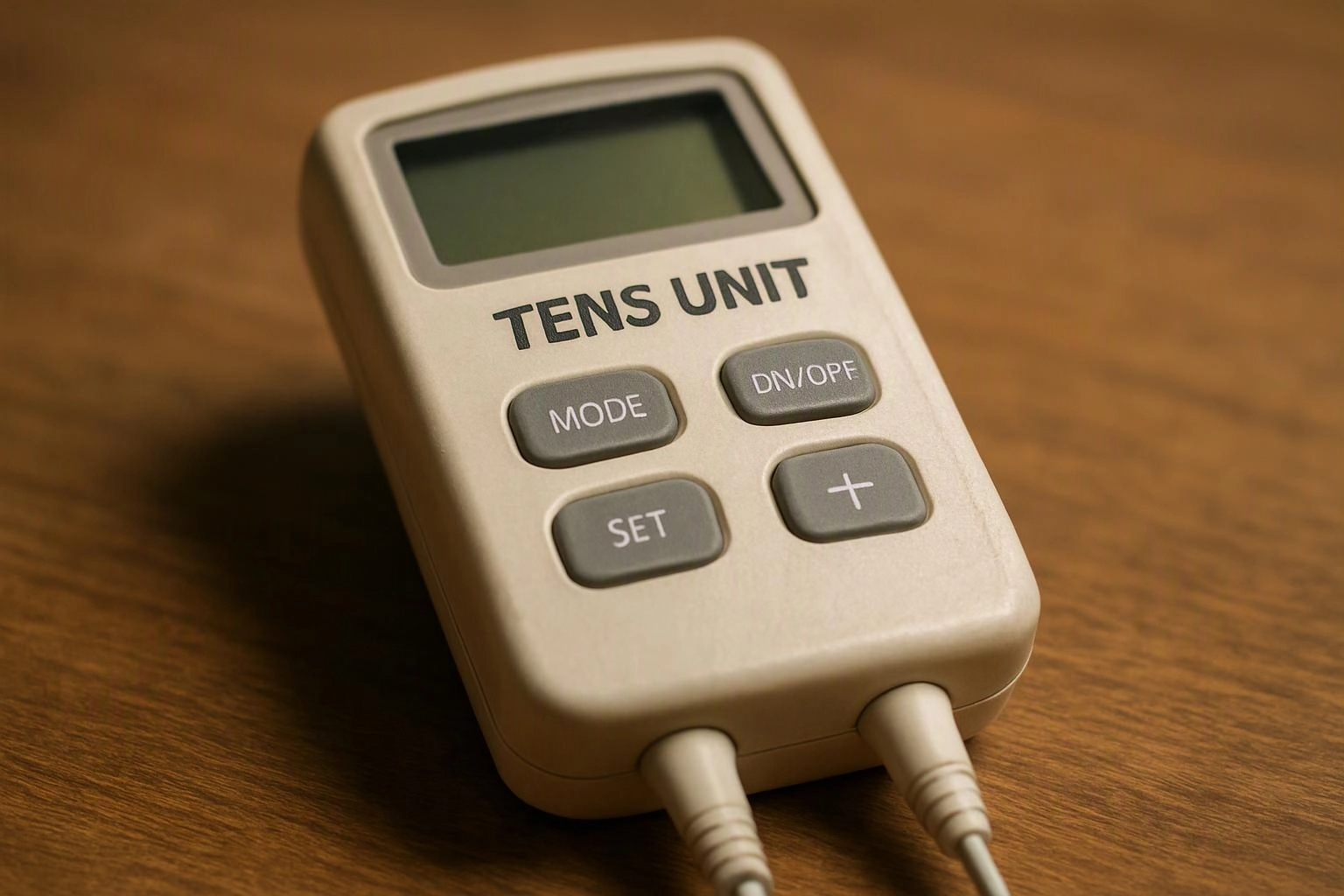
A TENS Unit is a small electrotherapy device that sends mild electrical pulses through adhesive skin electrodes. The pulses stimulate sensory nerves near a painful area and may change how pain signals are processed. TENS supports symptom relief during care, but it does not correct a spinal or joint problem by itself.
Quick Facts About TENS Unit
Category
Electrotherapy device
Used for
Temporary pain relief support
Common confusion
TENS is not EMS
Also called
Transcutaneous electrical nerve stimulation, TENS
Often discussed with
Neck Pain Treatment
Key Takeaways About TENS Unit
- TENS targets sensory nerves through surface electrodes.
- Treatment settings are adjusted for comfort and purpose.
- TENS is not the same as muscle-stimulation therapy.
How TENS Unit Works
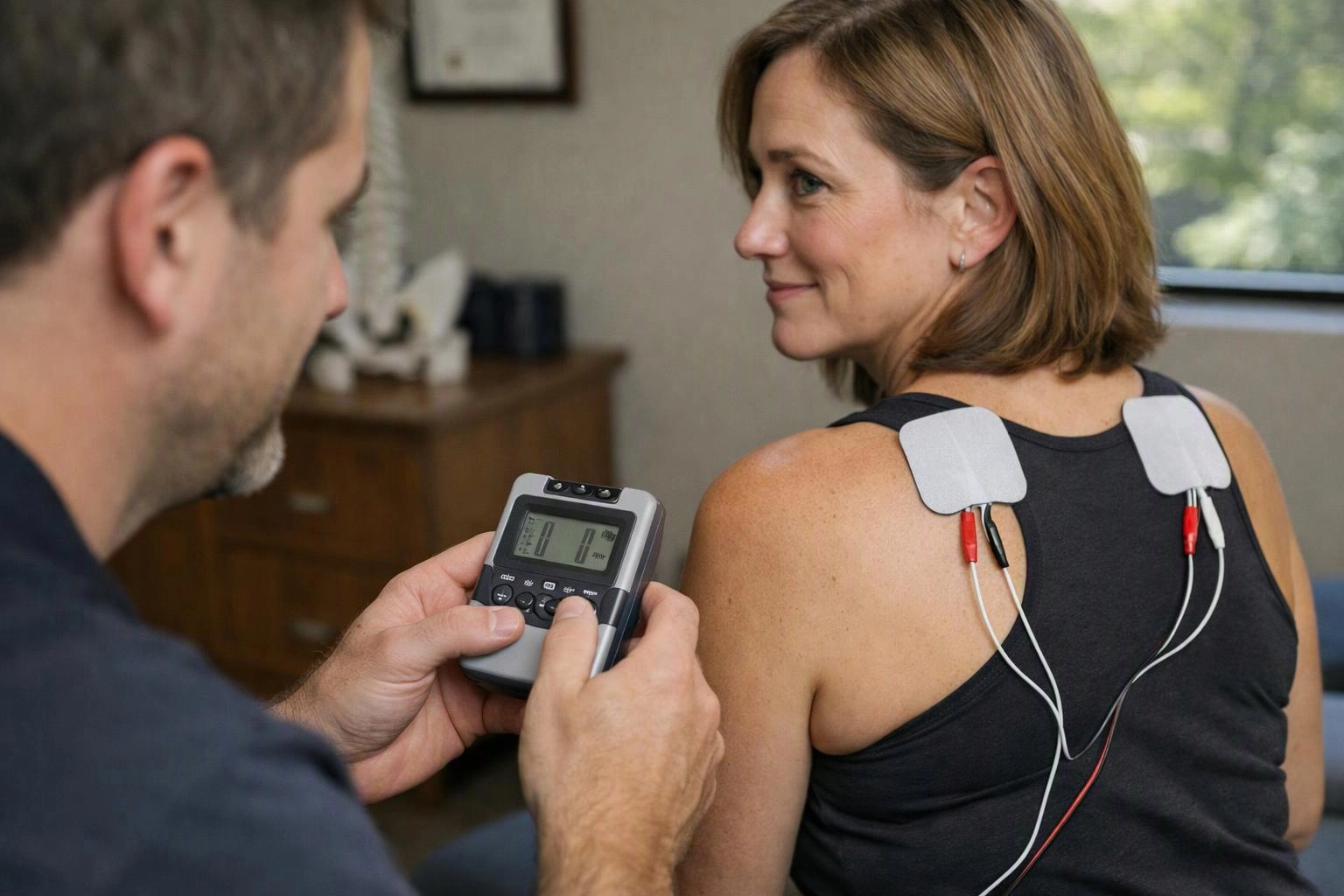
A TENS Unit sends controlled electrical pulses through electrodes placed on the skin near a painful area. The stimulation activates nearby sensory nerves, which can change how the nervous system processes pain signals. Settings may be adjusted for pulse strength and comfort during a session.
Related glossary terms: Muscle Spasm, Nerve Compression, Range Of Motion.
TENS differs from electrical muscle stimulation, or EMS, which aims to produce muscle contraction. TENS focuses on sensory input and does not repair tissue, realign the spine, or replace an assessment. During neck pain care, electrode placement depends on the painful region, skin condition, and treatment goals. A clinician checks the response and stops or changes the application if the stimulation feels uncomfortable.
From the Advanced Injury Care Clinic team
When we use a TENS Unit during neck pain treatment, we review the pain location and check the skin before placing electrodes. We adjust the stimulation to the person’s comfort and observe the response throughout care. Our team treats TENS as supportive therapy, not as a substitute for clinical assessment.
TENS Unit in Practice: A Real-World Example
A person with neck pain may receive TENS with electrodes positioned near the affected muscles while other care addresses movement and joint function. The clinician checks comfort during the session and changes the settings when needed.
Related Services
Related Terms
Muscle Spasm
A muscle spasm is a sudden, involuntary tightening of muscle fibers that can feel firm, painful…
Nerve Compression
Nerve Compression is pressure placed on a nerve by nearby tissue, such as a spinal disc…
Range Of Motion
Range Of Motion is the available movement at a joint or body region, measured by how…
Advanced Injury Care Clinic
Have Questions About TENS Unit?
Contact Advanced Injury Care Clinic for practical guidance on TENS Unit and related chiropractor work in Hermitage.