
What Is the Spinal Cord?
The spinal cord is a long bundle of nerve tissue that carries messages between the brain and the body. It runs through the spinal canal and connects with nerves that serve the limbs, trunk, and organs. The spinal cord also helps coordinate reflexes, which are rapid protective responses to certain stimuli.
Quick Facts About Spinal Cord
Category
Central nervous system structure
Used for
Communicating signals between brain and body
Common confusion
Not the same as the spinal column
Also called
Spinal cord tissue
Often discussed with
Neck Pain Treatment
Key Takeaways About Spinal Cord
- The spinal cord is nerve tissue, not a spinal bone.
- Its condition can affect movement, feeling, and reflexes.
- The spinal cord is different from the spinal nerves.
How Spinal Cord Works
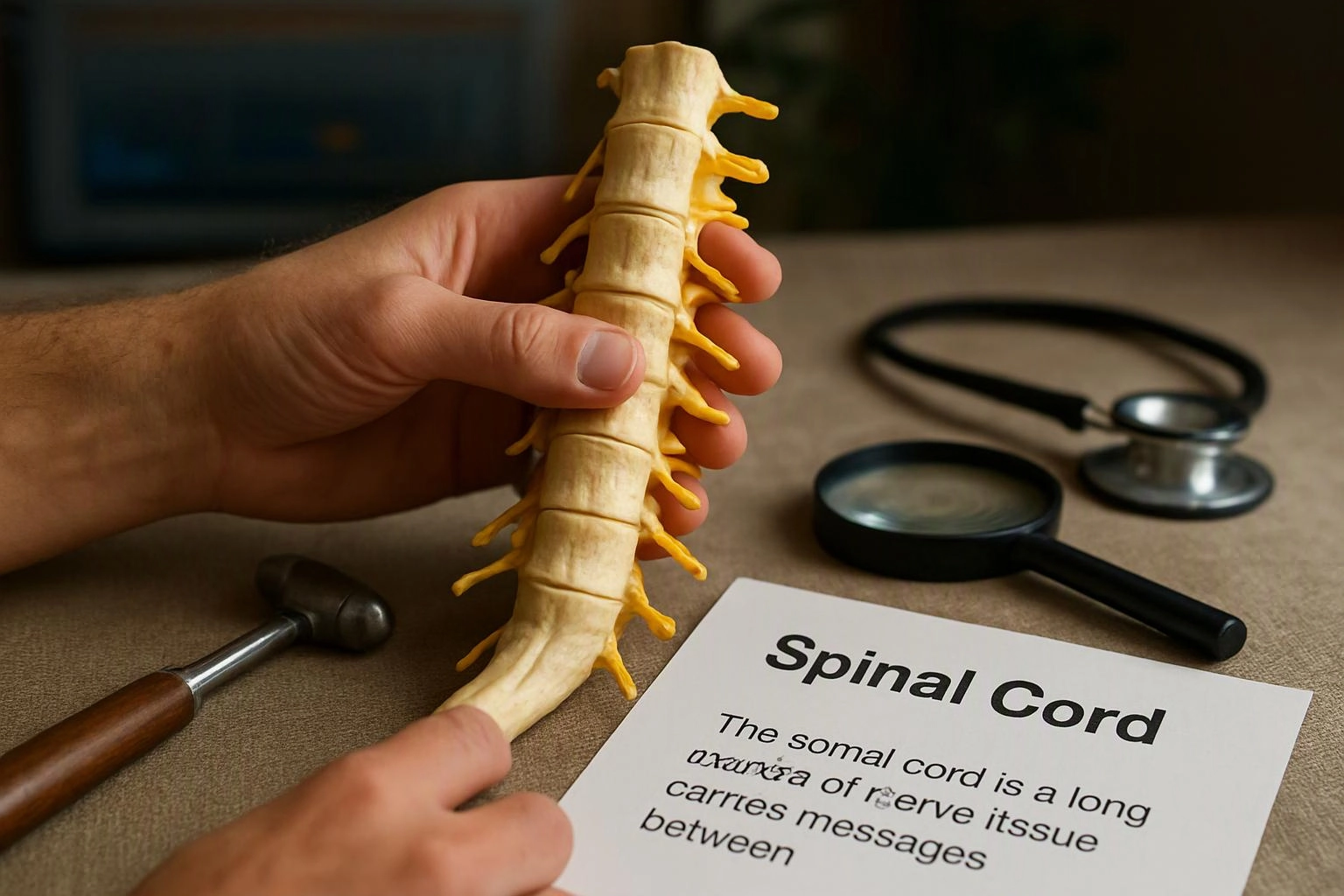
Spinal cord tissue carries electrical and chemical messages between the brain and the body. Signals traveling downward help control movement. Signals traveling upward carry information about touch, temperature, pressure, and body position. The spinal cord also supports reflex pathways that can respond quickly without waiting for conscious processing by the brain.
Related glossary terms: Cervical Spine, Nerve Compression, Radiculopathy.
The spinal column surrounds and protects the cord, while spinal nerves branch outward through openings between the vertebrae. Spinal nerves connect the cord with specific regions of the body. During a neck pain evaluation, clinicians consider symptoms, movement patterns, and nerve-related findings together. A neck problem may involve muscles, joints, discs, or nerve roots without involving the spinal cord itself.
From the Advanced Injury Care Clinic team
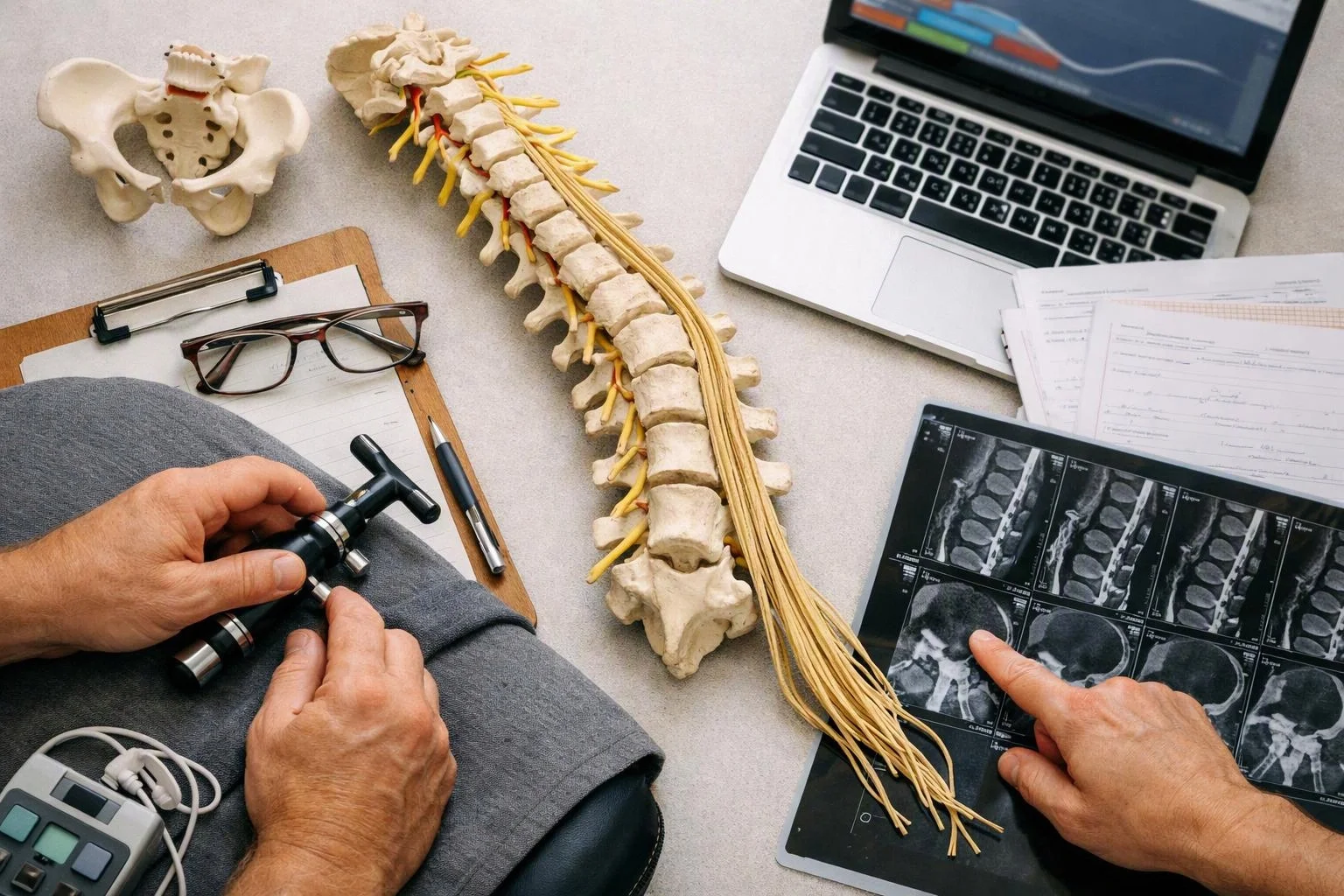
When we evaluate neck pain, we check the person’s reported symptoms, neck movement, strength, sensation, and reflex responses. Our team also considers whether findings suggest a local joint or muscle issue, nerve-root involvement, or a concern that needs medical evaluation.
Spinal Cord in Practice: A Real-World Example
A person with neck pain may feel stiffness that stays near the neck and upper shoulder. Tingling, weakness, or changes in coordination can point toward nerve involvement and require a more careful clinical assessment.
Related Services
Related Terms
Cervical Spine
Cervical Spine is the upper section of the spinal column located in the neck. The cervical…
Nerve Compression
Nerve Compression is pressure placed on a nerve by nearby tissue, such as a spinal disc…
Radiculopathy
Radiculopathy is a nerve-root disorder caused by irritation or compression near the spine. The condition can…
Range Of Motion
Range Of Motion is the available movement at a joint or body region, measured by how…
Advanced Injury Care Clinic
Have Questions About Spinal Cord?
Contact Advanced Injury Care Clinic for practical guidance on Spinal Cord and related chiropractor work in Hermitage.