
What Is Myofascial Pain?
Myofascial Pain is discomfort that starts in muscle tissue or the fascia surrounding it. The pain may feel deep, sore, tight, or tender. Sensitive bands or trigger points can make movement uncomfortable and may send pain to another area. Muscle strain, repeated activity, poor posture, or injury can contribute to this pattern.
Quick Facts About Myofascial Pain
Category
Muscle and fascia pain pattern
Used for
Assessing tender muscle areas
Common confusion
Nerve pain or joint pain
Also called
Muscle and fascia pain
Often discussed with
Dry needling for myofascial pain, Massage Therapy
Key Takeaways About Myofascial Pain
- Pain may come from muscle and surrounding fascia.
- Trigger points can refer pain to nearby areas.
- Myofascial pain isn't the same as nerve-root pain.
How Myofascial Pain Works
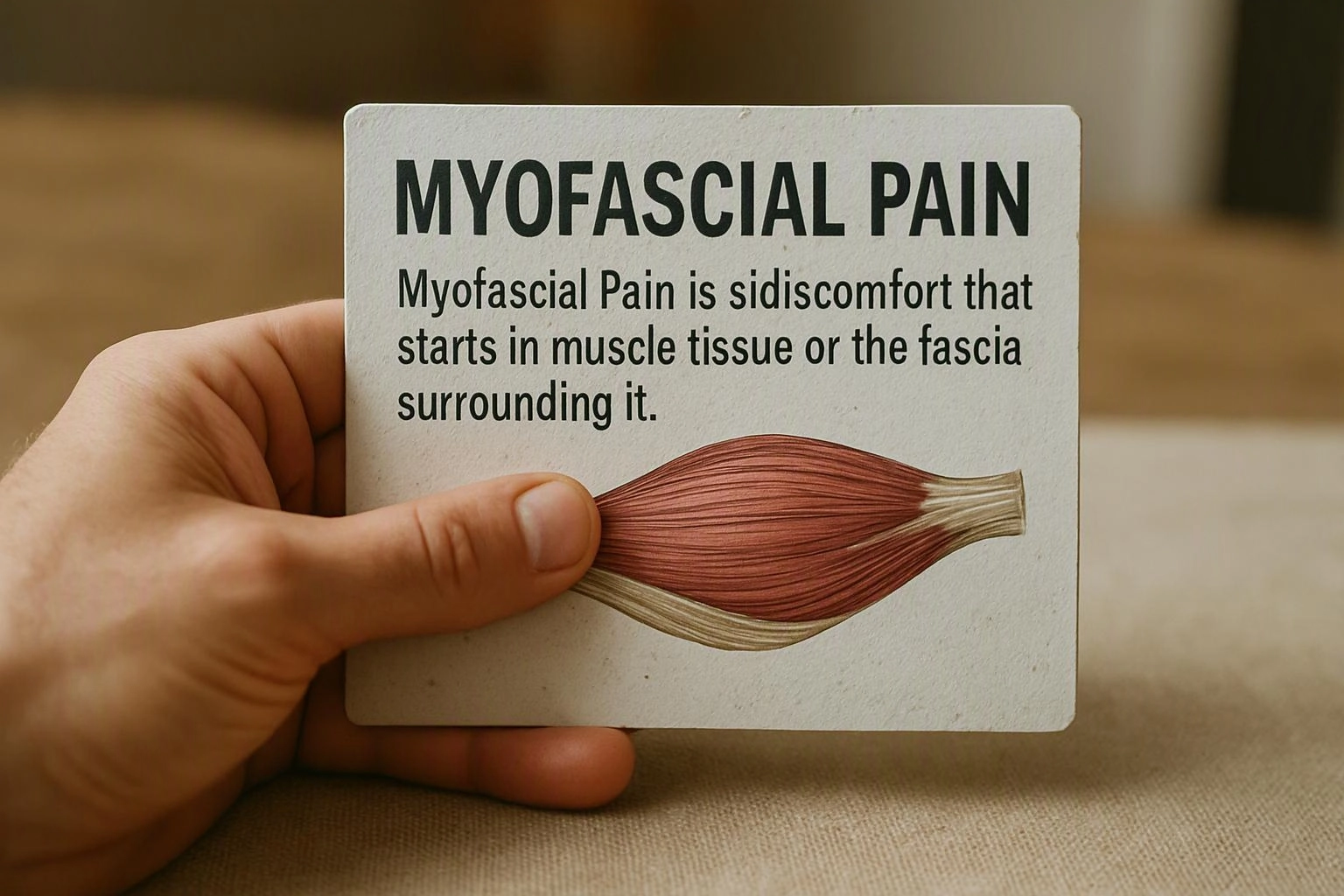
Myofascial Pain involves changes in how muscle and fascia respond to pressure and movement. Fascia is a thin layer of connective tissue around muscles. When a muscle stays tense or becomes irritated, a tender spot may develop.
Related glossary terms: Trigger Point, Referred Pain, Manual Therapy.
A trigger point is a sensitive area within a tight muscle band. Pressure on that spot may cause local soreness or refer discomfort to another area. A clinician checks the location, tenderness, muscle tension, and movement pattern during an exam. These findings help separate myofascial pain from problems involving a joint or nerve root.
Dry needling for myofascial pain targets selected tight muscle areas. The clinician chooses treatment sites based on the exam and the person’s symptoms. The goal is to address abnormal muscle tension and support more comfortable movement.

From the Advanced Injury Care Clinic team
When we assess myofascial pain, we check the painful area, nearby movement, muscle tension, and tenderness. We also ask whether symptoms spread from a tight spot or follow a nerve pattern. That distinction helps our team decide whether dry needling fits the findings.
Myofascial Pain in Practice: A Real-World Example
A person develops shoulder discomfort after repeated lifting. The upper shoulder muscle feels tight, and pressure on a tender spot sends soreness toward the neck. An exam may identify a myofascial pain pattern and guide dry needling for myofascial pain.
Related Services
Related Terms
Trigger Point
Trigger Point is a sensitive, tight area within a muscle that may cause local soreness or…
Referred Pain
Referred Pain is pain felt in one area even though the source lies somewhere else. The…
Manual Therapy
Manual Therapy is hands-on care that uses skilled touch to assess and treat muscles, joints, connective…
Range of Motion
Range of Motion is the amount a joint can move in different directions. It describes movement…
Advanced Injury Care Clinic
Have Questions About Myofascial Pain?
Contact Advanced Injury Care Clinic for practical guidance on Myofascial Pain and related chiropractor work in Hermitage.