
What Is Manual Muscle Testing?
Manual Muscle Testing is a physical exam method that checks how a muscle responds to pressure. A practitioner positions a body part and asks the person to hold it while applying pressure. The response provides information about muscle strength and movement during the exam.
Quick Facts About Manual Muscle Testing
- Category
- Physical exam method
- Used for
- Checking muscle response to pressure
- Common confusion
- A muscle response is not a diagnosis.
- Also called
- Muscle Testing, MMT
- Often discussed with
- Applied Kinesiology
Key Takeaways About Manual Muscle Testing
- The test checks a specific movement, not overall fitness.
- Your position can affect the result.
- A weak response doesn't identify its cause on its own.
How Manual Muscle Testing Works
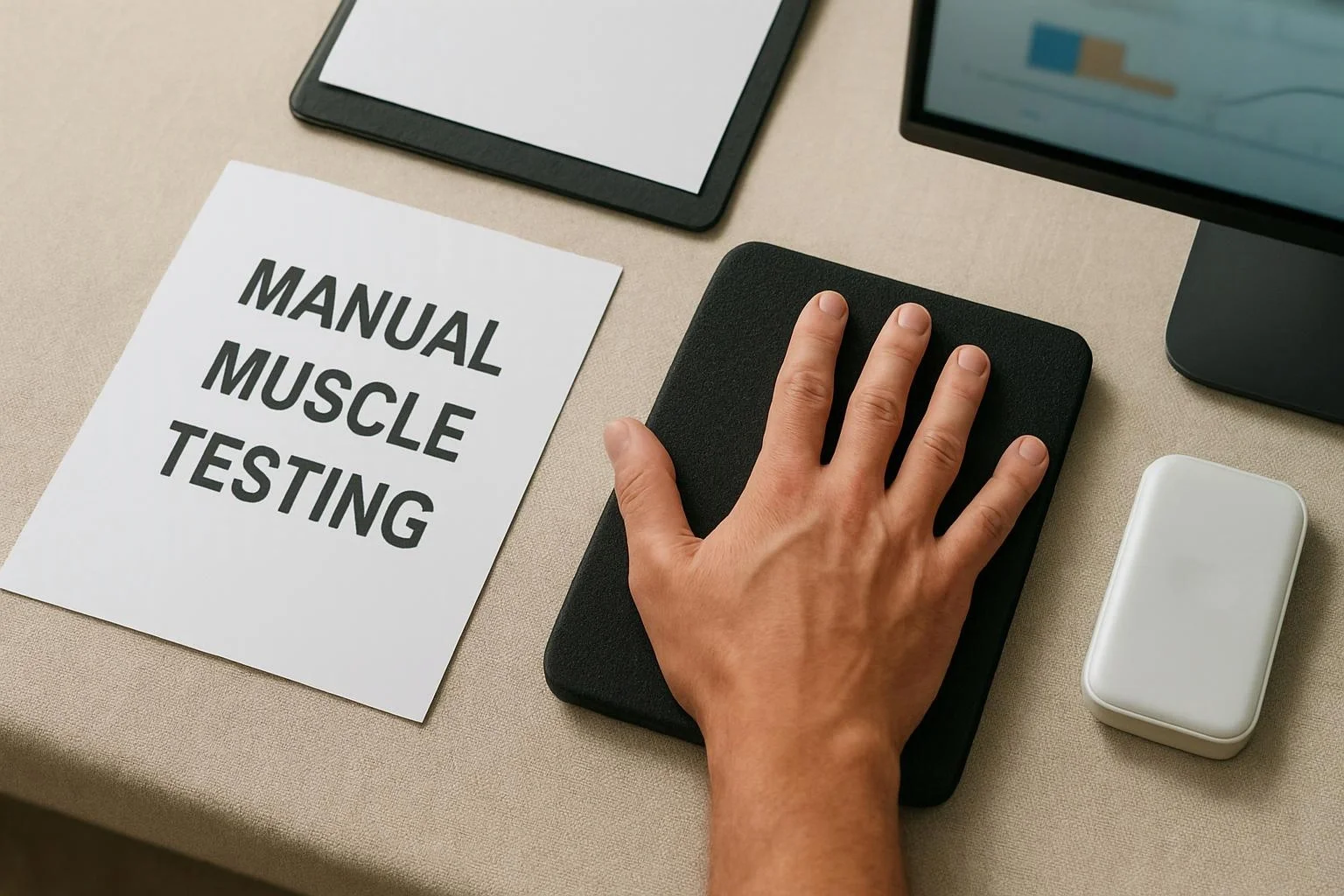
Manual muscle testing works by checking a muscle during a specific movement. The practitioner chooses a position that lets the muscle perform that movement. For example, lifting your arm engages muscles around your shoulder. The practitioner watches how well you hold the position as pressure is applied.
Related glossary terms: Range of Motion, Rotator Cuff, Nerve Root.
The result describes your response during that part of the exam. Your position, effort and discomfort can affect what the practitioner observes. A practitioner may describe the response in words or use a strength grading system. The result doesn't explain the cause of a weak response by itself.
In applied kinesiology, practitioners may use muscle responses alongside other exam findings. Manual muscle testing differs from a workout because the goal is to observe a response. The test also differs from a lab test, which examines a sample from your body.
From the Advanced Injury Care Clinic team
When we use manual muscle testing in applied kinesiology, we pay attention to your position during the check. We also consider what you tell us about discomfort. That context helps us interpret the response as part of the exam.
Manual Muscle Testing in Practice: A Real-World Example
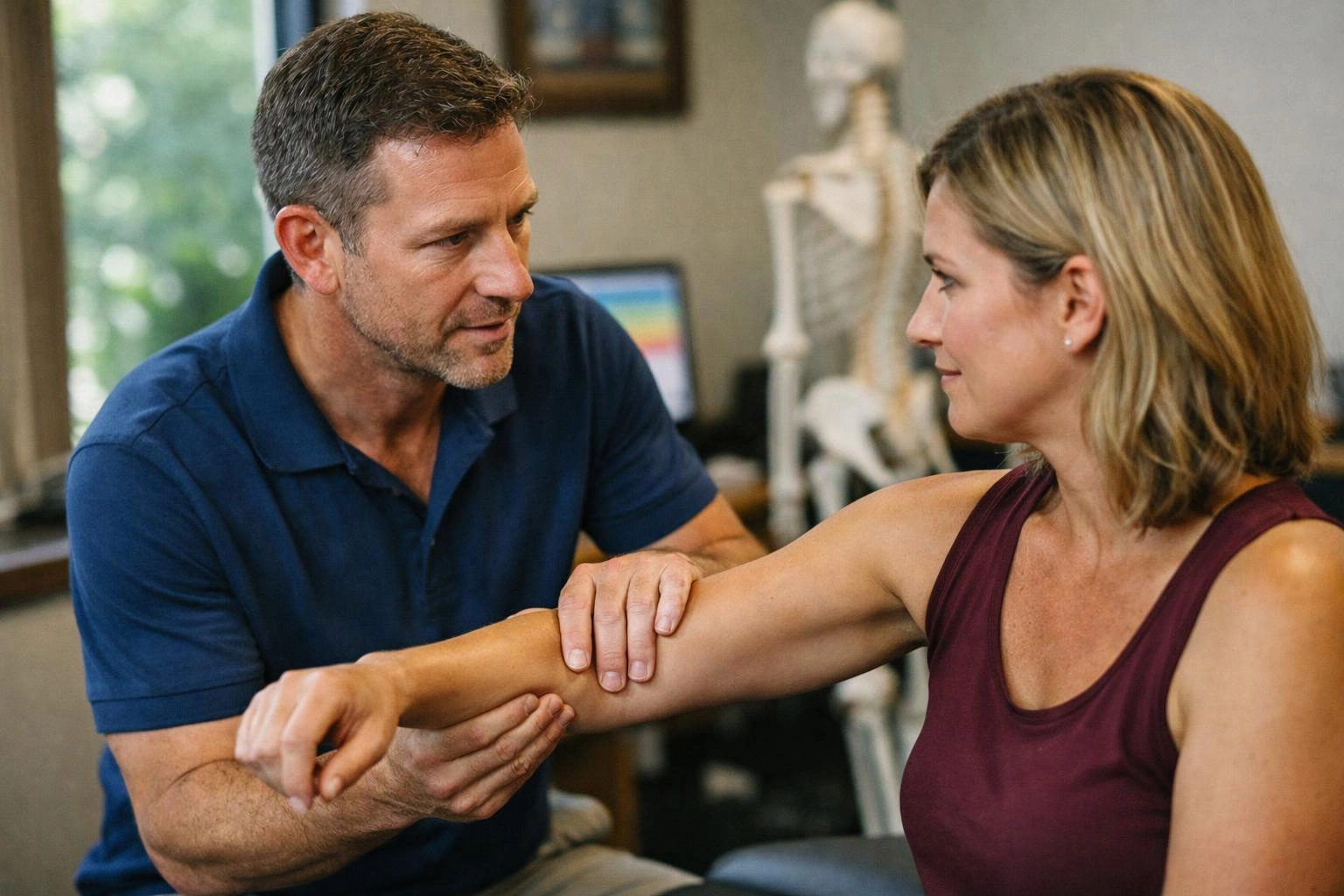
During an applied kinesiology visit, a person reports trouble lifting an arm. The practitioner checks the shoulder muscle response while the person holds the arm in position.
Related Services
Related Terms
Range of Motion
Range of Motion is a measure of how far a joint moves in a given direction.
Rotator Cuff
A rotator cuff is a group of muscles and tendons that surrounds the shoulder joint.
Nerve Root
A nerve root is a bundle of nerve fibers that connects a spinal nerve to the spinal cord.
Hip Flexor
A hip flexor is a muscle that helps bring your thigh toward your torso.
Advanced Injury Care Clinic
Have Questions About Manual Muscle Testing?
Contact Advanced Injury Care Clinic for practical guidance on Manual Muscle Testing and related chiropractor work in Hermitage.