
What Is Diastasis Recti?
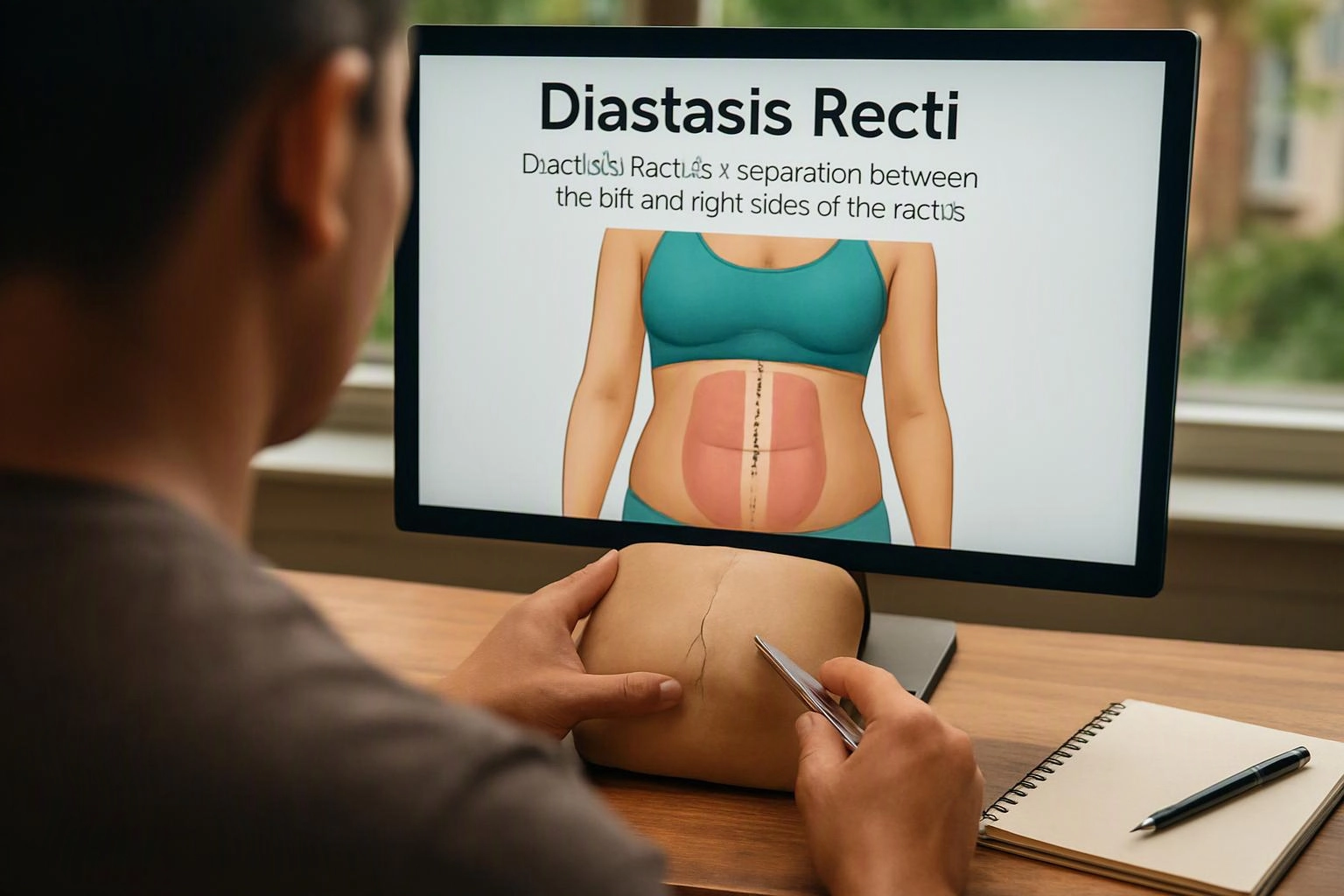
Diastasis Recti is a separation between the left and right sides of the rectus abdominis muscle along the midline of the abdomen. The connective tissue between these muscles becomes stretched, often during pregnancy as the abdomen expands. The condition may affect abdominal tension, trunk support, and movement without representing a muscle tear.
Quick Facts About Diastasis Recti
Category
Abdominal wall condition
Used for
Movement and core-support assessment
Common confusion
Often confused with a muscle tear
Also called
Abdominal separation, Rectus diastasis
Often discussed with
Prenatal Chiropractic Care
Key Takeaways About Diastasis Recti
- The midline tissue, not the abdominal muscles alone, is the distinguishing feature.
- Pregnancy can change abdominal tension as the abdomen expands.
- Diastasis Recti is not the same as a muscle tear.
How Diastasis Recti Works

Diastasis Recti involves the linea alba, a band of connective tissue that joins the abdominal muscles at the center of the body. As the tissue stretches, the abdominal wall may produce less tension during movements such as rising, turning, or lifting. The change can feel different across the upper abdomen, navel area, and lower abdomen.
Related glossary terms: Pelvic Floor, Lumbar Spine, Anterior Pelvic Tilt.
A clinician checks the abdominal wall through observation and gentle examination during selected movements. The assessment considers tissue tension, abdominal coordination, breathing, posture, and related pelvic movement. Pelvic Floor function can also affect how the trunk manages pressure. Findings help distinguish diastasis recti from a hernia, muscle strain, or ordinary changes in abdominal shape.
From the Advanced Injury Care Clinic team
When we assess Diastasis Recti during prenatal chiropractic care, we consider abdominal tension, posture, breathing, and movement together. Our team also considers related pelvic and spinal mechanics so the finding fits the person’s overall presentation. We keep the assessment gentle and refer concerns that fall outside chiropractic care.
Diastasis Recti in Practice: A Real-World Example
During prenatal chiropractic care, a pregnant patient may notice a ridge along the abdominal midline when rising from a supported position. The clinician observes the movement and considers abdominal coordination alongside pelvic and spinal mechanics.
Related Services
Related Terms
Pelvic Floor
Pelvic Floor is a group of muscles and connective tissues that supports the pelvic organs and…
Lumbar Spine
Lumbar Spine is the lower section of the vertebral column between the thoracic spine and sacrum…
Anterior Pelvic Tilt
Anterior Pelvic Tilt is a postural position in which the front of the pelvis rotates forward…
Range Of Motion
Range Of Motion is the available movement at a joint or body region, measured by how…
Advanced Injury Care Clinic
Have Questions About Diastasis Recti?
Contact Advanced Injury Care Clinic for practical guidance on Diastasis Recti and related chiropractor work in Hermitage.