Massage Therapy, Myofascial Release, and Trigger Point Therapy Compared
Soft tissue therapy uses different manual approaches for different goals. Massage therapy, myofascial release therapy, and trigger point therapy vary by technique, tissue target, symptom pattern, maintenance needs, and patient fit. Advanced Injury Care Clinic evaluates the affected tissue, symptoms, movement findings, and desired outcome before recommending the most suitable approach.
Request an EstimateHow Massage, Myofascial Release, and Trigger Point Therapy Differ
Massage therapy uses broader strokes, pressure, and manual techniques across one or more soft tissue regions. The approach may support comfort, muscle mobility, and relaxation-oriented treatment goals.
Myofascial release therapy focuses on fascia and connective tissue that may feel restricted or limit movement. Treatment uses sustained or focused contact based on the movement assessment, palpation findings, and tissue response.
Trigger point therapy targets localized tender areas within taut muscle tissue. Focused pressure may address muscle tension in the treated area and symptoms that appear nearby through referred pain.
Soft tissue therapy is selected according to the tissue involved, symptom distribution, movement limitation, and patient feedback. These approaches may also be combined when muscle tightness and tissue restriction overlap.
Massage Therapy, Myofascial Release, and Trigger Point Therapy at a Glance
The most suitable therapy depends on the treatment goal, the tissue involved, symptom distribution, maintenance needs, and the assessment findings. Cost and timeline also depend on the scope of care and how the tissue responds.
| Factor | Option A | Option B |
|---|---|---|
| Approach | Massage therapy uses broader strokes, pressure, and soft tissue techniques. | Myofascial release therapy uses focused contact to address fascial and soft tissue restriction. |
| Cost | Cost varies with session scope, treatment areas, technique, and care plan. | Cost varies with session scope, treatment areas, technique, and care plan. |
| Timeline | The treatment timeline depends on symptoms, goals, response, and whether care is focused or ongoing. | The treatment timeline depends on symptoms, goals, response, and whether care is focused or ongoing. |
| Maintenance | Maintenance may involve reassessment and repeated soft tissue care when symptoms or movement needs return. | Maintenance may involve reassessment and repeated soft tissue care when restriction or movement needs return. |
| Best for | Broad muscle tension, general soft tissue work, and relaxation-oriented treatment goals. | Focused restrictions involving fascia, connective tissue, and limited tissue mobility. |
Trigger point therapy adds a more localized muscle focus. The best option depends on whether the findings point to broad soft tissue needs, fascial restriction, or specific tender muscle areas.
What Is Massage Therapy Best For?
Massage therapy is best for broader soft tissue treatment when muscle tension, tissue comfort, and general mobility are the main concerns.
Best for: Massage therapy suits readers seeking broader soft tissue treatment with less emphasis on highly localized pressure.
What Is Myofascial Release Therapy Best For?
Myofascial release therapy is best for focused work on fascial and connective tissue restriction that may contribute to limited movement or discomfort.
Fascia is connective tissue that surrounds and connects muscles and other body structures. When soft tissue mobility is limited, our team uses sustained or focused manual contact according to the assessment and tissue response.
Our team may adjust contact, direction, and pressure as movement findings and patient feedback change. The goal is to address tissue restriction while keeping treatment responsive to the person receiving care.
Best for: Myofascial release therapy suits readers whose symptoms appear connected to restricted soft tissue mobility, fascia, or movement limitation.
What Is Trigger Point Therapy Best For?
Trigger point therapy is best for localized areas of muscle tenderness or tension that may contribute to symptoms in the same or another nearby area.
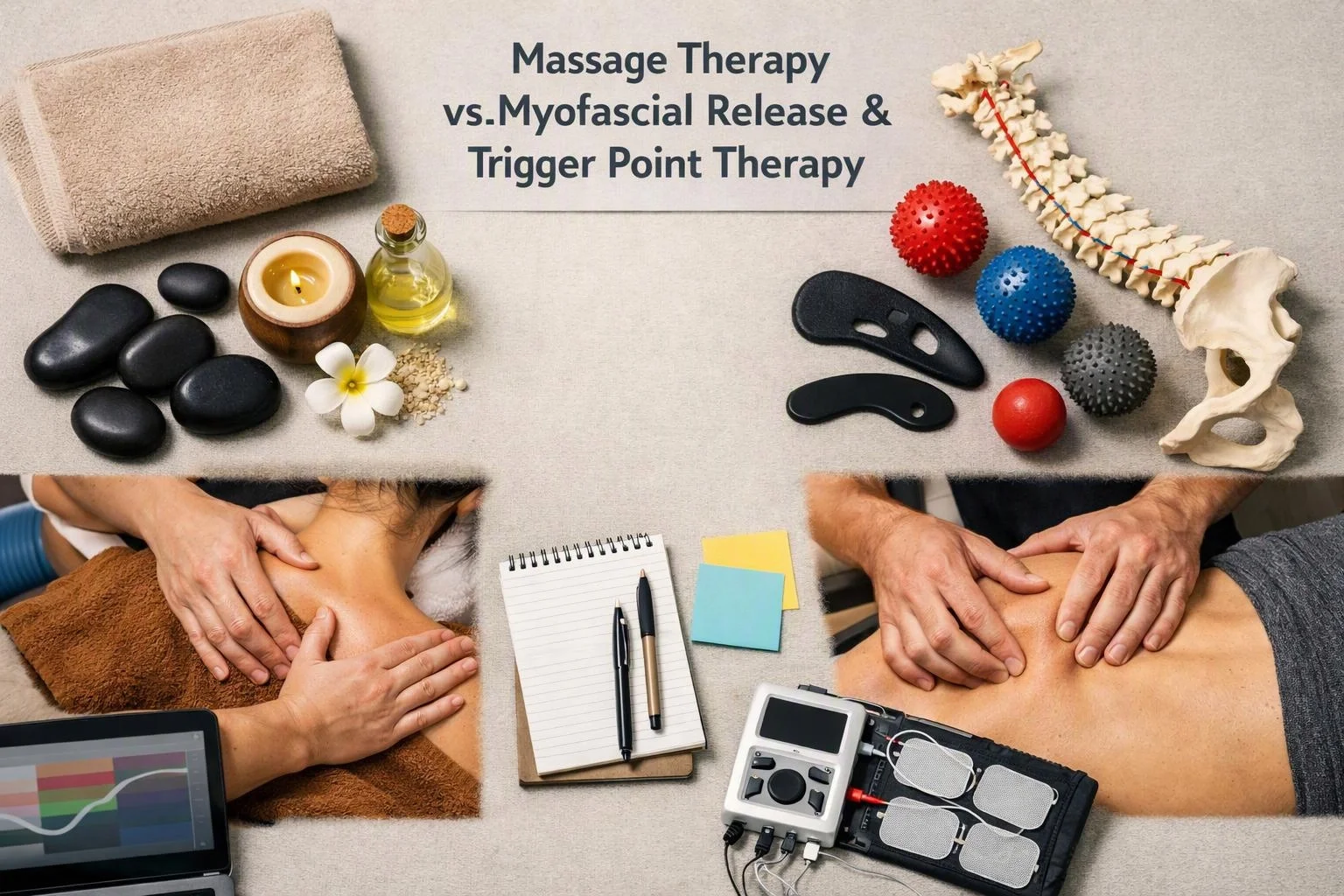
Best for: Trigger point therapy suits readers with specific tender muscle areas identified during assessment.
How Trigger Point Therapy Compares With Myofascial Release
Trigger point therapy targets localized muscle sensitivity, while myofascial release therapy addresses broader restrictions involving fascia and connective tissue.
Trigger point work primarily focuses on muscle tissue and tender points. Myofascial release uses broader fascial contact when tissue restriction or reduced mobility involves connected soft tissue layers.
Both approaches may be considered when muscle tension, referred pain, and restricted movement overlap. Our team uses the examination findings to decide whether localized pressure, fascial contact, or a combination best matches the treatment goals.
What to Expect During Myofascial Release Therapy
Myofascial release therapy begins with an assessment, continues with focused manual treatment guided by tissue response, and ends with discussion of movement and follow-up needs.
During the treatment-planning process, Free Consultations are available so we can discuss whether this approach fits the reported symptoms and examination findings.
What to Discuss Before Trigger Point Therapy
Before trigger point therapy, discuss symptom location, referred pain patterns, relevant health history, medication considerations, and tolerance for focused pressure.
These details help our team assess whether localized muscle work is appropriate and whether another form of soft tissue therapy better matches the presentation.
How Advanced Injury Care Clinic Helps Choose the Right Approach
Advanced Injury Care Clinic reviews the symptoms, movement findings, tissue response, and treatment goals before recommending massage therapy, myofascial release therapy, trigger point therapy, or another suitable soft tissue approach; Free Consultations are available.
Our team connects the reported symptoms with chiropractic assessment findings, including movement assessment, palpation, muscle tension, and possible referred pain. We use those findings to decide whether a broader or more focused manual therapy approach is appropriate.
We may recommend Massage Therapy when broad soft tissue care fits the goals. We may select myofascial release therapy or trigger point therapy when the findings point to tissue restriction or localized tenderness.
Care planning can change as symptoms and tissue response change. We explain the recommended approach, maintenance considerations, and follow-up care so the plan remains connected to the patient’s needs.
Questions About Massage, Myofascial Release, and Trigger Point Therapy
Can massage therapy and trigger point therapy be used in the same care plan?
Yes, massage therapy and trigger point therapy can be used in the same care plan when assessment findings show a need for both broader soft tissue work and localized muscle treatment. Advanced Injury Care Clinic selects and sequences techniques according to symptoms, tissue response, and treatment goals.
Is myofascial release therapy painful?
Myofascial release therapy may create pressure or tenderness, but treatment should remain responsive to patient feedback. Our team adjusts contact and pressure according to comfort, tissue response, and movement findings.
How do I know whether my symptoms involve fascia or a trigger point?
Fascial restriction and a trigger point can produce overlapping symptoms, so a movement assessment and palpation help distinguish the likely tissue involved. Our team considers symptom location, movement limitation, localized tenderness, referred pain, and tissue response together.
What should I tell the clinic before soft tissue therapy?
Tell the clinic about symptom location, recent injuries, changes in pain, medical history, medications, movement limits, and tolerance for pressure. These details help our team plan safe, focused follow-up care.
Advanced Injury Care Clinic helps connect your symptoms and movement findings with a focused soft tissue care plan. Contact our team to discuss your treatment goals and available options.