Understanding Ergonomic Assessment
Ergonomic Assessment is a process that examines how a workspace, job task. Or tool interacts with the human body. The goal is to find ways to make work safer, more comfortable. And more efficient. For example, an office worker might experience neck pain from looking down at a laptop screen. An Ergonomic Assessment would identify This issue and recommend raising the screen to eye level to reduce strain on the neck and shoulders. These assessments are not just for offices—they apply to factories, healthcare settings, construction sites. And even home workstations.
Ergonomic Assessments focus on key factors like posture, movement, force. And repetition. Poor posture, such as slouching or hunching, can lead to back pain or shoulder tension over time. Repetitive tasks, like typing or assembly line work, can cause strain injuries if not properly managed. The assessment looks at how much force is needed to complete a task, such as lifting boxes or using tools. And suggests ways to reduce unnecessary strain. By addressing these factors, Ergonomic Assessments help prevent injuries and improve overall well-being.
How Ergonomic Assessment Works?
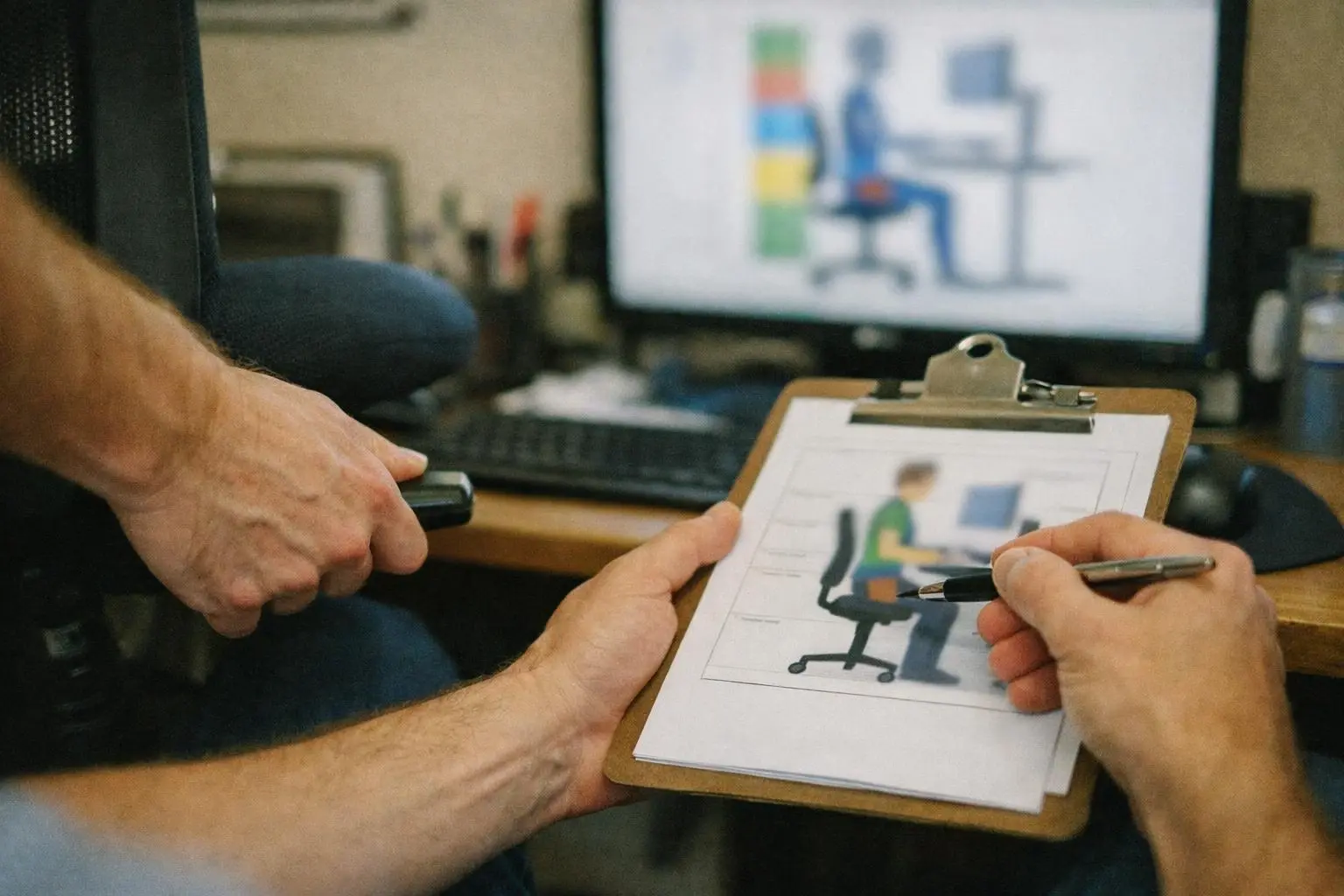
An Ergonomic Assessment typically begins with a trained professional observing a worker performing their usual tasks. The assessor looks for common risk factors, such as awkward postures, repetitive motions. Or excessive force. They may also ask questions about discomfort, pain. Or fatigue the worker experiences during or after their shift. Tools like checklists, measurements. And sometimes video recordings are used to document findings. For example, the assessor might measure the height of a chair, the distance to a computer screen. Or the angle of a worker’s wrists while typing.
In practice, After gathering data, the assessor recommends changes to improve the workspace. These changes can be simple, like adjusting the height of a chair or adding a footrest. They can also involve more significant modifications, such as replacing a tool with a more ergonomic version or redesigning a workstation layout. In some cases, the assessor may suggest changes to work habits, like taking short breaks to stretch or alternating tasks to reduce repetition. The recommendations are custom to the specific needs of the worker and the demands of their job.
Why Ergonomic Assessment Matters?

Ergonomic Assessments matter because they help prevent injuries that can lead to pain, disability. And lost productivity. Musculoskeletal disorders, such as back pain, carpal tunnel syndrome. And tendonitis, are among the most common work-related injuries. These conditions often develop gradually from poor ergonomics and can result in missed workdays, reduced efficiency. And even long-term health issues. By identifying and addressing ergonomic risks early, businesses can save money on healthcare costs, workers’ compensation claims. And employee turnover.
Beyond injury prevention, Ergonomic Assessments also improve comfort and job satisfaction. When workers are comfortable and free from pain, they can focus better on their tasks and perform at their best. This can lead to higher productivity, fewer errors. And a more positive work environment. For employers, investing in ergonomic improvements shows a commitment to employee well-being, which can boost morale and loyalty.
When Ergonomic Assessment Matters Most?
Ergonomic Assessments are especially important in situations where workers are at high risk for injury. This includes jobs that involve repetitive motions, heavy lifting, prolonged sitting or standing. Or awkward postures. For example, office workers who spend hours typing or using a mouse may develop wrist or shoulder pain. While factory workers who lift heavy objects may experience back injuries. New employees, workers returning from injury. Or those experiencing discomfort should also have an Ergonomic Assessment to ensure their workspace is safe and supportive.
Ergonomic Assessments are also valuable when introducing new equipment, tools. Or work processes. For instance, if a company switches to a new computer system or manufacturing tool, an assessment can help ensure the change doesn't introduce new ergonomic risks. And workplaces with high rates of injuries or worker complaints should prioritize Ergonomic Assessments to identify and address underlying issues. Regular assessments, such as once a year or after significant changes, can help maintain a safe and healthy work environment.