
What Is Degenerative Disc Disease?
Degenerative Disc Disease is a condition in which changes to spinal discs are associated with neck or back pain. Spinal discs are pads between the bones of the spine. These changes can include loss of disc moisture and height. Disc changes don't always cause pain.
Quick Facts About Degenerative Disc Disease
- Category
- Spinal disc condition
- Applies to
- Discs in the neck or back
- Common confusion
- Disc changes and a bulging disc
- Also called
- Disc Degeneration, DDD
- Often discussed with
- Spinal Decompression Therapy, Back Pain Treatment
Key Takeaways About Degenerative Disc Disease
- The name describes disc changes, not an infection.
- Symptoms and exam findings help put disc changes in context.
- A disc change isn't the same as a bulging disc.
How Degenerative Disc Disease Works
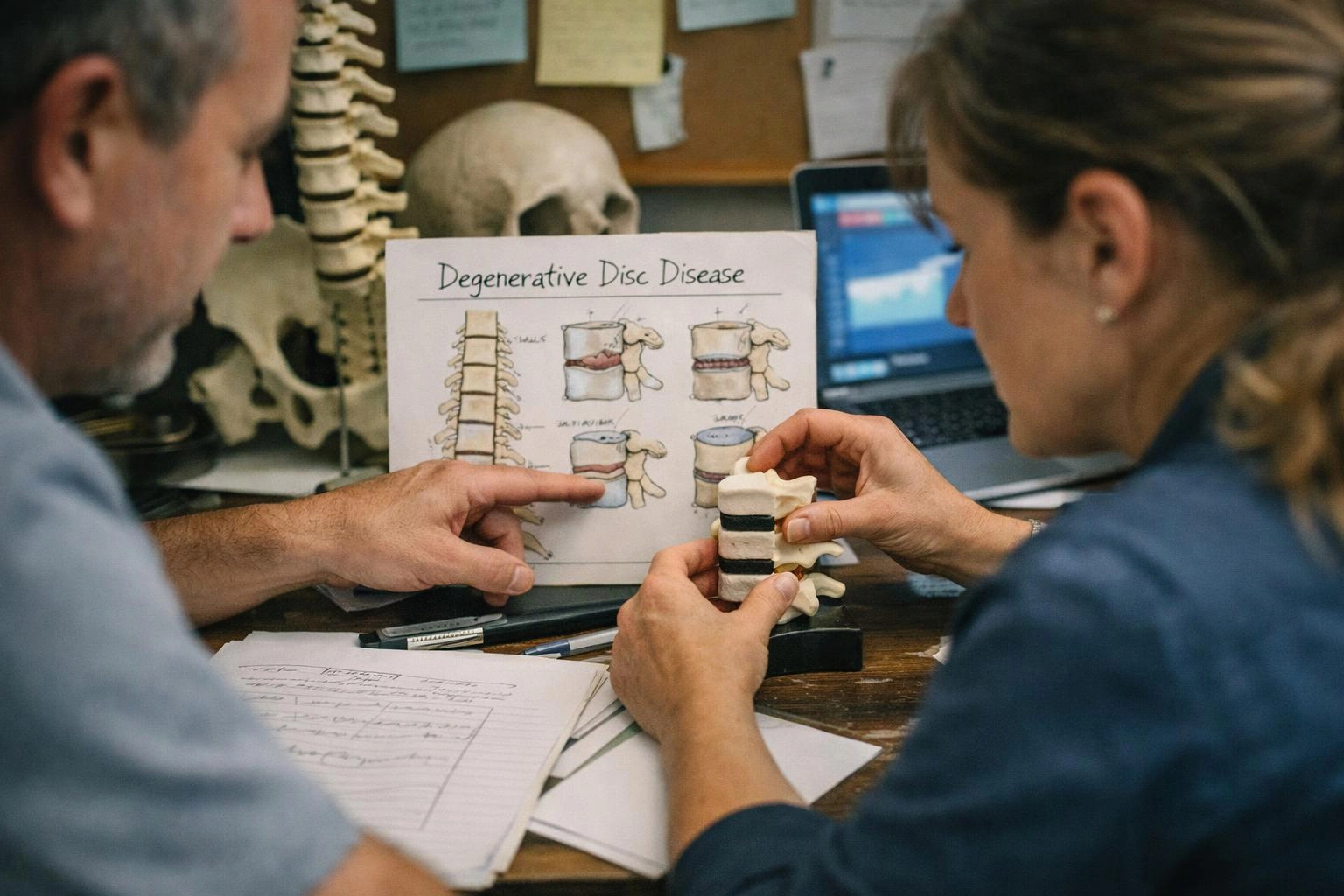
Degenerative disc disease affects how a spinal disc handles pressure and movement. A disc has a soft center and a tougher outer layer. As the disc changes, its outer layer can develop small tears. Nearby joints can also bear pressure differently. Related service: Spinal Decompression Therapy.
Related glossary terms: Intervertebral Disc, Bulging Disc, Nerve Root.
These changes can affect the space around a nerve root, where a nerve leaves the spine. Nerve irritation can lead to pain that travels into an arm or leg. Some people also notice tingling or numbness. The location of symptoms depends on the affected area.
Disc changes and a bulging disc are related but distinct findings. A bulge means part of a disc extends beyond its usual edge. Disc changes can occur without a bulge, and a bulge doesn't always cause symptoms.
From the Advanced Injury Care Clinic team
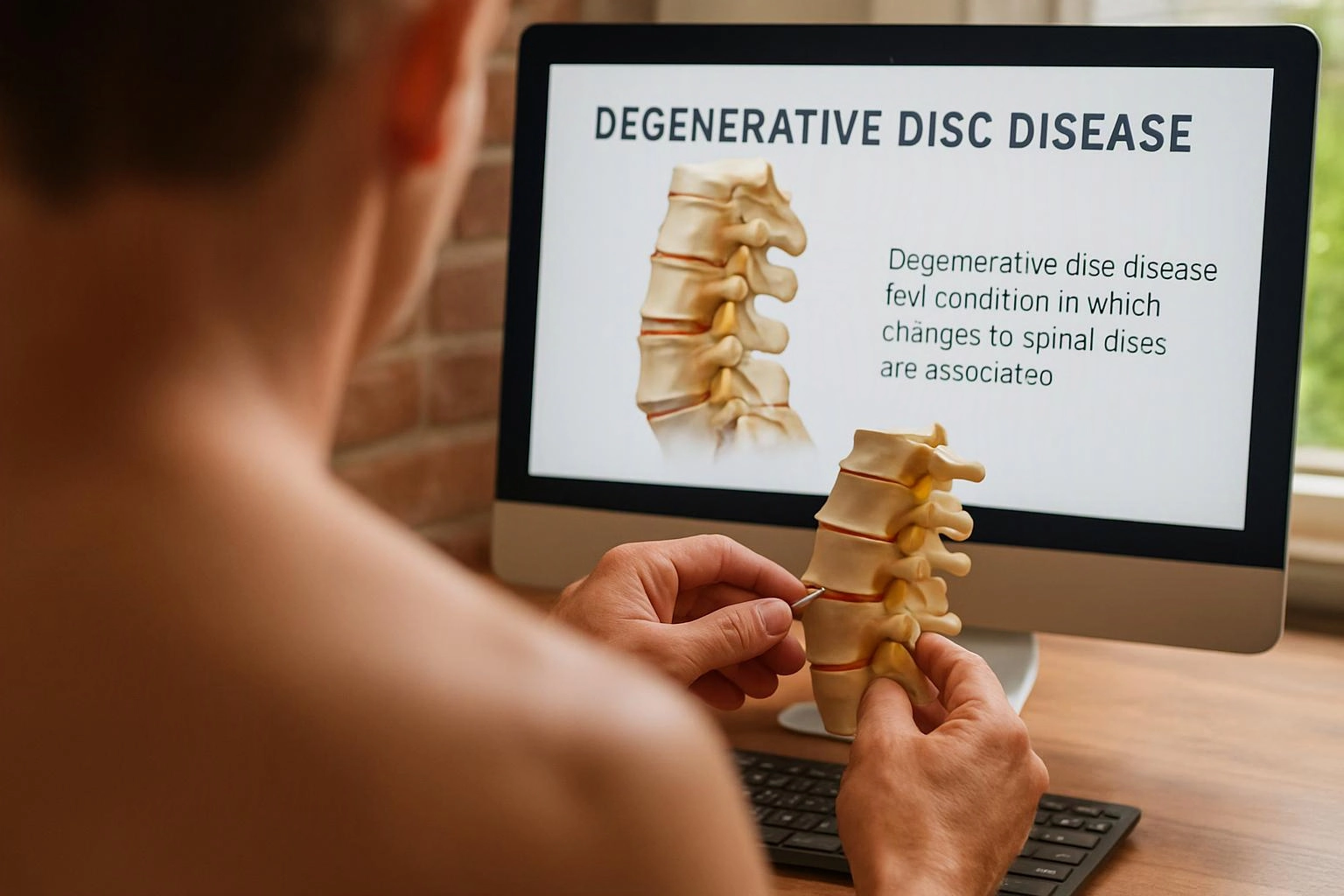
When we discuss degenerative disc disease, we consider where you feel symptoms and what movements affect them. Our team uses that context when discussing spinal decompression therapy. Decompression applies a gentle pulling force to the spine, but the term alone doesn't tell us whether that approach fits your situation.
Degenerative Disc Disease in Practice: A Real-World Example
A person with lower back pain asks whether spinal decompression therapy fits their situation. The discussion includes the person's symptoms and any known disc findings, since a disc finding alone doesn't identify the source of pain.
Related Services
Related Terms
Intervertebral Disc
An intervertebral disc is a pad of tissue between neighboring bones in the spine.
Bulging Disc
A bulging disc is a spinal disc that extends beyond its usual edge.
Nerve Root
A nerve root is a bundle of nerve fibers that connects a spinal nerve to the spinal cord.
Lumbar Spine
The lumbar spine is the section of your backbone in your lower back.
Advanced Injury Care Clinic
Have Questions About Degenerative Disc Disease?
Contact Advanced Injury Care Clinic for practical guidance on Degenerative Disc Disease and related chiropractor work in Hermitage.