How spinal decompression therapy differs from chiropractic adjustment
Spinal decompression therapy uses controlled traction to reduce pressure on spinal structures, while chiropractic adjustment uses targeted manual force to influence joint motion; Advanced Injury Care Clinic evaluates which approach fits the person's symptoms and goals.
Request an EstimateWhat Is the Difference Between Spinal Decompression Therapy and Chiropractic Adjustment?
Spinal decompression therapy applies controlled traction to the spine, while chiropractic adjustment applies a targeted manual force to a joint or spinal segment.
Both approaches can be part of conservative back pain treatment, but they use different methods. Decompression therapy focuses on changing spinal loading through traction, while an adjustment focuses on influencing joint motion.
Our team connects the treatment choice to the symptom pattern, physical findings, and functional goals rather than using one approach for every person.
How the Two Treatments Compare
The main differences involve how force is applied, what the treatment aims to address, how care is planned, and which symptoms or goals each approach may suit.
Cost drivers include the treatment plan, the number of recommended services, the clinical evaluation, and the care goals. We explain what the plan includes before providing exact pricing.
| Factor | Spinal Decompression Therapy | Chiropractic Adjustment | Main Consideration |
|---|---|---|---|
| Technique | Controlled traction through the spine | Targeted manual force to a joint or spinal segment | The source and pattern of symptoms |
| Treatment goal | Change spinal loading and reduce pressure on spinal structures | Influence joint motion and address movement restriction | The findings from the examination |
| Cost factors | Depends on the treatment plan and services included | Depends on the treatment plan and services included | A clinical evaluation helps define the quote |
| Treatment timeline | Planned around symptom response and treatment goals | Planned around mobility findings and symptom response | The plan may change as findings change |
| Maintenance | May be considered when ongoing spinal loading remains a concern | May be considered when movement restrictions return | Maintenance care depends on individual needs |
| Best fit | Disc-related symptoms and selected radiating pain patterns | Restricted joint motion and mechanical back or neck pain | Clinical suitability comes first |
What Spinal Decompression Therapy Does
Spinal decompression therapy is a non-surgical traction-based treatment that uses controlled pulling forces to change loading through the spine.
Spinal traction can alter how forces move through the vertebrae and intervertebral discs during care. The goal is to address spinal pressure that may contribute to back pain or leg pain.
We review the location, intensity, and pattern of symptoms before deciding whether decompression therapy is appropriate. Our team may also consider how nerve roots, supporting muscles, and spinal joints relate to the complaint.
Learn more about our Spinal Decompression Therapy service.
Advantages of Spinal Decompression Therapy
Spinal decompression therapy offers a traction-based option for people whose symptoms may relate to disc loading or pressure through the spine.
Best for: spinal decompression therapy may suit selected disc-related back pain or radiating pain patterns after clinical evaluation.
Best Fit for Spinal Decompression Therapy
Spinal decompression therapy may be a good fit when disc-related back pain, radiating pain, or pressure-sensitive symptoms are central to the treatment goals.
We also consider whether the person wants non-surgical care and whether traction fits the examination findings. Decompression therapy is not automatically suitable for every type of back or leg pain.
What Chiropractic Adjustment Does
Chiropractic adjustment is a manual therapy that applies a targeted force to influence motion in a spinal or other musculoskeletal joint.
A manual adjustment may focus on a spinal segment with restricted motion. The treatment goal is to improve joint mobility and address movement-related musculoskeletal pain.
Our team checks the movement pattern, surrounding muscles, and response to examination before selecting a manual adjustment. We use that information to shape the broader chiropractic treatment plan.
Advantages of Chiropractic Adjustment
Chiropractic adjustment offers a joint-focused approach for symptoms that appear connected to movement restriction or mechanical irritation.
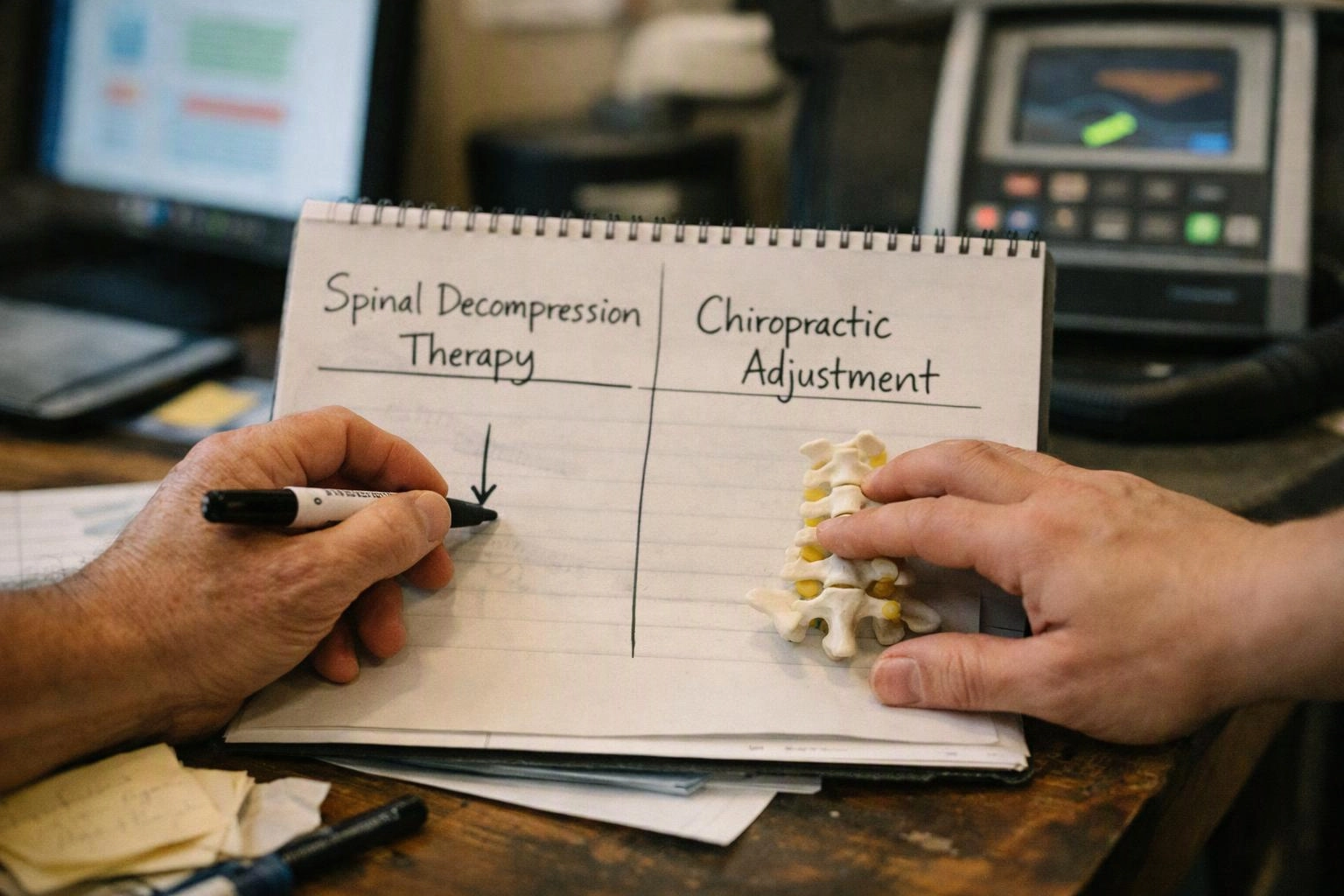
Best for: chiropractic adjustment may suit restricted joint motion, mechanical back pain, neck pain, and movement-related symptoms after examination.
Best Fit for Chiropractic Adjustment
Chiropractic adjustment may be a good fit when restricted joint motion and mechanical back pain are linked to movement-related symptoms.
We assess neck pain, back pain, joint mobility, and the way symptoms respond to movement. A manual adjustment is selected only when the examination supports that approach.
How We Decide Which Approach Fits Your Back Pain
Advanced Injury Care Clinic selects the more appropriate approach by reviewing the health history, symptom pattern, examination findings, and treatment goals.
Our clinical evaluation includes the location of pain, radiating symptoms, movement limits, prior care, and relevant health concerns. We then explain how the findings support spinal decompression therapy, chiropractic adjustment, another form of conservative care, or a combined plan.
The treatment plan should match the person's functional goals. We review progress and adjust the care plan when the response does not match the expected direction.
What Changes the Cost of Comparing These Treatments?
The cost of either approach depends on the recommended treatment plan, the services included, and the findings from the clinical evaluation; Advanced Injury Care Clinic explains the plan and provides exact pricing after reviewing the case.
Cost drivers include the type of care recommended, the number of recommended services, the complexity of the symptoms, and the care goals. We discuss these factors during the consultation so the quote reflects the proposed plan.
Our owner-provided offer is Free Consultations. Contact us to request a case review and an exact quote based on the recommended care.
Which Treatment Should You Choose for Back Pain?
Neither treatment is universally better because the appropriate choice depends on the source of the symptoms, examination findings, and the person's treatment goals.
Spinal decompression therapy may fit disc-related symptoms and selected radiating pain patterns. Chiropractic adjustment may fit restricted joint motion and mechanical back or neck pain.
Comparing chiropractic adjustment and physical therapy also requires attention to the treatment goal. Physical therapy often emphasizes active exercise and movement training, while adjustment is a hands-on approach focused on joint motion.
We use symptom evaluation and clinical suitability to decide whether one approach, a combined plan, or another form of back pain treatment is appropriate.
When Should You Discuss Back Pain Treatment With Us?
You should discuss back pain treatment with Advanced Injury Care Clinic when symptoms persist, limit movement, or extend beyond the back into another area.
Radiating symptoms, leg pain, new movement limits, or pain that interferes with daily activities can help guide the evaluation. We review the full symptom pattern before recommending care.
Contact us when you want to compare spinal decompression therapy and chiropractic adjustment through a structured treatment consultation. Our team will connect the findings to a clear treatment plan.
Questions About Spinal Decompression and Chiropractic Adjustment
Can spinal decompression therapy and chiropractic adjustment be used in the same care plan?
Yes, spinal decompression therapy and chiropractic adjustment can be used in the same care plan when Advanced Injury Care Clinic finds that both approaches fit the symptoms and treatment goals. We coordinate the plan around examination findings and the person's response to care.
Is spinal decompression therapy the same as spinal adjustment?
No, spinal decompression therapy and spinal adjustment use different techniques. Decompression therapy uses controlled traction, while spinal adjustment uses targeted manual force to influence joint motion.
Does chiropractic adjustment focus on the disc or the joint?
Chiropractic adjustment primarily focuses on joint motion and the spinal segment being assessed. The surrounding discs, nerve roots, and muscles still matter when we evaluate the full musculoskeletal problem.
Can either treatment be appropriate for radiating back pain?
Yes, either treatment may be appropriate for radiating back pain when the symptom pattern and examination findings support it. We first assess possible sources of the radiating symptoms before selecting a treatment approach.
Discuss your symptoms and goals with Advanced Injury Care Clinic so our team can explain the most suitable back pain treatment plan.
Related Resources
Delayed Whiplash Symptoms After a Car Accident: When to Seek Treatment
When You Need ItSciatica Warning Signs: When Leg Pain and Numbness Need Treatment
When You Need ItSigns Poor Posture Is Causing Neck Pain and Headaches
Everything About ItWhat Happens During an Initial Chiropractic Consultation