Chiropractic Adjustment vs. Massage Therapy
Chiropractic adjustment and massage therapy address different parts of musculoskeletal care: chiropractic adjustment focuses on joint and movement assessment, while massage therapy focuses on muscles and soft tissue. Advanced Injury Care Clinic can assess your needs and explain whether one approach or coordinated soft tissue care fits your goals.
Request an EstimateQuick Picks
Each service can support a different treatment goal. The best fit depends on whether your main concern involves joint movement, muscle tension, or both.
- Chiropractic adjustment is generally suited to joint restriction, spinal mobility concerns, and movement-related discomfort.
- Massage therapy is generally suited to muscle tension, soft-tissue discomfort, and fascia-related tightness.
How Chiropractic Adjustment and Massage Therapy Differ
Chiropractic adjustment is a manual therapy approach that focuses on joint movement within the musculoskeletal system. Our team reviews movement patterns and may use a manual adjustment or joint mobilization when the findings support that approach.
Massage therapy focuses on muscles and other soft tissue. Massage techniques may address muscle tension, fascia, soft tissue tension, and areas that feel restricted during movement.
The two services can overlap in conservative care, but their main targets differ. A clinical assessment helps connect your symptoms with joint movement, soft tissue, or a combination of factors.
Chiropractic Adjustment vs. Massage Therapy at a Glance
Cost drivers, timing, maintenance, and the best fit can vary with your findings and treatment goals. The comparison below shows the usual focus of each service without assigning a fixed price or timeline.
| Factor | Chiropractic Adjustment | Massage Therapy | Key Trade-Off |
|---|---|---|---|
| Cost drivers | Assessment complexity, areas assessed, and planned care | Service selected, areas addressed, and soft tissue goals | The service scope changes the quote |
| Timeline | Based on findings, response, and movement goals | Based on soft tissue needs and treatment goals | There is no single schedule for every person |
| Maintenance | May focus on movement quality and joint mobility | May focus on recurring muscle tension and soft tissue comfort | Maintenance care should match the reason for care |
| Best fit | Joint or movement concerns | Muscle tension and soft-tissue discomfort | Combined care may fit when both factors are present |
What Chiropractic Adjustment Can Help Address
Chiropractic adjustment may help address movement concerns involving the spinal joints and other joints. We use movement assessment to understand how joint mobility relates to musculoskeletal discomfort.
Best for: Chiropractic adjustment is generally the closer match for a joint or movement concern.
What Massage Therapy Can Help Address
Massage therapy may help address muscle tension and soft-tissue discomfort. Our team considers the location and feel of the tension when discussing soft tissue therapy.
Best for: Massage therapy is generally the closer match for muscle tension and soft-tissue discomfort.
Which Approach Fits Your Main Goal?
Chiropractic adjustment is generally the closer match for a joint or movement concern, while massage therapy is generally the closer match for muscle tension and soft-tissue discomfort.
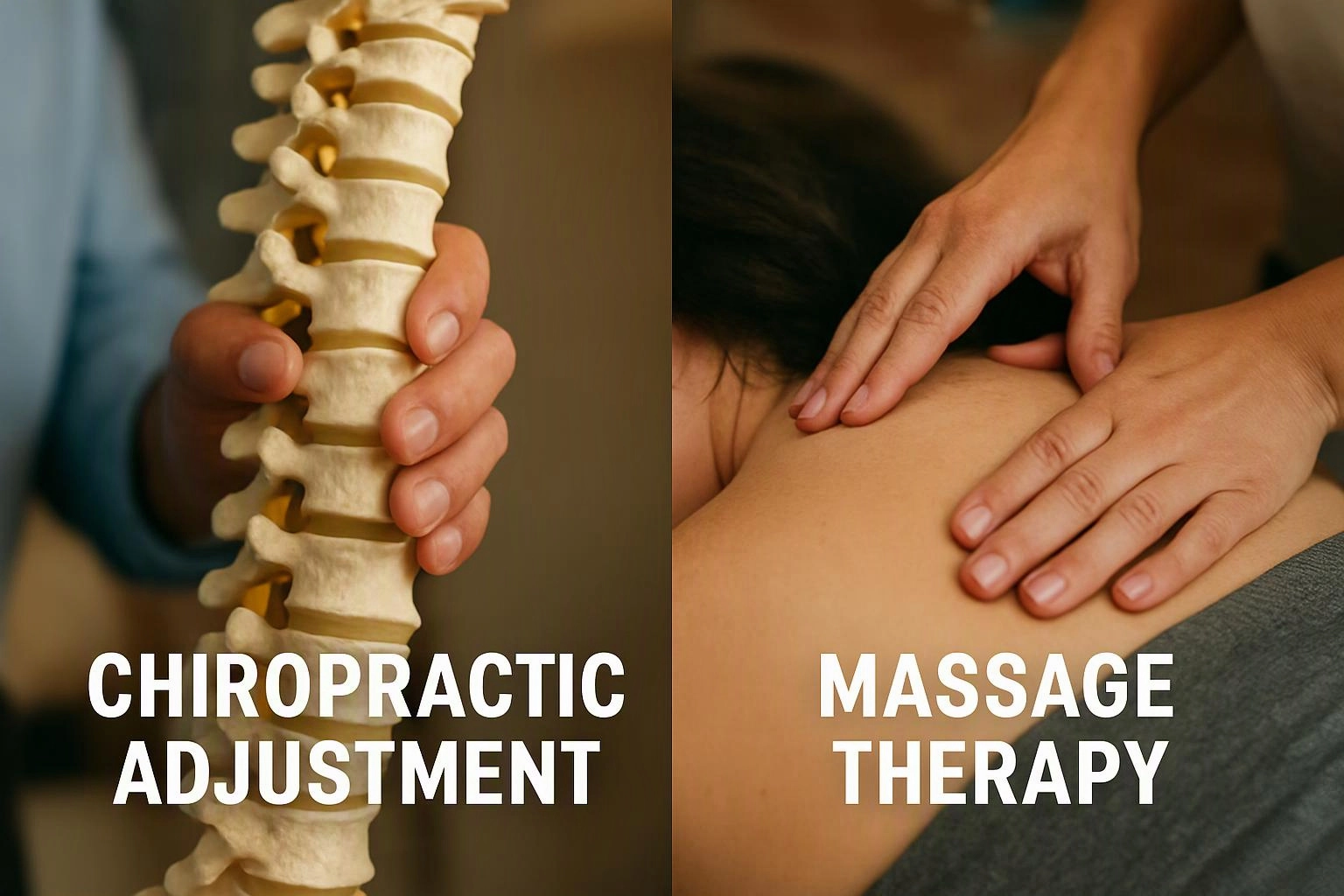
Treatment goals help guide the choice. A joint restriction may call for a movement evaluation, while muscle tension may point toward soft tissue therapy. Range of motion findings can also show whether joint movement, soft tissue, or both deserve attention.
We can explain how your symptoms relate to the findings and outline a care plan that matches your goals.
Can Chiropractic Adjustment and Massage Therapy Work Together?
Yes, coordinated chiropractic adjustment and massage therapy can address joint movement and soft-tissue factors together when the care plan matches the person's goals and findings.
Coordinated care may combine joint-focused treatment with soft tissue therapy when both joint restriction and muscle tension affect movement. Care coordination helps keep each service connected to the same treatment goals.
Our team reviews the clinical findings before recommending combined care. The plan may change as your movement, comfort, and response become clearer.
How to Prepare for Combined Chiropractic and Massage Care
Preparing for combined care starts with sharing your health history, current symptoms, and treatment goals. Clear information helps our team coordinate joint-focused and soft-tissue services.
What Changes the Cost of Each Treatment?
Treatment cost depends on the service selected, the areas addressed, the complexity of the assessment, and the planned care; Advanced Injury Care Clinic provides upfront pricing and offers Free Consultations for discussing the appropriate option.
Chiropractic adjustment costs may reflect the assessment and joint-focused care included. Massage therapy or other soft tissue therapy costs may reflect the areas addressed and the scope of bodywork selected.
We explain the planned service and its cost drivers before care. You can request an exact quote through our Chiropractic Adjustment service page.
How We Help You Choose Between These Services
Advanced Injury Care Clinic uses a clinical assessment, movement evaluation, and soft tissue assessment to connect your symptoms with the most suitable service.
We review joint movement, range of motion, muscle tension, and relevant movement patterns. Our team then explains whether chiropractic adjustment, massage therapy, soft tissue therapy, or coordinated care best matches your treatment goals.
We keep the care plan focused on the findings and update it when your needs change.
Questions About Chiropractic Adjustment and Massage Therapy
Can massage therapy replace a chiropractic adjustment?
Massage therapy does not always replace chiropractic adjustment because the services target different concerns. Advanced Injury Care Clinic assesses whether your main need involves soft tissue, joint movement, or both.
Should I get a massage before or after a chiropractic adjustment?
The best order depends on your findings, treatment goals, and care plan. Our team coordinates the sequence when both joint-focused and soft-tissue care are appropriate.
How do I tell whether my discomfort is related to a joint or soft tissue?
A clinical assessment helps determine whether discomfort relates more closely to joint movement, muscle tension, soft tissue, or a combination. Movement evaluation and range of motion findings can help guide that distinction.
What should I tell the clinic before combining chiropractic and massage therapy?
Tell our team about your health history, current symptoms, previous care, and treatment goals. Also describe activities that increase discomfort so we can coordinate the care plan appropriately.
Contact Advanced Injury Care Clinic to discuss your symptoms, treatment goals, and the care option that best fits your findings.
Related Resources
Delayed Whiplash Symptoms After a Car Accident: When to Seek Treatment
When You Need ItSciatica Warning Signs: When Leg Pain and Numbness Need Treatment
When You Need ItSigns Poor Posture Is Causing Neck Pain and Headaches
Everything About ItWhat Happens During an Initial Chiropractic Consultation