
What Is Nerve Root Compression?
Nerve Root Compression is pressure on a spinal nerve root where it leaves the spine. The pressure may irritate the nerve and affect nearby areas, such as the lower back, hip, leg, neck, or arm. Common sources include a bulging disc, narrowed spinal space, or changes in nearby joints.
Quick Facts About Nerve Root Compression
Category
Spinal nerve condition
Used for
Explaining radiating nerve symptoms
Common confusion
Not every pinched nerve involves a spinal nerve root
Also called
Nerve compression, Nerve root entrapment
Often discussed with
Sciatica Treatment, Spinal Decompression Therapy
Key Takeaways About Nerve Root Compression
- Pressure affects a nerve root near the spine.
- Symptoms may follow the nerve's path into an arm or leg.
- A pinched nerve can describe several types of nerve pressure.
How Nerve Root Compression Works
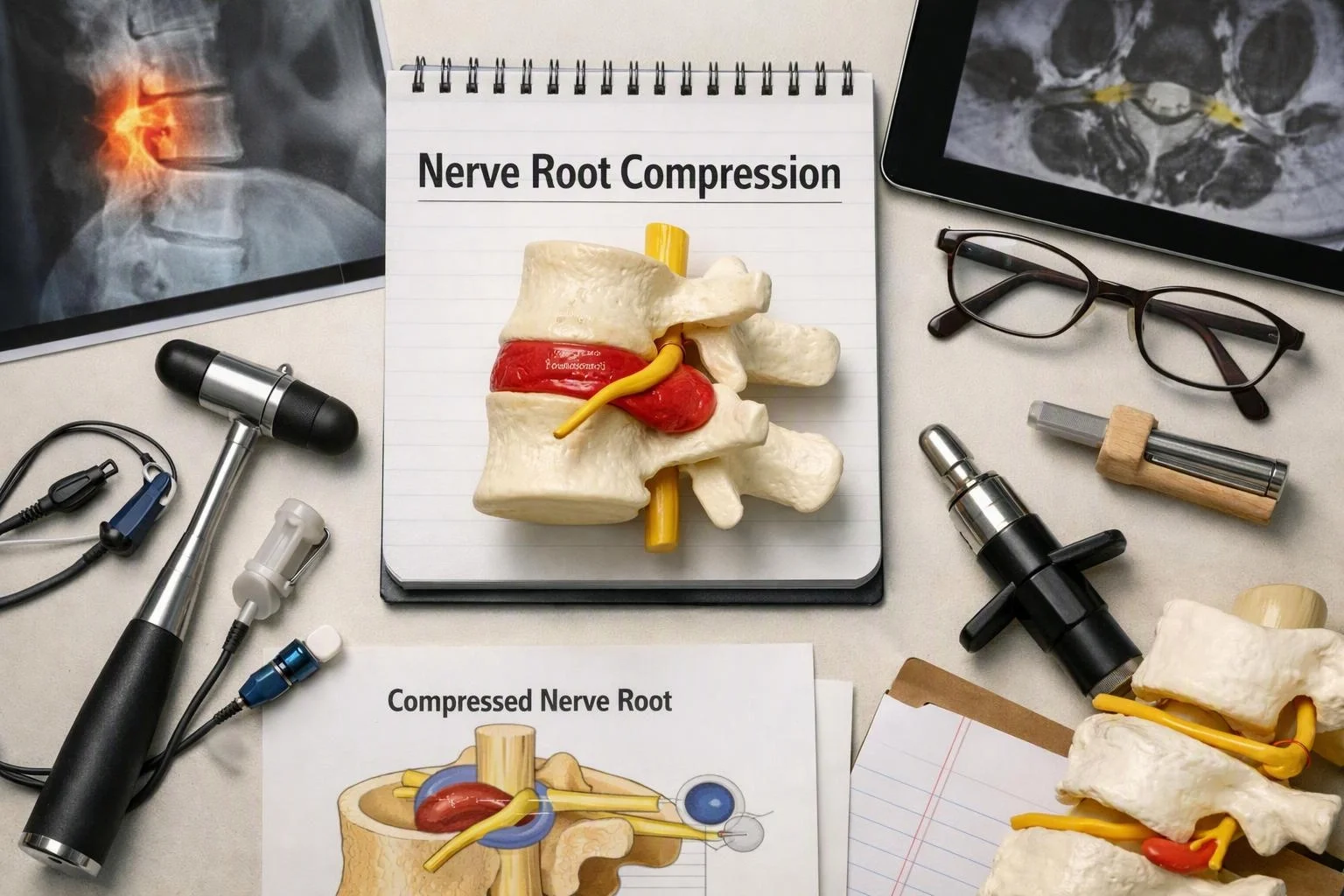
Nerve Root Compression develops when tissue near the spine presses against a nerve root. A disc bulge, joint change, or reduced space can create that pressure. The nerve may then send altered signals along its path.
Related glossary terms: Pinched Nerve, Radiculopathy, Lumbar Spine.
Symptoms depend on the affected spinal level and nerve. Lower back compression may send pain, tingling, numbness, or weakness into the buttock and leg. Neck compression may affect the shoulder, arm, or hand. Radiculopathy describes the group of symptoms that can result from irritated nerve roots.
During a sciatica evaluation, the care team considers the symptom pattern, movement limits, strength, sensation, and reflex changes. Lumbar Spine findings help connect leg symptoms with the lower back and guide the next clinical step.
From the Advanced Injury Care Clinic team
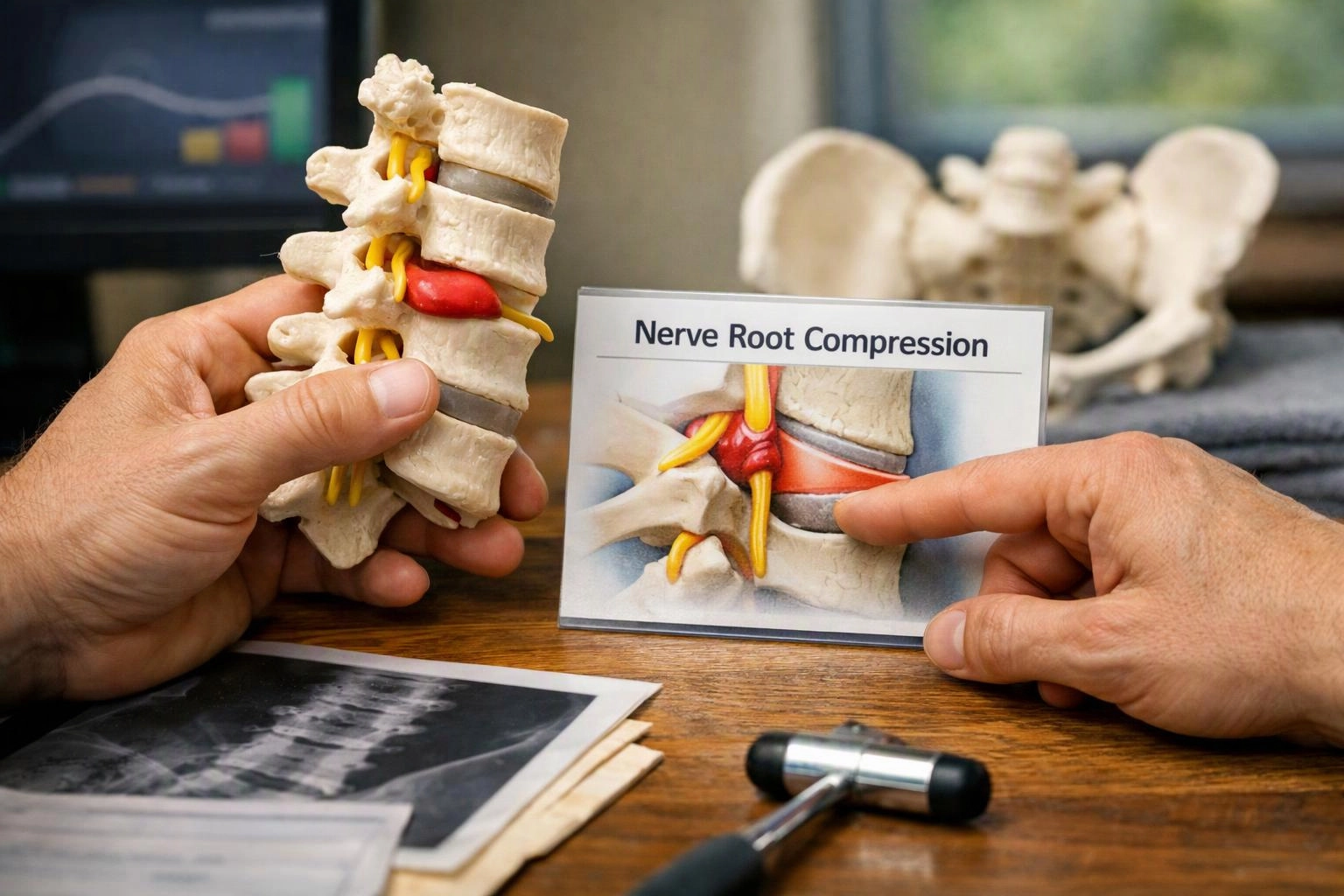
When we assess Nerve Root Compression during Sciatica Treatment, we review the pain pattern and check related movement, strength, and sensation changes. We also consider whether the lower back, hip, or nearby joints may contribute to the symptoms. These findings help us choose appropriate care and track changes over time.
Nerve Root Compression in Practice: A Real-World Example
A person with a lower back disc bulge may feel pain that travels through the buttock and down the leg. A clinical exam may find limited movement and altered sensation that follow one nerve path.
Related Services
Related Terms
Pinched Nerve
A pinched nerve is a nerve under pressure from nearby tissue, such as a disc, joint…
Radiculopathy
Radiculopathy is a nerve problem caused by irritation or pressure near the spine. The affected nerve…
Lumbar Spine
The lumbar spine is the lower section of the back, located between the thoracic spine and…
Disc Bulge
A Disc Bulge is a condition in which the outer part of an intervertebral disc extends…
Advanced Injury Care Clinic
Have Questions About Nerve Root Compression?
Contact Advanced Injury Care Clinic for practical guidance on Nerve Root Compression and related chiropractor work in Hermitage.